HRMS Software: Best HRMS Software for Businesses (2026 Guide)
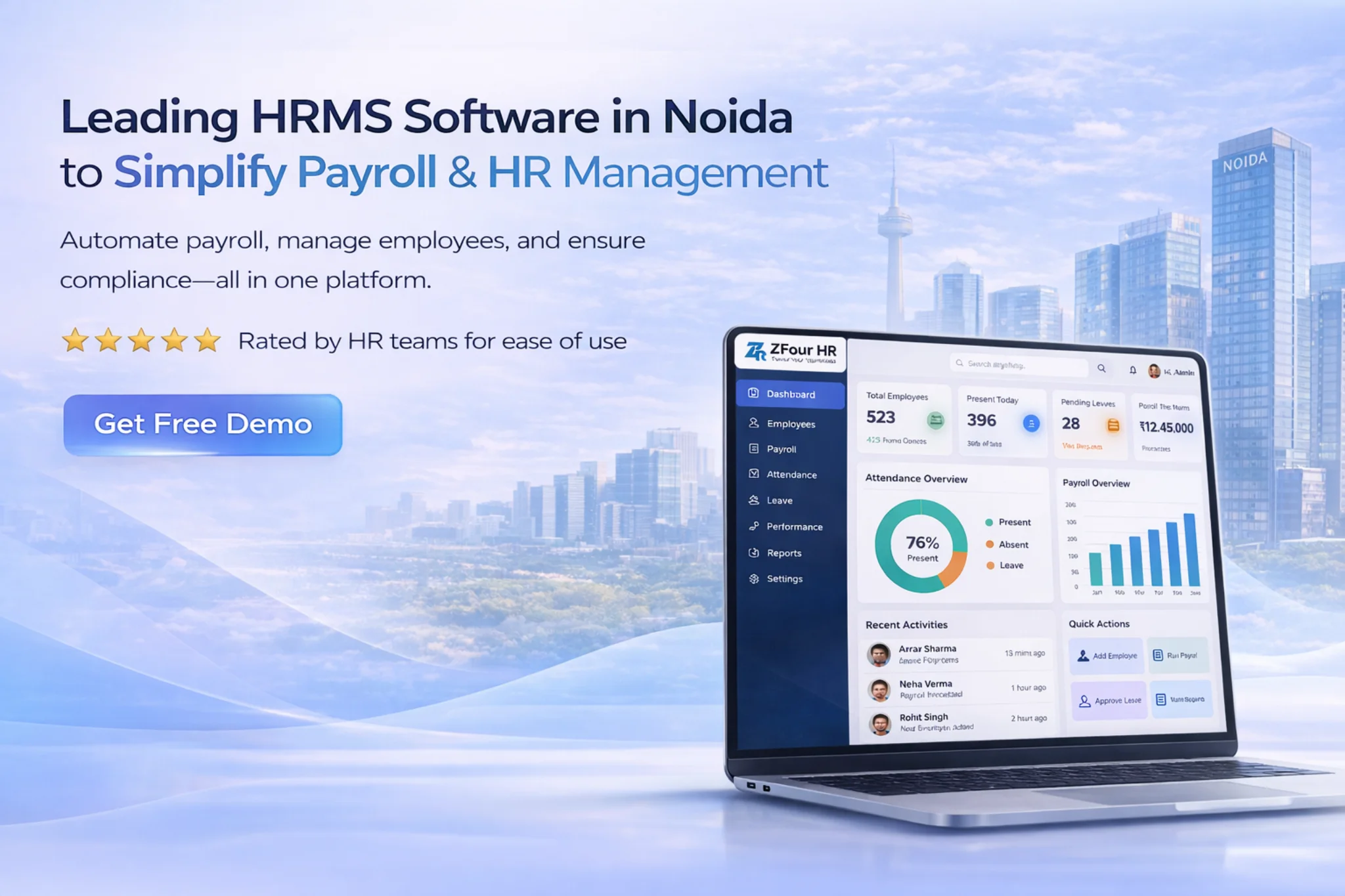
HRMS software in Noida is a digital system that helps businesses manage payroll, attendance, and employee data while ensuring compliance with local regulations.
As Noida continues to grow as a hub for IT companies, startups, and SMEs, managing HR operations manually has become inefficient and error-prone. Mistakes in payroll, attendance, and compliance can lead to financial losses and legal issues.
HRMS software solves these challenges by automating HR processes, improving accuracy, and streamlining daily operations. It helps businesses save time, reduce errors, and manage employees more effectively.
In this guide, you will learn about HRMS software in Noida, including its features, benefits, pricing, use cases, and how to choose the best solution for your business.
What is HRMS Software?
HRMS (Human Resource Management System) is software that helps businesses manage employee data, payroll, attendance, and HR tasks in one centralized system.
It automates routine HR processes, reduces manual work, and improves accuracy. Businesses use HRMS to streamline operations, manage employees efficiently, and ensure compliance with labour laws.
Why Do Businesses Need HRMS Software?
Businesses need HRMS software to automate HR tasks, manage payroll efficiently, and ensure compliance with labour laws.
For IT companies and enterprises, managing HR operations manually becomes time-consuming and error-prone.
HRMS software helps companies handle increasing workforce demands and streamline daily HR processes.
Key reasons businesses need HRMS software:
- Automates payroll and reduces salary errors
- Simplifies attendance and leave management
- Ensures compliance with Delhi-NCR labour laws
- Saves time for HR teams
- Improves employee management and productivity
HRMS vs Payroll Software vs ERP System
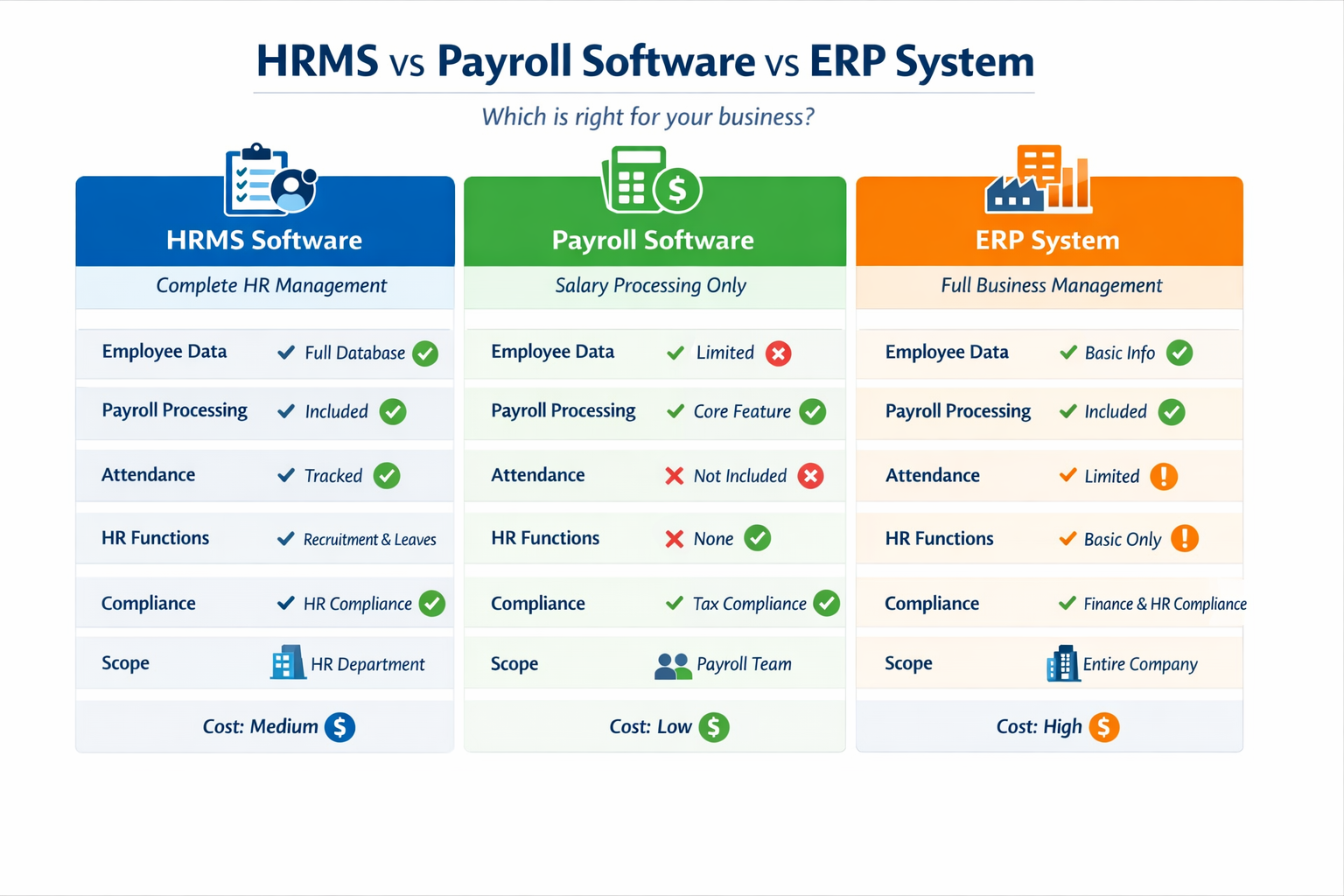
Businesses often get confused between HRMS, payroll software, and ERP systems. Understanding the difference helps in choosing the right solution.
HRMS Software
HRMS is a complete system that manages employee data, payroll, attendance, and HR processes in one place. It is designed specifically for HR operations.
Payroll Software
Payroll software focuses only on salary processing, tax deductions, and payslip generation. It does not handle full HR operations.
ERP System
ERP (Enterprise Resource Planning) is a broader system that manages finance, inventory, HR, and operations. HR is only one part of ERP.
For most startups and SMEs, HRMS software is the best choice because it is cost-effective and focused on HR needs.
Industry Use Cases of HRMS Software
IT Companies
IT companies handle large teams and flexible work structures. HRMS helps them manage attendance, remote work, and payroll efficiently.
Startups
Startups need automation to reduce operational costs. HRMS helps them manage HR without hiring a large team.
Manufacturing Companies
Manufacturing businesses require shift management and attendance tracking. HRMS simplifies workforce management.
Digital Marketing Agencies
Agencies manage multiple employees and freelancers. HRMS helps track attendance, performance, and payroll.
These use cases show that HRMS software is useful across different industries.
Compliance Management with HRMS
Compliance is one of the biggest challenges for businesses. HRMS software helps companies follow labour laws and avoid penalties.
Key Compliance Areas:
- Provident Fund (PF) management
- Employee State Insurance (ESI)
- Minimum wage compliance
- Salary structure regulations
- Tax deductions (TDS)
HRMS software automates these processes and ensures accuracy.
This is especially important for businesses operating in Delhi-NCR, where compliance rules frequently change.
Step-by-Step Implementation of HRMS Software
Implementing HRMS software in your company is simple if done correctly.
Step 1: Identify Requirements
Understand your business needs such as payroll, attendance, and employee management.
Step 2: Choose the Right Software
Select HRMS software that fits your company size and budget.
Step 3: Data Migration
Upload employee data into the system.
Step 4: Configure Settings
Set up payroll structure, attendance rules, and leave policies.
Step 5: Train Employees
Provide basic training to HR teams and employees.
Step 6: Go Live
Start using the HRMS system for daily operations.
Proper implementation ensures smooth HR operations and better results.
Common Mistakes While Choosing HRMS Software
Businesses often make mistakes when selecting HRMS software. Avoid these to ensure success:
- Choosing software without scalability
- Ignoring customer support
- Selecting complex systems
- Not checking integration options
- Focusing only on price
Always choose software that is simple, scalable, and reliable.
Future of HRMS Software in Noida
HRMS software is evolving with technology. Businesses are moving towards advanced HR solutions.
Trends to Watch:
- AI-based HR analytics
- Cloud-based HR systems
- Mobile HR management apps
- Automated compliance tracking
- Employee self-service portals
Companies adopting modern HRMS solutions will gain a competitive advantage.
How Does HRMS Software Work?
HRMS software works by centralizing employee data and automating HR processes such as payroll, attendance, and leave management in one system.
It collects employee information, processes it digitally, and generates accurate results in real time. This reduces manual effort and improves efficiency.
Here’s how HRMS software works step by step:
- Employee data is stored in a centralized system
- Attendance is tracked automatically
- Payroll is calculated based on attendance and policies
- Leave requests are managed digitally
- Reports and analytics are generated instantly
What Are the Key Features of HRMS Software?
HRMS software includes features like employee management, payroll automation, attendance tracking, and reporting to streamline HR operations.
These features help businesses manage their workforce efficiently and reduce manual work.
Key features of HRMS software include:
- Employee Management: Stores employee data, documents, and job details in one place
- Payroll Management: Automates salary calculation, deductions, and payslip generation
- Attendance Tracking: Monitors employee working hours using biometric or cloud systems
- Leave Management: Allows employees to apply for leave and managers to approve digitally
- Performance Management: Tracks employee productivity and performance metrics
- Reporting & Analytics: Provides real-time insights for better decision-making
What Are the Benefits of HRMS Software for Businesses?
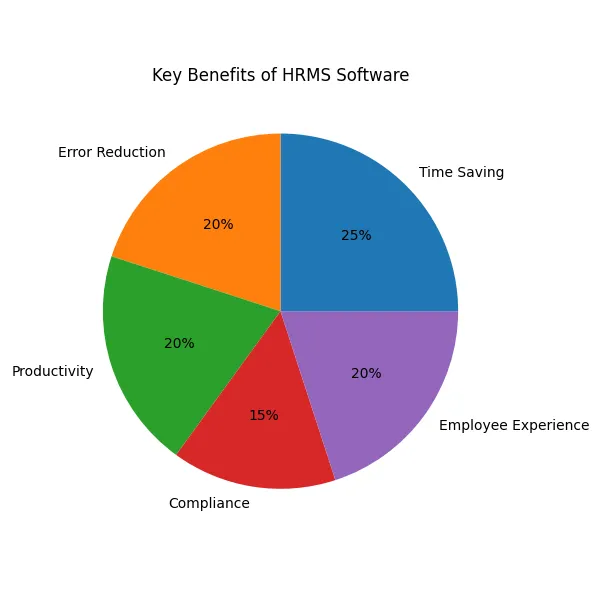
It enables companies to save time, reduce errors, improve productivity, and ensure compliance with labour laws.
By automating HR processes, companies can manage employees more efficiently and focus on growth.
Key benefits of HRMS software include:
- Saves Time: Automates repetitive HR tasks like payroll and attendance
- Reduces Errors: Minimizes mistakes in salary calculations and data management
- Improves Productivity: Allows HR teams to focus on strategic tasks
- Ensures Compliance: Helps follow labour laws and regulations in Delhi-NCR
- Enhances Employee Experience: Provides easy access to payslips, leave requests, and data
- Centralized Data Management: Keeps all employee information in one system
HRMS Software for Startups
HRMS software helps startups and businesses manage HR operations efficiently while reducing costs.
Startups often have limited resources and rapidly growing teams. HRMS software enables them to automate payroll, attendance, and employee management without hiring a large HR team.
Key benefits for startups:
- Cost-Effective: Reduces the need for additional HR staff
- Easy to Implement: Quick setup with minimal technical effort
- Scalable: Grows with business expansion
- Automates HR Tasks: Simplifies payroll and attendance management
HRMS Software for SMEs and Enterprises in Growing Companies
This system helps organizations, SMEs, and enterprises manage large teams, automate HR processes, and improve operational efficiency.
Medium and large businesses deal with complex HR operations, including payroll, compliance, and employee management. HRMS software simplifies these tasks by centralizing data and automating workflows.
Key benefits include:
- Manages Large Workforce: Handles employee data and operations efficiently
- Provides Detailed Analytics: Offers insights for better decision-making
- Improves Compliance Management: Ensures adherence to labour laws and regulations
- Integrates with Business Tools: Connects with accounting and other systems for seamless operations
HRMS vs Traditional HR Management
HRMS software is faster, more accurate, and more efficient than traditional manual HR management.
While traditional HR relies on paperwork and manual processes, HRMS automates tasks and centralizes data, making it easier to manage employees and operations.
Here’s a comparison:
Feature | HRMS Software | Manual HR |
Data Management | Centralized | Scattered |
Payroll | Automated | Manual |
Accuracy | High | Error-prone |
Time | Fast | Time-consuming |
Compliance | Easy | Complex |
HRMS is a better choice for businesses looking to scale efficiently and reduce manual workload.
Cloud-Based HRMS vs On-Premise HRMS
Cloud-based HRMS software is an online system that allows businesses to manage HR tasks like payroll, attendance, and employee data from anywhere using the internet.
Unlike traditional systems, cloud HRMS does not require installation or heavy maintenance. It is hosted on secure servers and can be accessed anytime, making it ideal for modern businesses.
Key benefits of cloud-based HRMS:
- Anywhere Access: Manage HR operations from any location
- Low Maintenance: No need for hardware or manual updates
- Cost-Effective: Subscription-based pricing reduces upfront costs
- Scalable: Easily grows with your business
- Secure Data Storage: Protects employee data with advanced security
Cloud-based HRMS is the preferred choice for businesses due to its flexibility and ease of use.
What is the Cost of HRMS Software in Noida?
The cost of HRMS software typically ranges from ₹50 to ₹300 per employee per month, depending on features, company size, and provider.
Pricing varies based on business requirements, customization, and the type of HRMS solution selected.
Common pricing models include:
- Per Employee Pricing: Charged monthly based on number of employees
- Subscription Plans: Fixed monthly or yearly packages
- Custom Enterprise Pricing: Tailored solutions for large organizations
Factors affecting HRMS pricing:
- Number of employees
- Features included (payroll, attendance, analytics)
- Level of customization
- Customer support and integration
Businesses should choose HRMS software based on value, scalability, and long-term benefits rather than just price.
How to Choose the Best HRMS Software
To choose the best HRMS software, businesses should focus on ease of use, features, pricing, scalability, and customer support.
Selecting the right HRMS ensures smooth HR operations, better efficiency, and long-term growth.
Key factors to consider:
- Ease of Use: Choose software that is simple, user-friendly, and easy to adopt
- Features: Ensure it includes payroll, attendance, employee management, and reporting
- Pricing: Select a cost-effective solution that fits your budget
- Scalability: The software should grow with your business needs
- Customer Support: Reliable support is important for smooth operations
An organization should choose HRMS software that offers the right balance of features, affordability, and ease of use.
Why Choose ZFour HRMS?
ZFour HRMS is a reliable solution for businesses looking to automate HR processes, manage payroll efficiently, and ensure compliance with ease.
Designed for startups, SMEs, and enterprises, ZFour HRMS simplifies HR operations and improves overall productivity.
Key benefits of ZFour HRMS:
- Easy-to-Use Interface: Simple and user-friendly for quick adoption
- Affordable Pricing: Cost-effective solution for growing businesses
- All-in-One HR Platform: Manages payroll, attendance, and employee data in one system
- Quick Implementation: Easy setup with minimal technical effort
- Reliable Customer Support: Dedicated assistance for smooth operations
ZFour HRMS is ideal for firms that want to reduce manual work and scale efficiently.
Real-Life Use Case of HRMS
This system helps organizations reduce errors, save time, and improve efficiency in daily HR operations.
For example, a Noida-based company with 50 employees faced challenges with payroll errors and manual attendance tracking.
After implementing HRMS software, the company automated its HR processes, reduced errors, and saved over 10 hours every week.
What Are the Advanced Features of HRMS Software?
Modern HRMS software includes advanced features that improve efficiency, accuracy, and decision-making.
Key advanced features include:
- AI-Based Analytics: Provides insights for better workforce planning
- Mobile App Access: Allows employees and HR teams to manage tasks on the go
- Employee Self-Service Portal: Enables employees to access data and request leave easily
- Automated Compliance Tracking: Ensures adherence to labour laws
- Integration with Business Tools: Connects with accounting and other systems
What Challenges Do Businesses Face Without HRMS Software?
Businesses without HRMS software often struggle with manual processes, errors, and compliance risks.
Common challenges include:
- Payroll Errors: Mistakes in salary calculations and deductions
- Time-Consuming Tasks: Manual HR work takes significant time
- Compliance Risks: Difficulty in following labour laws
- Data Mismanagement: Scattered and unorganized employee data
- Low Productivity: Inefficient processes slow down operations
HRMS software eliminates these challenges by automating tasks and improving accuracy
1. What is HRMS software in Noida?
HRMS software is a digital system that helps businesses manage payroll, attendance, and employee data efficiently while ensuring compliance with local regulations.
2. Which is the best HRMS software in Noida?
The best HRMS software depends on business needs, but solutions like ZFour HRMS are preferred for ease of use, affordability, and complete HR features.
3. Why do companies need HRMS software?
Companies need HRMS software to automate HR tasks, reduce payroll errors, manage employee data, and ensure compliance with labour laws.
4. How does HRMS software help with payroll?
HRMS software automates salary calculation, tax deductions, and payslip generation, reducing errors and saving time for HR teams.
5. Is HRMS useful for small businesses in Noida?
Yes, HRMS is useful for small businesses as it reduces manual work, saves time, and helps manage employees efficiently.
6. What features should HRMS software have?
HRMS software should include payroll management, attendance tracking, employee management, leave management, and reporting features.
7. How much does HRMS software cost?
HRMS software cost varies based on features and company size, but most solutions offer affordable monthly or subscription plans.
8. Can HRMS handle compliance in Delhi-NCR?
Yes, HRMS software helps manage compliance by automating PF, ESI, tax calculations, and labour law requirements.