HR Systems for Small Businesses in India (2026 Guide)
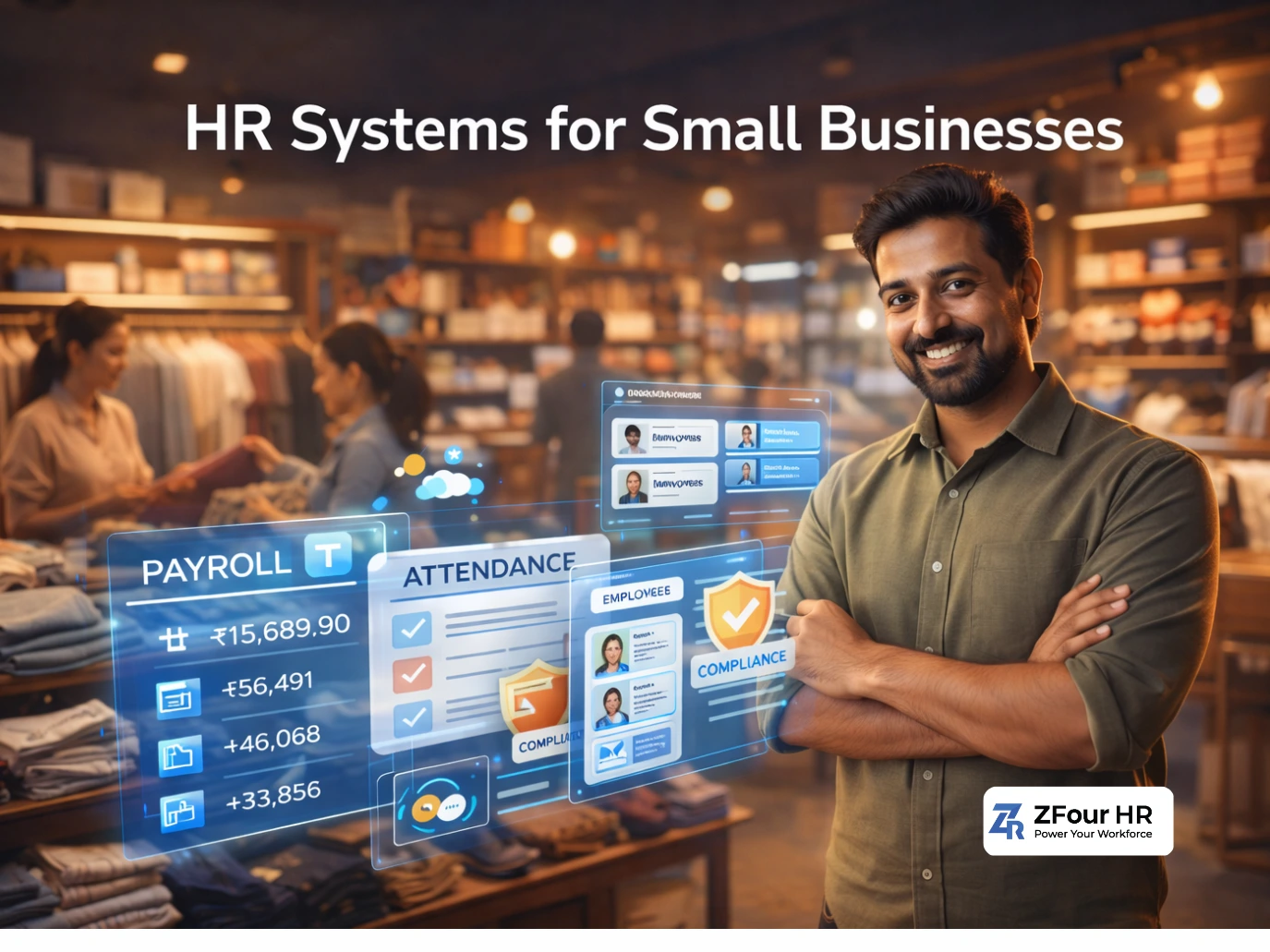
India’s Best HR Systems for Small Businesses
From HR Chaos to Business Clarity
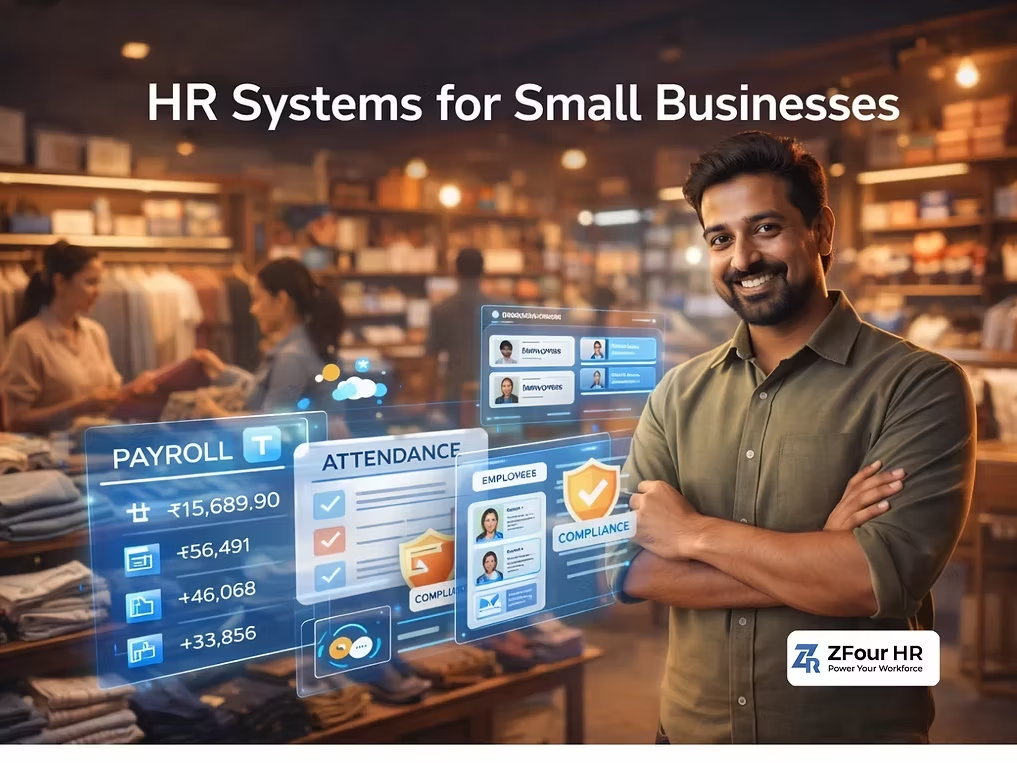
HR systems for small businesses are software solutions that automate payroll, attendance, employee data, and compliance in one platform. They reduce manual work, improve accuracy, and help businesses manage employees efficiently while supporting growth.
Most small businesses don’t fail because of lack of customers—they struggle because of internal chaos.
Manual payroll, scattered employee data, and attendance tracked in spreadsheets create inefficiencies that grow with your business.
What starts small quickly becomes a serious operational problem.
This is why HR systems for small businesses in India are no longer optional—they are essential for smooth operations, employee satisfaction, and long-term growth.
Why Small Businesses Struggle Without HR Systems?
Most small businesses don’t fail because of a lack of customers.
They struggle because of internal chaos.
Employee data is scattered. Payroll is handled manually. Attendance is tracked in spreadsheets. HR teams are overloaded with repetitive tasks.
At first, this seems manageable.
But as the business grows, these small inefficiencies turn into major problems.
This is where HR systems for small businesses become essential.
Businesses often face salary errors due to manual processing, which can be solved by using a payroll management system for small businesses in India.
A structured HR system is no longer optional. It is the foundation of smooth operations, employee satisfaction, and business growth.
What are HR systems for small businesses?
HR systems for small businesses are software solutions that manage payroll, attendance, employee data, and compliance in one platform to improve efficiency and reduce manual work.
Why Small Businesses Need HR Systems in 2026
The workplace has changed significantly.
Employees expect:
- Timely salaries
- Transparent processes
- Organized systems
At the same time, businesses are growing faster and handling more data.
Without proper systems, this leads to:
- Errors in payroll
- Mismanaged attendance
- Compliance issues
- Employee dissatisfaction
Using HR systems for small businesses helps eliminate these problems.
Common Problems Without HR Systems
Many businesses don’t realize the impact of poor HR processes.
Key issues include:
- Salary delays and payroll errors
- Attendance disputes
- Lack of employee transparency
- Compliance risks
- Increased HR workload
These problems affect both employees and business performance.
HR Systems vs Manual HR Management
Feature | Manual HR | HR Systems |
Accuracy | Low | High |
Time Required | High | Low |
Error Risk | High | Minimal |
Compliance | Difficult | Automated |
Scalability | Limited | High |
Manual systems may work temporarily, but they are not sustainable for growing businesses.
Key Features of HR Systems
1. Payroll Management
Automates salary and tax calculations
2. Attendance Tracking
Real-time employee tracking
3. Employee Database
Secure centralized records
4. Compliance Management
Ensures legal adherence
5. Leave Management
Simplifies leave approvals
Benefits of HR Systems for Small Businesses
- ⏱ Saves Time (automation)
- 🎯 Improves Accuracy
- 🔍 Enhances Transparency
- ⚖️ Ensures Compliance
- 📊 Supports Business Growth
Hidden Cost of Not Using HR Systems
Without HR systems, businesses lose:
- Time due to manual processes
- Money due to payroll errors
- Compliance penalties
- Employee trust
- Productivity
👉 The cost of not using HR software is higher than investing in one.
Common Mistakes to Avoid
- Choosing based only on price
- Ignoring scalability
- Poor integration
- Lack of training
- Incomplete implementation
🇮🇳 HR Systems & Compliance in India
Indian labor laws require accurate records.
Without HR systems:
- Risk of penalties
- Legal issues
- Operational disruptions
👉 HRMS software ensures compliance automatically.
Why HR Systems Fail in Some Businesses
Not all implementations succeed.
Common reasons:
- Lack of proper setup
- Partial automation
- Poor integration
- Resistance to change
A successful system requires proper planning and adoption.
Signs Your Business Needs an HR System
If your business is facing these issues, it is time to upgrade:
- Frequent payroll errors
- Employee complaints
- HR team overloaded
- Lack of transparency
- Compliance issues
These are clear indicators of system inefficiency.
Types of HR Systems:
1. HRMS (Human Resource Management System)
Comprehensive solution covering all HR functions.
2. Payroll Systems
Focused on salary processing.
3. Attendance Systems
Tracks employee attendance.
4. Cloud-Based HR Systems
Accessible from anywhere.
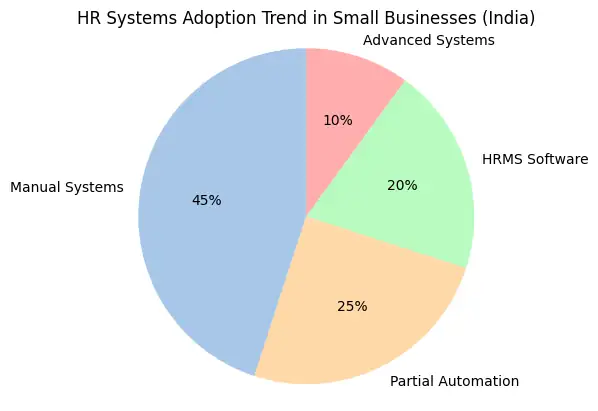
HR Systems Adoption Trend (India)
Insight:
Most small businesses are still using manual systems, creating an opportunity for improvement.
How HR Systems Improve Employee Experience
Employees today expect structured systems.
HR systems provide:
- Transparent salary details
- Easy leave management
- Accurate attendance records
- Better communication
This improves satisfaction and retention.
How HR Systems Help Business Growth
HR systems are not just operational tools.
They directly impact:
- Productivity
- Employee retention
- Decision-making
- Business scalability
Companies with better systems grow faster.
Case Example
A small business with 30 employees managed HR manually.
As the company grew:
- Payroll errors increased
- HR workload doubled
- Employees raised complaints
After implementing an HR system:
- Processes became faster
- Errors reduced
- Employee satisfaction improved
Best HR Systems for Small Businesses: What to Compare
Choosing the right HR system is not just about features. It’s about solving real business problems.
Here is a comparison table to help you understand what to look for:
Feature | Basic Tools | Advanced HR Systems |
Payroll Automation | Limited | Full automation |
Attendance Tracking | Manual | Real-time tracking |
Compliance Management | Manual | Automated |
Reporting | Basic | Advanced analytics |
Employee Access | Limited | Self-service portal |
Scalability | Low | High |
When evaluating HR systems for small businesses, focus on usability, integration, and scalability rather than just price.
A system that grows with your business will always provide better value.
Accurate tracking of employee working hours becomes easier with an employee attendance management system India, improving both payroll and productivity.
Step-by-Step Guide to Implementing HR Systems
Many businesses hesitate because they think implementation is complex.
In reality, it can be simple if done correctly.
Step 1: Identify Current Problems
Start by analyzing your current HR challenges such as payroll errors, attendance issues, or compliance gaps.
Step 2: Define Requirements
List the features your business needs, such as payroll automation, attendance tracking, or reporting.
Step 3: Choose the Right System
Select an HR system that fits your business size and growth plans.
Step 4: Data Migration
Transfer employee data from manual records or spreadsheets into the system.
Step 5: Train Your Team
Ensure HR staff and employees understand how to use the system.
Step 6: Monitor and Optimize
Track performance and make improvements over time.
A structured implementation ensures smooth adoption and better results.
Integration of HR Systems with Payroll and Attendance
HR systems work best when integrated.
Instead of using separate tools, integration ensures:
- Seamless data flow
- Accurate salary calculations
- Better reporting
For example:
Attendance data directly impacts payroll. If attendance is incorrect, salary calculations will also be wrong.
An integrated HR system eliminates this problem.
To manage all HR functions efficiently, businesses are now adopting HRMS software for small business India for better automation and control.
Quick Self-Check: Does Your Business Need an HR System
Ask yourself:
- Do you face frequent payroll errors?
- Is your HR team overloaded?
- Are employees complaining about transparency?
- Do you rely heavily on spreadsheets?
If the answer is yes to any of these, your business can benefit from an HR system.
What are HR systems for small businesses?
HR systems for small businesses are software solutions that manage payroll, attendance, employee data, and compliance in one platform. They automate HR processes, reduce manual work, and improve operational efficiency.
Why are HR systems important for small businesses?
HR systems for small businesses are important because they streamline HR operations, reduce errors, and ensure compliance. They help businesses manage employees efficiently and support long-term growth.
How do HR systems reduce manual work?
HR systems reduce manual work by automating tasks such as payroll processing, attendance tracking, and reporting. This minimizes human errors and allows HR teams to focus on strategic activities.