Payroll Management System for Small Business India (2026 Guide)
Why Payroll Is Becoming a Serious Business Risk?
For many small businesses in India, payroll is still treated as a basic administrative task.
Salaries are calculated manually, attendance is tracked in spreadsheets, and compliance is handled separately. Initially, this seems manageable.
But as the business grows, these small processes begin to fail.
Salary errors increase. Payments get delayed. Employees start questioning calculations. HR teams spend hours fixing issues instead of focusing on growth.
This is where most businesses realize that manual payroll is not sustainable.
A payroll management system for small businesses in India is no longer just a tool. It is a necessity for accuracy, compliance, and long-term growth.
What Is a Payroll Management System?
A payroll management system is software that automates employee salary processing, tax deductions, compliance, and reporting.
Instead of handling payroll manually, businesses can manage everything in one centralized system.
Core Functions:
Salary calculation
Tax deductions (TDS, PF, ESI)
Payslip generation
Attendance integration
Compliance tracking
This reduces human error and improves efficiency.
Why Do Small Businesses in India Need Payroll Software?
Many small business owners believe payroll software is only for large companies.
This is one of the biggest misconceptions.
In reality, small businesses face more risk because they rely heavily on manual systems.
Common Challenges:
Frequent salary errors
Delayed payroll processing
Incorrect tax calculations
Lack of compliance tracking
Increased HR workload
As team size increases, these problems multiply.
Key Benefits of Payroll Management Systems for Small Businesses in India
1. Accuracy in Salary Processing
Automated calculations eliminate human errors and ensure correct salary payments.
2. Time Efficiency
Payroll that takes hours manually can be completed within minutes.
3. Compliance Management
The system automatically updates tax rules and ensures legal compliance.
4. Employee Transparency
Employees can access payslips and salary breakdowns anytime.
5. Scalability
The system grows with your business without increasing workload.
Manual Payroll vs Payroll Software
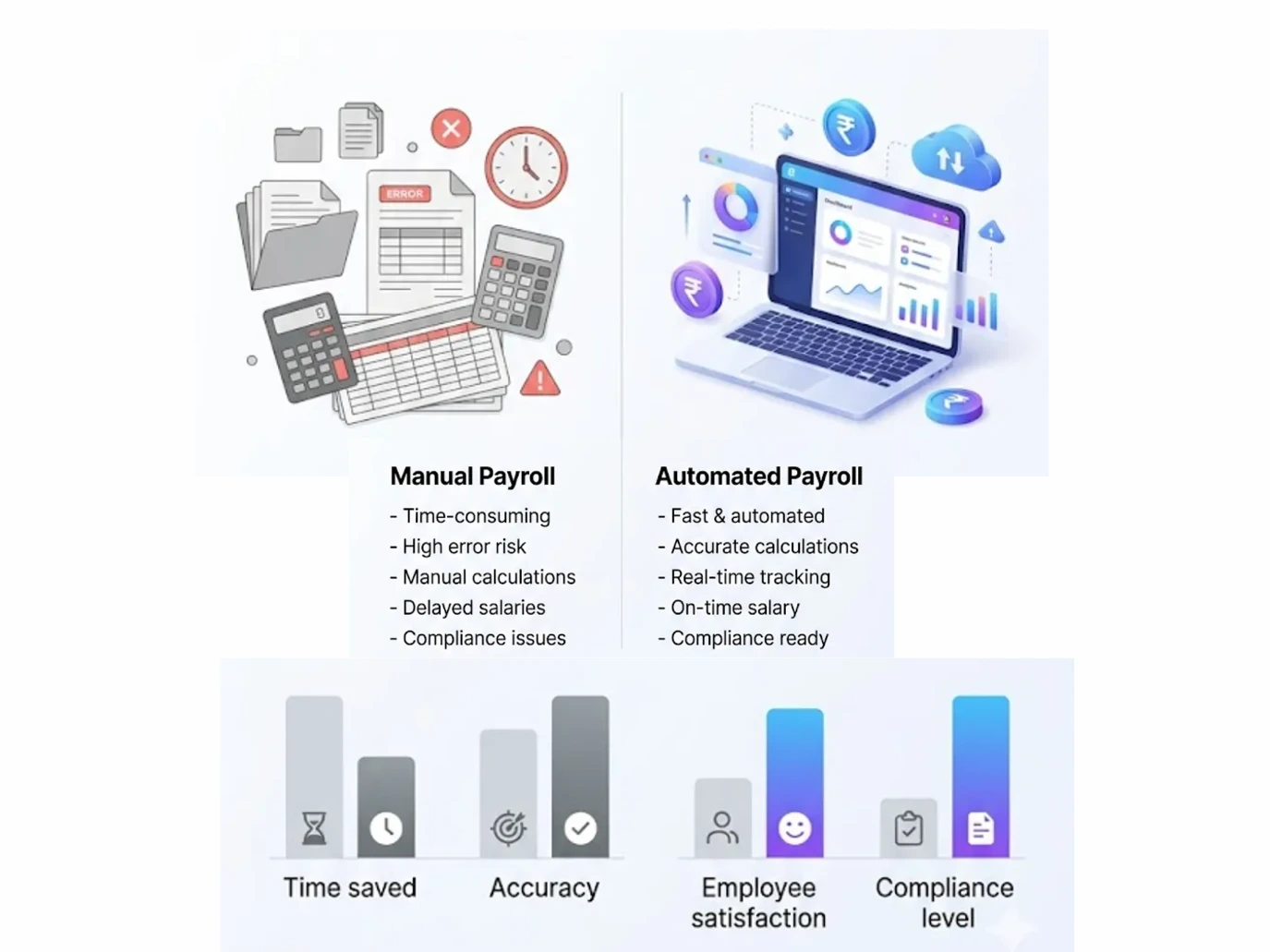
Feature | Manual Payroll | Payroll Software |
Accuracy | Low | High |
Time Required | High | Low |
Error Risk | High | Minimal |
Compliance | Difficult | Automated |
Scalability | Limited | High |
Manual systems may work temporarily, but they create long-term inefficiencies.
Payroll Error Distribution in Small Businesses (India)
Below is a simple representation of where most payroll errors occur:
Payroll Error Breakdown:
Salary Calculation Errors ████████████ 35%
Tax Deduction Mistakes ████████ 25%
Attendance Issues ██████ 20%
Overtime Mismanagement ████ 12%
Compliance Errors ███ 8%
Insight:
60% of payroll issues come from salary and tax errors
Most of these are caused by manual processing
How Payroll Software Solves These Problems
A payroll management system simplifies complex processes.
Key Solutions:
Automates salary calculations
Tracks attendance and overtime
Manages tax deductions
Generates reports instantly
This reduces workload and improves accuracy.
Signs Your Business Needs a Payroll System
If your business is experiencing any of the following, it is time to upgrade:
Payroll takes too much time
Frequent salary disputes
Errors in calculations
Difficulty managing compliance
HR team is overloaded
These are clear indicators of system inefficiency.
Best payroll automation system in India
: What to Look For
Choosing the right system is critical.
Essential Features:
Automated payroll processing
Tax compliance integration
Attendance tracking
Cloud-based access
Data security
Additional Features:
Mobile access
Real-time reporting
Integration with HRMS
A well-designed system simplifies operations and supports growth.
Why Payroll Systems Fail in Growing Businesses
Many businesses adopt tools but still face issues.
The reason is simple. The system is not aligned with business growth.
Common Causes:
Partial automation
Lack of integration
Poor implementation
A payroll system should be part of a larger HR ecosystem.
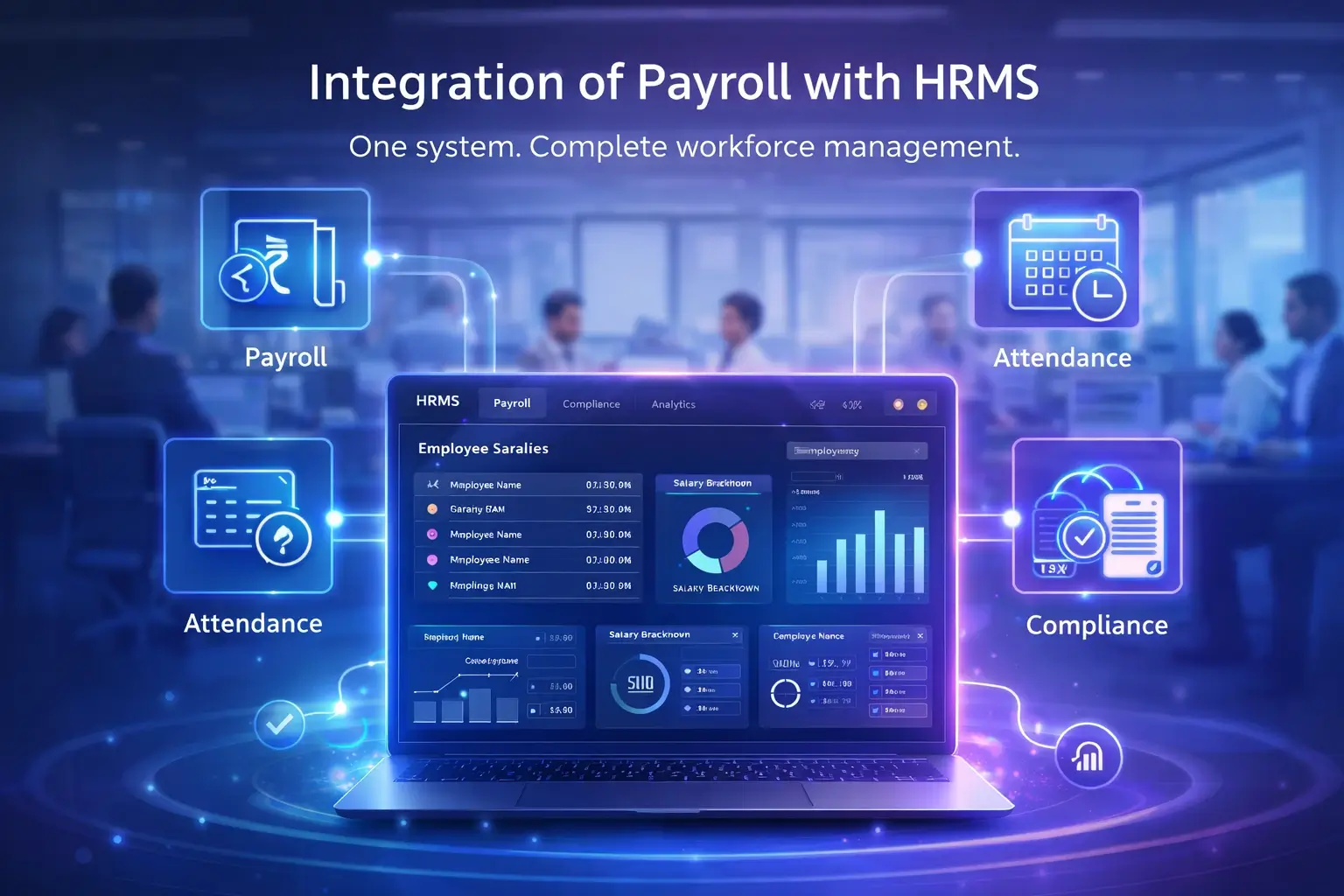
Integration of Payroll with HRMS
Payroll does not work independently.
It is connected with:
Attendance systems
Employee data
Compliance tracking
This is why businesses prefer integrated HRMS solutions.
Future of Payroll Management in India (2026–2030)
Payroll systems are evolving rapidly.
Key Trends:
Cloud-based payroll systems
AI-driven payroll analytics
Automated compliance updates
Real-time employee access
Businesses adopting these trends will operate more efficiently.
Cost of Not Using Payroll Software
Ignoring payroll automation can lead to:
Financial losses due to errors
Legal penalties from compliance issues
Employee dissatisfaction
Increased operational costs
Over time, these costs exceed the investment in payroll software.
Case Example: Real Business Scenario
A small company with 25 employees managed payroll manually.
Initially, everything worked fine.
As the company grew:
Payroll errors increased
Employees raised complaints
HR workload doubled
Within months, employee satisfaction dropped.
After implementing a payroll system:
Errors reduced significantly
Payroll time decreased
Employee trust improved
This shows how small changes can create major impact.
Free Payroll System Check for Your Business
Many businesses are unaware of gaps in their payroll process.
A quick evaluation can help identify issues in:
Salary calculations
Compliance handling
Attendance tracking
If your business is still managing payroll manually, it may already be affecting your growth.
Explore how a payroll management system for small businesses in India can transform your operations.
Build a Strong Business with the Right Payroll System
Payroll is not just about paying employees.
It is a core business function that affects trust, compliance, and efficiency.
Businesses that adopt payroll systems early will:
Improve accuracy
Save time
Reduce risks
Scale efficiently
Those who continue with manual processes will face increasing challenges.