Employee Engagement Analytics & Retention Strategies in 2026
Employee engagement has changed dramatically over the last few years. In 2026, organizations are no longer asking whether engagement matters—they are asking how to measure it accurately and act on it early.
With rising attrition, burnout, and quiet quitting, employee engagement analytics has become a core business function rather than an HR activity.
Companies that rely only on annual surveys or manual feedback loops are struggling to keep pace with today’s workforce expectations.
This blog explains how modern engagement analytics works, why older models failed, and how data-driven retention strategies are reshaping employee experience.
Why Traditional Employee Engagement Surveys Are No Longer Enough
The Limits of Annual and Quarterly Surveys
Traditional employee engagement surveys were designed for stable work environments. In today’s fast-moving workplaces, they often arrive too late.
By the time survey data is reviewed:
- Employee motivation may already be low
- Burnout may already be present
- Attrition decisions may already be made
Engagement measured once or twice a year does not reflect real employee sentiment over time.
Engagement Trends Over Time
Metric | 2019 | 2022 | 2025 |
Average employee tenure | 4.5 yrs | 3.4 yrs | 2.8 yrs |
Employees actively disengaged | 18% | 27% | 34% |
Survey participation rate | High | Moderate | Declining |
These trends show why companies are shifting toward continuous employee feedback and engagement analytics instead of static surveys.
What Is Employee Engagement Analytics?
From Feedback to Ongoing Measurement
Employee engagement analytics uses behavioral, communication, and participation data to understand how employees feel on an ongoing basis, not just during surveys.
Instead of asking long questionnaires, organizations now analyze:
- Short feedback signals
- Participation patterns
- Workload trends
- Time-based changes in engagement
This allows leaders to respond before disengagement turns into attrition.
Key Engagement Metrics Used Today
Engagement Metric | What It Indicates |
Feedback frequency | Level of involvement |
Leave usage trends | Burnout risk |
Response tone | Emotional state |
Engagement consistency | Retention likelihood |
These metrics form the foundation of employee engagement tools used by modern HR teams.
Employee Burnout at Workplace: A Growing Risk
Why Is Burnout Increasing?
Employee burnout at the workplace has increased due to:
- Extended work hours
- Remote and hybrid fatigue
- Blurred work-life boundaries
- Constant performance pressure
Burnout is no longer limited to high-stress roles—it affects knowledge workers across industries.
Common Workplace Burnout Indicators
Indicator | Risk Level |
Long working hours | High |
Skipping planned leave | High |
Reduced communication | Medium |
Emotional detachment | High |
Burnout directly impacts engagement, productivity, and long-term retention.
How Retention Risk Becomes Predictive, Not Reactive?
In 2026, engagement analytics increasingly supports predictive retention models by identifying disengagement patterns weeks before they appear in surveys or exit data.
Traditional retention analysis looks backward. It relies on exit interviews, past survey results, and historical attrition reports to explain why employees have already left.
Predictive retention analytics works differently.
Instead of focusing on outcomes, it analyzes patterns that appear before disengagement becomes visible. By combining:
- Engagement trends over time
- Burnout indicators
- Attrition patterns
- Average employee tenure
Organizations can forecast which teams or roles are at higher risk of disengagement in the coming months.
This shift from reactive reporting to predictive workforce insights enables early, meaningful interventions—before productivity declines or resignation decisions are made.
In this model, retention is no longer managed after employees leave, but while they are still present, engaged, and contributing.
Employee Retention Strategies Backed by Data
Why Retention Needs Analytics
Employee retention strategies work best when they are preventive, not reactive. Data shows that replacing an employee costs significantly more than retaining one.
Cost of Employee Attrition (India – Mid-Level Role)
Cost Component | Estimated Impact |
Hiring & recruitment | ₹4–6 Lakhs |
Training & onboarding | ₹2–3 Lakhs |
Productivity loss | ₹3–5 Lakhs |
Knowledge loss | Long-term |
Even a small reduction in voluntary attrition can result in substantial savings for organizations.
How to Reduce Employee Attrition Using Engagement Analytics
Early Signals Matter More Than Exit Interviews
Exit interviews explain why someone left. Engagement analytics explains why someone is thinking of leaving.
Early indicators include:
- Declining participation
- Reduced emotional engagement
- Sudden changes in work behavior
Identifying these signals early allows managers to intervene meaningfully.
Attrition Prevention Indicators
Signal | Action Opportunity |
Engagement drop | Manager conversation |
Burnout pattern | Workload adjustment |
Communication decline | Team support |
This approach makes retention proactive instead of reactive.
Employee Experience Management in 2026
Engagement Is Central to Experience
Employee experience management is no longer about perks or office culture alone. It is about how employees feel during their everyday work.
Organizations focusing on engagement analytics improve:
- Trust
- Transparency
- Manager-employee relationships
- Overall retention
What Strong Employee Experience Looks Like?
Experience Factor | Outcome |
Continuous listening | Higher trust |
Fair feedback systems | Reduced bias |
Early burnout detection | Better well-being |
Quiet Quitting and Engagement Decline
Quiet Quitting Is an Engagement Issue
Quiet quitting is not disengagement overnight. It is the result of unnoticed engagement decline.
Employees often continue performing tasks while emotionally withdrawing — a pattern that analytics can detect early.
Early Engagement Decline Signs
- Neutral communication tone
- Minimal initiative
- Reduced collaboration
Addressing these signals early prevents long-term disengagement.
Why Employee Engagement Analytics Matters More Than Ever
Organizations that invest in engagement analytics are better equipped to:
- Understand workforce sentiment
- Prevent burnout
- Reduce employee attrition
- Improve long-term retention
Employee engagement analytics does not replace human leadership—it supports better decisions with better data.
A Real-World Example of Predictive Engagement in Practice
In practice, predictive employee engagement analytics is increasingly being embedded into HR platforms to help organizations move from reactive surveys to continuous listening.
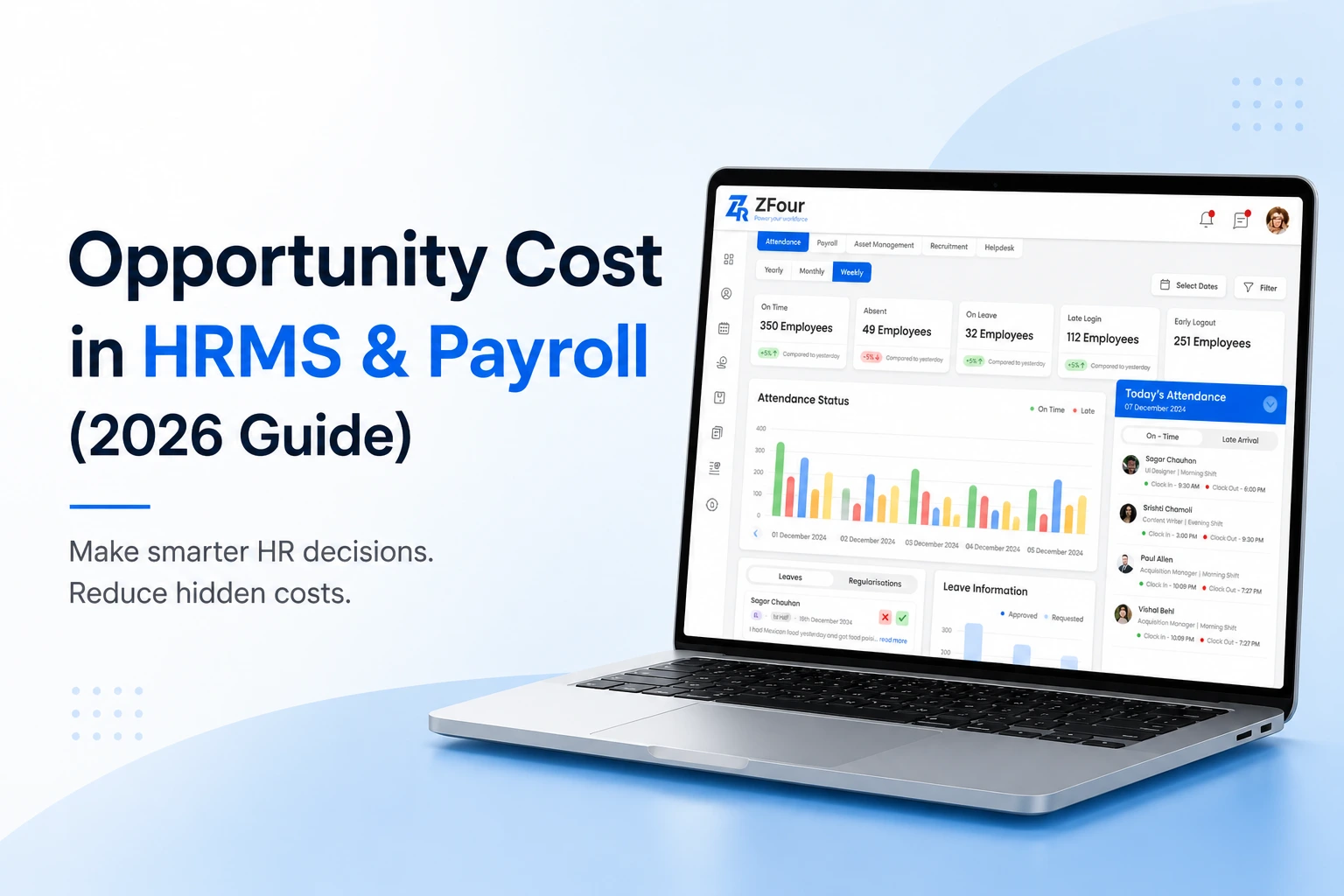
For example, platforms like ZFour HRMS apply engagement analytics to identify early signs of disengagement by observing participation trends, workload patterns, and leave behavior over time.
Rather than relying on annual surveys alone, this approach enables managers to spot engagement dips earlier and respond with timely, human interventions—such as one-on-one conversations or workload adjustments—before burnout or attrition occurs.
This illustrates how engagement analytics can shift retention efforts from reporting outcomes to preventing avoidable exits.
This helps organizations:
- Understand overall engagement trends across teams
- Identify early signs of burnout and disengagement
- Spot areas where retention risk may be increasing
- Prioritize where leadership attention is most needed
World Health Organization—Burnout as an occupational phenomenon (ICD-11)