Intel Data Leak Lesson: How ZFour Prevents Insider Risk
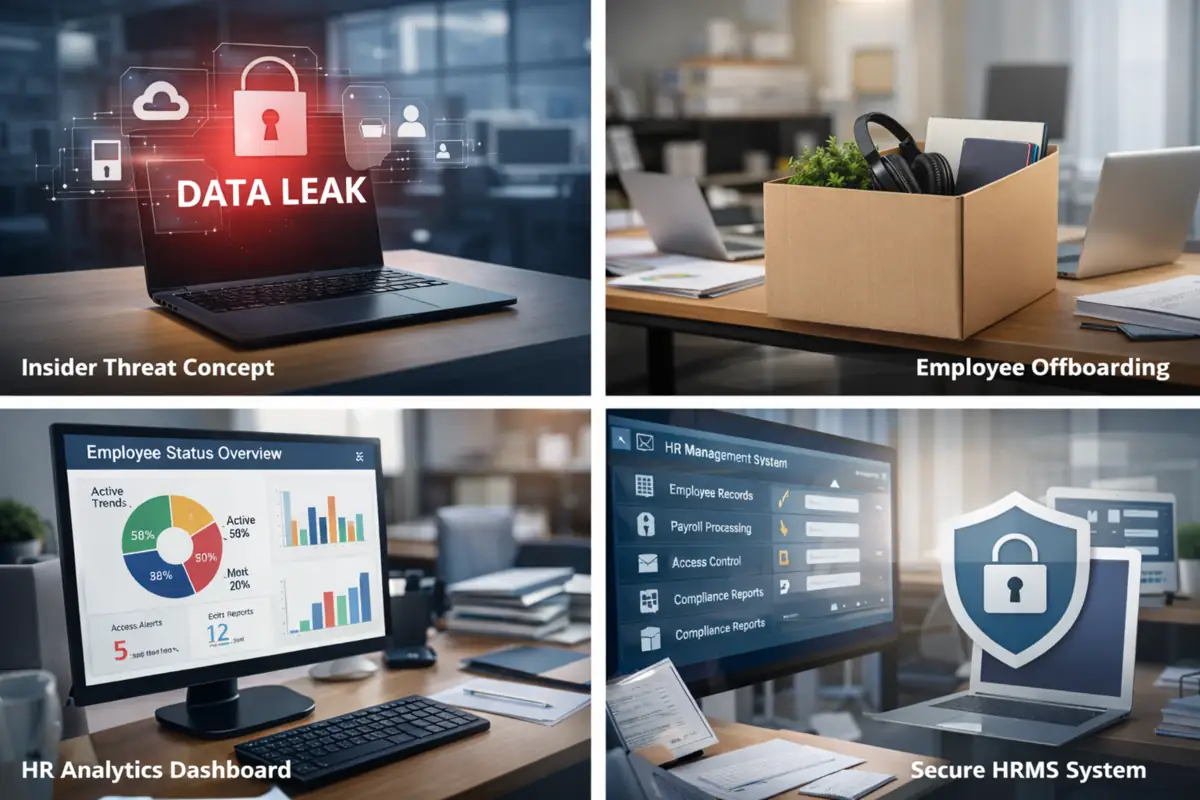
When Internal Risk Becomes the Biggest Threat
In recent global tech news, Intel reportedly faced a serious insider data breach where a former employee allegedly downloaded thousands of confidential company files before termination and disappeared with sensitive data.
While investigations and legal actions continue, one key lesson stands out clearly for businesses worldwide:
This incident highlights why employee lifecycle management, access control, and analytics-based HR monitoring are no longer optional — they are essential for data security and compliance.
Intel Data Leak Shows the Growing Insider Threat Risk
The Intel data leak highlights how insider threats can emerge during employee exits. When access control and employee lifecycle tracking are weak, confidential company data becomes vulnerable to misuse.
The Real Problem: What Usually Goes Wrong?
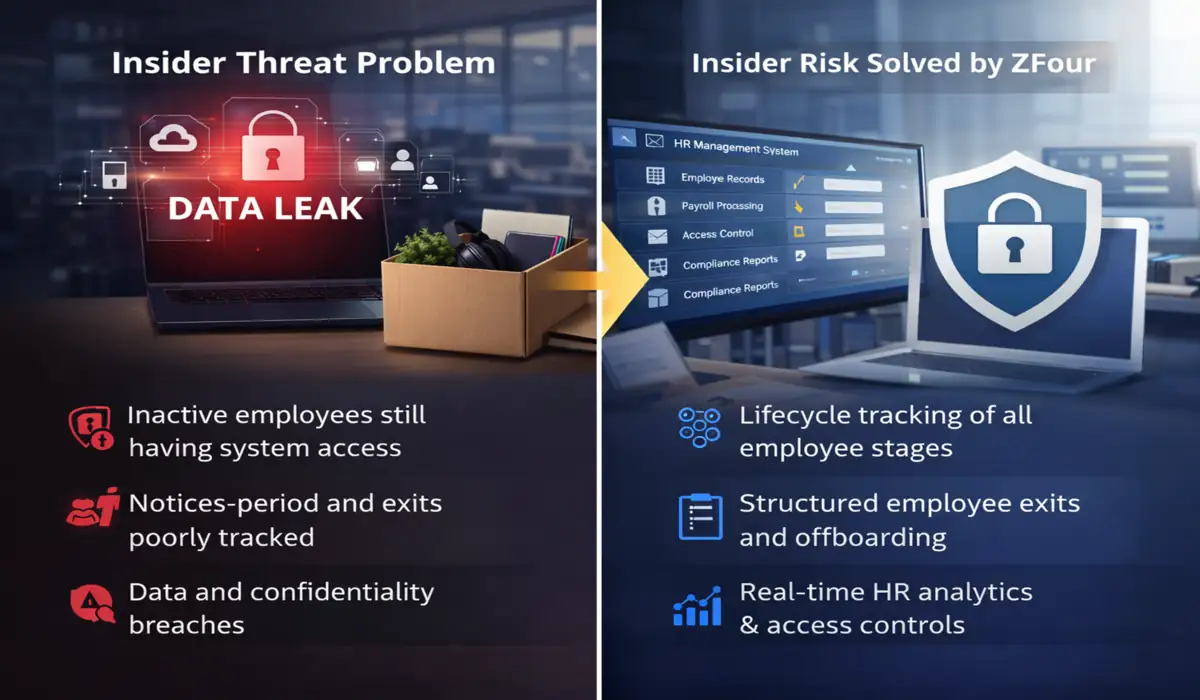
Most employee data breach and insider threat incidents occur due to gaps in basic HR and compliance processes, such as:
- Delayed or incomplete employee offboarding process
- No real-time visibility into employee status changes
- Poor access control after resignation or termination
- Lack of centralized HR data management
- Manual HR processes with no audit trail
When HR systems are disconnected from operations, insider security risk grows silently — often unnoticed until damage is done.
According to verified media reports, a former employee at a leading global semiconductor company allegedly downloaded around 18,000 confidential files before leaving the organization, highlighting the growing risk of insider threats during employee exits.
How ZFour HRMS Helps Reduce Insider Risk?
Insider Risk Area | How ZFour HRMS Helps | Business Impact |
Employee Lifecycle Tracking | Centralized tracking of joining, role changes, notice period, and exits | No inactive or exited employee remains active in the system |
Notice Period Monitoring | Separates active, notice-period, and exited employees in real time | Early visibility of high-risk employee stages |
Access Control Support | Ensures timely employee status updates linked to exits | Reduces unauthorized access after resignation or termination |
Structured Offboarding | Standardized exit process with documented workflows | Prevents data misuse during employee exits |
Payroll & Final Settlement | Accurate and timely final payroll processing | Eliminates delays that extend system access |
HR Analytics & Reports | Real-time dashboards for employee status and exits | Detects unusual patterns before risk escalates |
Audit-Ready Documentation | Maintains timestamped attendance, payroll, and exit records | Supports internal audits and legal investigations |
Compliance Management | Centralized HR records aligned with labour compliance needs | Reduces compliance gaps and operational risk |
ZFour HRMS reduces insider risk by combining employee lifecycle management, real-time HR analytics, and structured offboarding, helping businesses stay secure, compliant, and risk-aware.
1. Centralized Employee Lifecycle Tracking
ZFour HRMS acts as a single source of truth for:
- Employee onboarding status
- Role and designation changes
- Notice period tracking
- Exit initiation and completion
This ensures no ex-employee remains active in the HR system once the offboarding process begins — a critical factor in insider threat prevention.
2. Analytics-Driven Employee Status Monitoring
With real-time HR analytics, ZFour enables HR teams to:
- Track active vs inactive employees
- Monitor notice-period employees
- Generate exit, access, and compliance reports
- Detect unusual employee activity patterns early
Why it matters: Structured and visible employee data analytics reduce blind spots and strengthen organizational data security.
3. Structured Exit & Payroll Closure
ZFour HRMS ensures:
- Accurate final payroll processing
- Proper exit documentation
- Immediate employee status updates
- Secure storage of historical HR records
This structured approach minimizes reliance on manual follow-ups — one of the biggest risk factors in employee data theft cases.
4. Audit-Ready Reports for Compliance & Investigation
During audits, disputes, or legal reviews, ZFour HRMS provides instant access to:
- Attendance and shift history
- Employment and role timelines
- Payroll and statutory compliance records
- Exit and offboarding documentation
All records remain timestamped, traceable, and audit-ready, supporting HR compliance in India.
Why HR Analytics Matter More Than Ever in 2026?
Modern HR is no longer just about records — it’s about risk intelligence.
With the rise of:
- Remote work
- Hybrid work models
- Increased digital access to internal systems
Businesses need analytics-backed HRMS software that can detect irregularities before a data breach occurs, not after.
The Bigger Lesson for Businesses
The Intel incident is not about one company or one employee. It is a wake-up call for all organizations.
What Real HR Analytics Reveal?
The Intel data leak highlights how insider risks often escalate due to weak visibility during employee exits.
Analytics from HR and compliance studies show that most insider incidents occur during notice periods or terminations.
Insider Risk Analytics (Industry Data)
Risk Area | Without HR Analytics | With HR Analytics (HRMS) |
Employee offboarding visibility | Manual tracking, delayed updates | Real-time status updates |
Access risk during notice period | High | Significantly reduced |
Data misuse detection | After incident | Early-stage alerts |
Audit readiness | Low | High |
Compliance response time | Slow | Immediate |
Insight: Organizations using analytics-driven HRMS report 30–40% faster incident detection during employee exits (industry HR compliance benchmarks).
Final Thoughts: Prevention Is Always Cheaper Than Recovery
ZFour HRMS does more than simplify HR and payroll management. It helps organizations remain compliant, secure, and risk-aware.
In an era where insider data risks are increasing, HR analytics and structured employee management can be the difference between control and chaos.
Smart HR. Secure Processes. Data You Can Trust. ZFour HRMS
Protect your business from insider risks before they become costly.
Book a free ZFour HRMS demo today and see how real-time HR analytics, structured offboarding, and compliance-ready reports keep your organization secure.