7 min read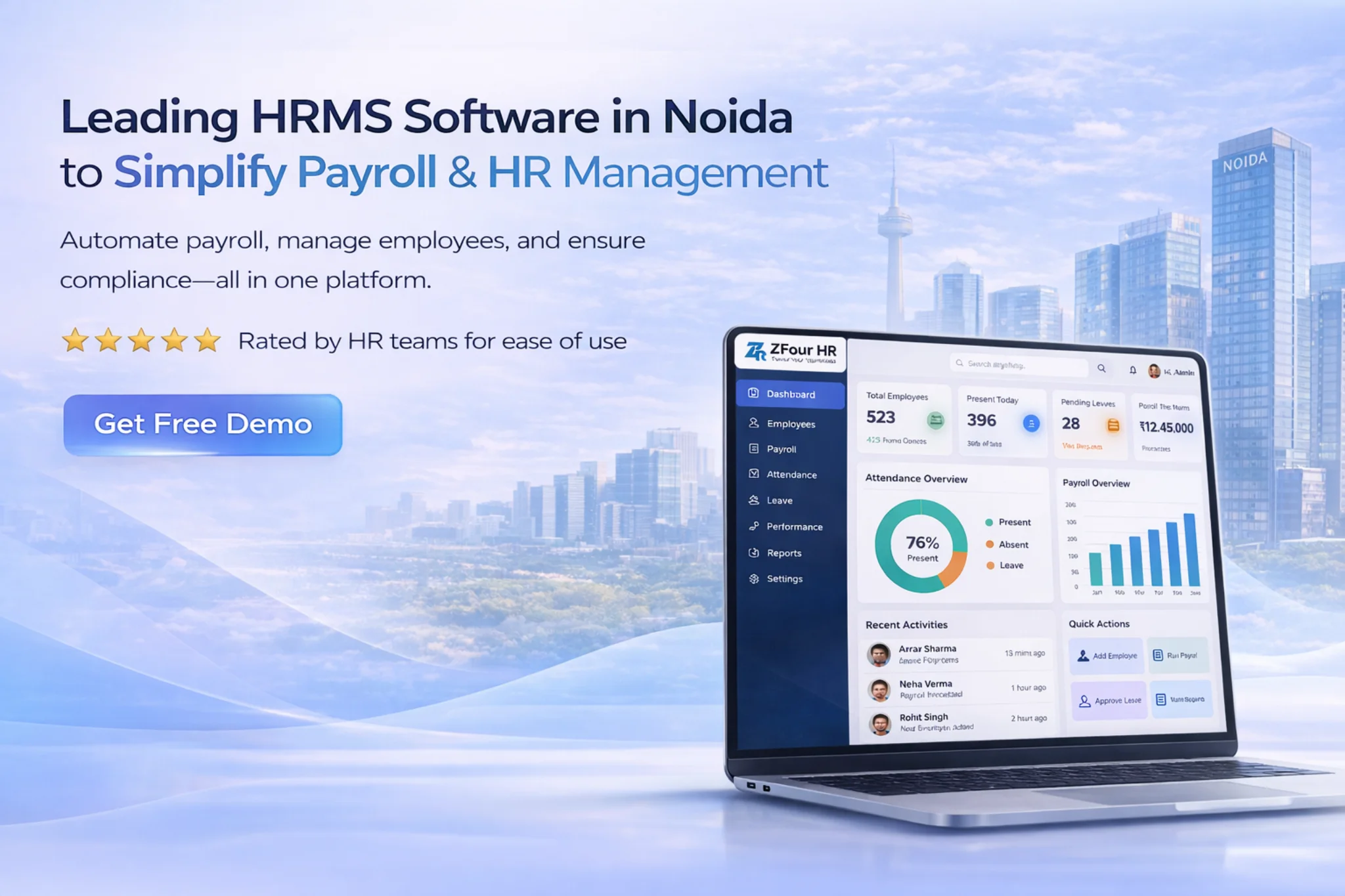
HRMS software in Noida is a digital system that helps businesses manage payroll, attendance, and employee data while ensuring compliance with local regulations.
As Noida continues to grow as a hub for IT companies, startups, and SMEs, managing HR operations manually has become inefficient and error-prone. Mistakes in payroll, attendance, and compliance can lead to financial losses and legal issues.
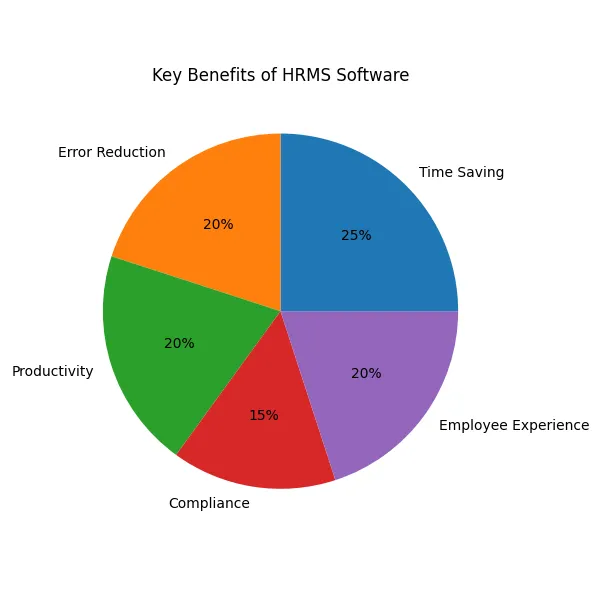
HRMS software solves these challenges by automating HR processes, improving accuracy, and streamlining daily operations. It helps businesses save time, reduce errors, and manage employees more effectively.
In this guide, you will learn about HRMS software in Noida, including its features, benefits, pricing, use cases, and how to choose the best solution for your business — including what makes Noida's HR and compliance needs different from other cities.
Why Noida Businesses Need Locally-Aware HRMS Software
Noida isn't a single kind of workplace — it's an IT corridor, an industrial belt, and a growing SME hub all at once, and each needs something different from HRMS software.
Sector 62, 63, 125, and 142 host hundreds of IT and outsourcing companies running hybrid and flexible-shift teams, where the priority is employee self-service, remote attendance, and performance tracking. Greater Noida and Phase II are home to manufacturing and industrial units, where shift-based attendance, the Factories Act, and Provident Fund compliance for large blue-collar workforces matter more.
Both fall under the Uttar Pradesh Shops and Commercial Establishments Act, which governs working hours, leave entitlements, and record-keeping — separately from the national PF and ESI frameworks administered by EPFO and ESIC. Generic HRMS setups that aren't configured for UP-specific rules can create compliance gaps that only surface during an audit. HRMS platforms built specifically for the Noida business ecosystem account for this from the start rather than requiring manual workarounds later.
Compliance Management with HRMS
Compliance is one of the biggest challenges for businesses. HRMS software helps companies follow labour laws and avoid penalties.
Key Compliance Areas:
Provident Fund (PF) management, aligned with EPFO requirements
Employee State Insurance (ESI), aligned with ESIC requirements
Minimum wage compliance, including UP-specific minimum wage updates that revise periodically
Salary structure regulations under the Uttar Pradesh Shops and Commercial Establishments Act
Tax deductions (TDS), aligned with Income Tax Department rules
Factories Act requirements for manufacturing units in Greater Noida and Phase II
HRMS software automates these processes and ensures accuracy.
This is especially important for businesses operating in Delhi-NCR, where compliance rules frequently change — and where a Noida-registered business may face different specific requirements than one registered in Delhi or Gurgaon, even within the same metro region.
Real-Life Use Case of HRMS
The following is an illustrative scenario based on common outcomes reported by small businesses adopting HRMS software — not a specific named customer case study.
This system helps organizations reduce errors, save time, and improve efficiency in daily HR operations.
For example, a Noida-based company with 50 employees could face challenges with payroll errors and manual attendance tracking. After implementing HRMS software, a business in this situation would typically automate its HR processes, reduce errors, and save meaningful time on tasks that previously required manual double-checking each pay cycle.
If you'd like to reference a real, named customer outcome instead, see testimonials — replacing this illustrative example with a verifiable one would strengthen this section further.
What is the Cost of HRMS Software in Noida?
HRMS pricing varies depending on organization size, required modules, implementation scope, support level, and vendor pricing model. Many providers use a per-employee-per-month subscription model, while enterprise deployments are often quoted based on specific business requirements rather than a flat per-head rate.
Because pricing structures and market rates shift over time, the most reliable way to budget is to request current quotes directly from two or three vendors for your actual employee count and required modules, rather than relying on a general published range.
Pricing varies based on business requirements, customization, and the type of HRMS solution selected.
Common pricing models include:
Per Employee Pricing: Charged monthly based on number of employees
Subscription Plans: Fixed monthly or yearly packages
Custom Enterprise Pricing: Tailored solutions for large organizations
Factors affecting HRMS pricing:
Number of employees
Features included (payroll, attendance, analytics)
Level of customization
Customer support and integration
Businesses should choose HRMS software based on value, scalability, and long-term benefits rather than just price.
How to Choose the Best HRMS Software for Your Noida Business (Buying Checklist)
To choose the best HRMS software, businesses should focus on ease of use, features, pricing, scalability, and customer support — and, for Noida businesses specifically, whether the platform actually handles UP-specific compliance out of the box.
Question to Ask | Why It Matters |
|---|---|
Does it support UP Shops and Commercial Establishments Act rules? | Generic setups can miss state-specific working-hour and leave rules |
Does it handle both IT-style hybrid attendance and factory shift attendance? | Relevant if you operate across Noida's IT and industrial zones |
How is pricing structured as we scale past 50, 100, 200 employees? | Per-employee pricing can shift total cost significantly at scale |
What's the actual onboarding/data migration timeline? | Determines how fast you can realistically go live |
Is support ticket-based or dedicated? | Matters most in your first few payroll cycles |
Is the vendor independently certified (ISO, SOC, etc.)? | A reasonable proxy for how seriously they treat data security |
An organization should choose HRMS software that offers the right balance of features, affordability, ease of use, and — for a Noida business — genuine local compliance support.
Expert Tip: Before requesting product demonstrations, document your current HR workflows including payroll, leave approvals, attendance tracking, and onboarding. Comparing software against your real business processes gives a far more accurate evaluation than reviewing feature lists alone, since two platforms can list the same feature and handle it very differently in practice.
Security and Data Privacy Considerations
HRMS platforms store sensitive information salary details, bank account numbers, PAN and identity data, sometimes health records which makes security a core evaluation criterion, not an afterthought. Before choosing a platform, it's worth understanding how each vendor handles:
Role-based access control: employees should see only their own data; managers should see only their team's data.
Data encryption: both in transit and at rest, for salary, banking, and identity information.
Audit logs: a record of who accessed or edited sensitive data, and when.
Secure backups: regular, tested backups that protect against data loss, not just data theft.
Access permissions: clearly defined admin roles, so not every HR user has unrestricted system-wide access.
Vendor certifications: independent certifications like ISO 27001 or SOC 2 are a reasonable proxy for how seriously a vendor treats security, though it's worth asking what the certification actually covers.
Data hosting: where data is physically stored, and how that aligns with India's Digital Personal Data Protection (DPDP) Act, 2023.
A vendor that can answer these questions clearly and specifically — rather than with generic reassurance — is usually a safer long-term choice, regardless of how polished the interface looks in a demo.
Which HRMS Is Right for Your Business?
If your organization needs... | Consider evaluating... |
|---|---|
Payroll + attendance automation | HRMS with integrated payroll and attendance in one module |
A multi-location workforce | Cloud HRMS with centralized, cross-location reporting |
Manufacturing shift management | HRMS with shift scheduling and Factories Act compliance support |
Hybrid or remote teams | HRMS with mobile self-service and remote/geofenced attendance |
Rapid business growth | A scalable HRMS with workflow automation that won't need replacing in a year |
This isn't about ranking one platform above another — it's a starting point for narrowing your shortlist based on what your business actually needs, before you get into vendor-specific comparisons.
Why Choose ZFour HRMS?
ZFour HRMS is a reliable solution for businesses looking to automate HR processes, manage payroll efficiently, and ensure compliance with ease.
Designed for startups, SMEs, and enterprises, ZFour HRMS simplifies HR operations and improves overall productivity.
Before deciding on any single platform, organizations should compare multiple HRMS options based on their specific business requirements, implementation approach, compliance needs, integration capabilities, and long-term scalability. With that in mind, here's where ZFour specifically stands out:
Key benefits of ZFour HRMS:
Easy-to-Use Interface: Simple and user-friendly for quick adoption
Affordable Pricing: Cost-effective solution for growing businesses
All-in-One HR Platform: Manages payroll, attendance, and employee data in one system
Quick Implementation: Easy setup with minimal technical effort
Reliable Customer Support: Dedicated assistance for smooth operations
Noida-Specific Compliance: Configured for UP Shops and Commercial Establishments Act and Factories Act requirements
ZFour HRMS is ISO and SOC certified, and independent customer testimonials are available if you'd like to hear directly from other businesses before deciding. ZFour HRMS is ideal for firms that want to reduce manual work and scale efficiently.
Choosing the Right HRMS for Your Business
Selecting the best HRMS software is not just about comparing features or pricing. The right solution should align with your organization's workforce size, HR processes, compliance requirements, integration needs, and future growth plans. Taking the time to evaluate implementation support, security, scalability, and user experience can help you make a more informed long-term investment.
If you're evaluating HRMS software for your business in Noida or across Delhi-NCR, create a shortlist of suitable platforms, request live product demonstrations, and involve HR, payroll, finance, and IT stakeholders before making your final decision.
If you'd like to explore how ZFour HRMS supports payroll management, attendance tracking, employee self-service, leave management, statutory compliance, and workforce automation through a unified cloud platform, schedule a personalized product demonstration to see how it aligns with your organization's requirements.

Farheen Ahmed
HR Tech Content Strategist at ZFour Technology Private Limited
Research-driven content on HRMS, payroll, attendance management, employee management, and modern HR technology for Indian businesses.