18 min read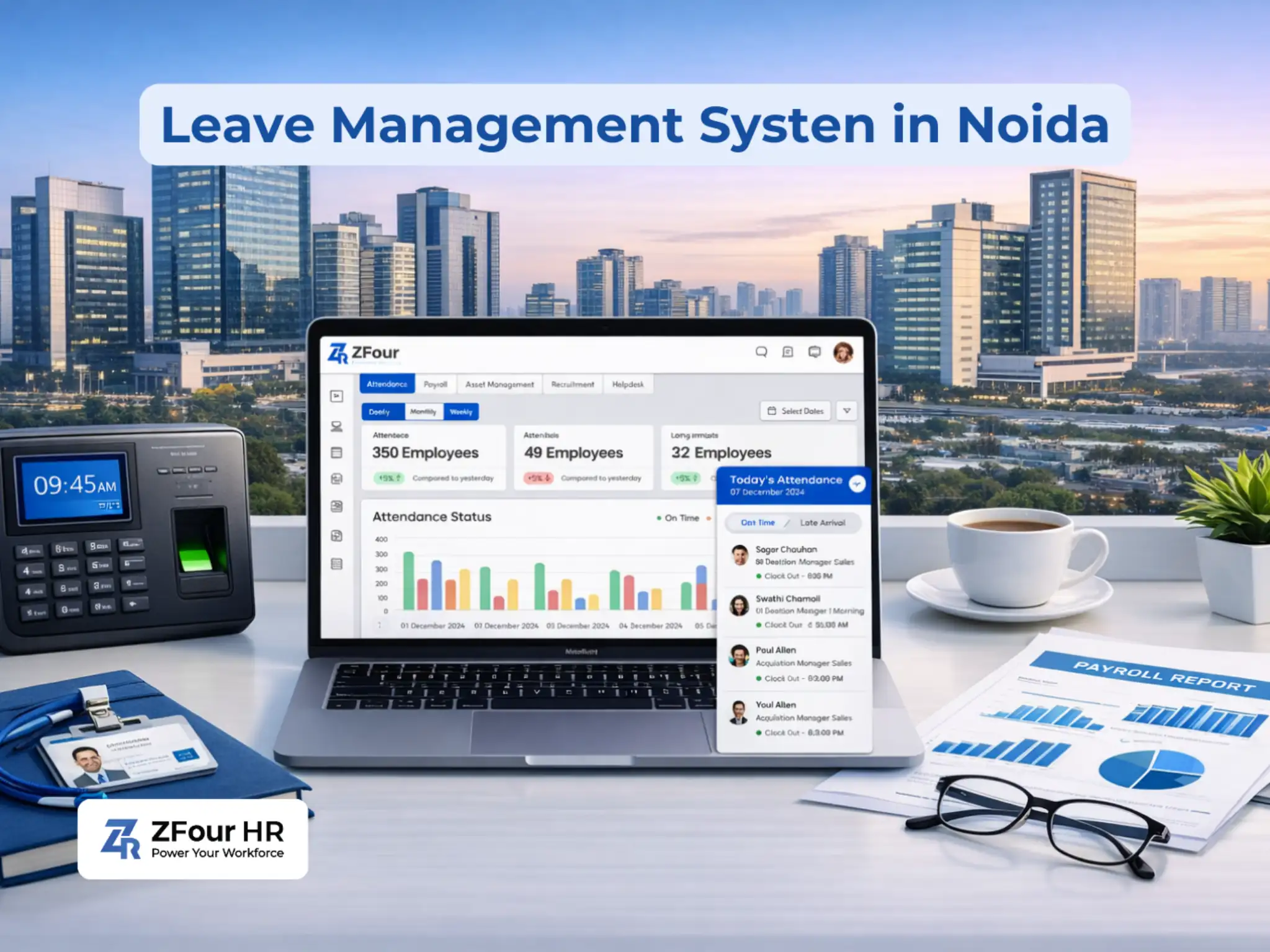
Managing employee leave manually becomes increasingly difficult as a business grows. Tracking leave requests through Excel sheets, emails, WhatsApp messages, or paper registers often leads to approval delays, payroll errors, inaccurate leave balances, and additional administrative work for HR teams. For businesses in Noida, where industries such as IT, manufacturing, startups, BPOs, healthcare, and retail are expanding rapidly, an efficient leave management process is essential.
A Leave Management System helps organizations automate the entire leave lifecycle—from submitting leave requests and manager approvals to attendance updates, leave balance tracking, and payroll integration. Instead of relying on manual processes, businesses can manage employee leave through a centralized platform that improves accuracy, transparency, and compliance.
Modern leave management software also provides employees with self-service access to apply for leave, check approval status, and view available leave balances from a desktop or mobile device. HR teams benefit from automated workflows, real-time reporting, and reduced administrative effort, while managers gain better visibility into team availability for workforce planning.
In this guide, you'll learn how a leave management system works, why businesses in Noida are adopting automated leave management, its essential features, benefits for employees and HR teams, implementation considerations, and how it can simplify workforce management and support business growth.
What Is a Leave Management System?
A Leave Management System is a software solution that helps businesses manage employee leave requests, approvals, leave balances, holiday calendars, and attendance records from a single platform. Instead of relying on spreadsheets, emails, or paper-based processes, organizations can automate leave management to improve accuracy, reduce administrative work, and maintain consistent HR records.
Feature | Availability |
|---|---|
Cloud-Based | ✅ Yes |
Mobile App | ✅ Yes |
Payroll Integration | ✅ Yes |
✅ Yes | |
ESS Portal | ✅ Yes |
Multi-Level Approval | ✅ Yes |
Reports & Analytics | ✅ Yes |
Custom Leave Policies | ✅ Yes |
For businesses in Noida, where companies often manage growing teams across multiple departments or locations, a leave management system simplifies the entire leave process. Employees can apply for leave online, managers can review and approve requests in real time, and HR teams can track leave balances without manual calculations.
A modern leave management system is usually part of a comprehensive Human Resource Management System (HRMS). It integrates seamlessly with attendance tracking, payroll processing, employee self-service (ESS) portals, and reporting tools. This ensures that approved leave is automatically reflected in attendance records and payroll calculations, reducing errors and improving operational efficiency.
Key Functions of a Leave Management System
Online leave application and approval
Real-time leave balance tracking
Custom leave policy configuration
Holiday and company calendar management
Attendance and payroll integration
Multi-level approval workflows
Automated reports and analytics
Mobile access for employees and managers
Whether you're a startup, SME, or large enterprise, implementing a leave management system helps streamline HR operations, improve transparency, and provide employees with a better workplace experience.
Why Businesses in Noida Need Leave Management Software
Noida has become one of North India's fastest-growing business hubs, with thousands of IT companies, startups, manufacturing units, healthcare organizations, educational institutions, BPOs, and corporate offices. As businesses expand and teams grow, managing employee leave manually becomes increasingly difficult. Delayed approvals, inaccurate leave balances, payroll discrepancies, and compliance challenges can impact both productivity and employee satisfaction.
A leave management system helps businesses automate the entire leave process, eliminating the need for spreadsheets, paper records, or lengthy email chains. Employees can submit leave requests online, managers can approve them instantly, and HR teams can track leave records from a centralized dashboard.
Challenges Businesses Face Without Leave Management Software
Manual leave tracking through Excel or paper records
Delayed leave approvals and poor communication
Incorrect leave balance calculations
Payroll errors caused by inaccurate leave records
Difficulty managing multiple leave policies
Increased HR workload and administrative effort
Limited visibility into employee availability
Compliance and audit challenges
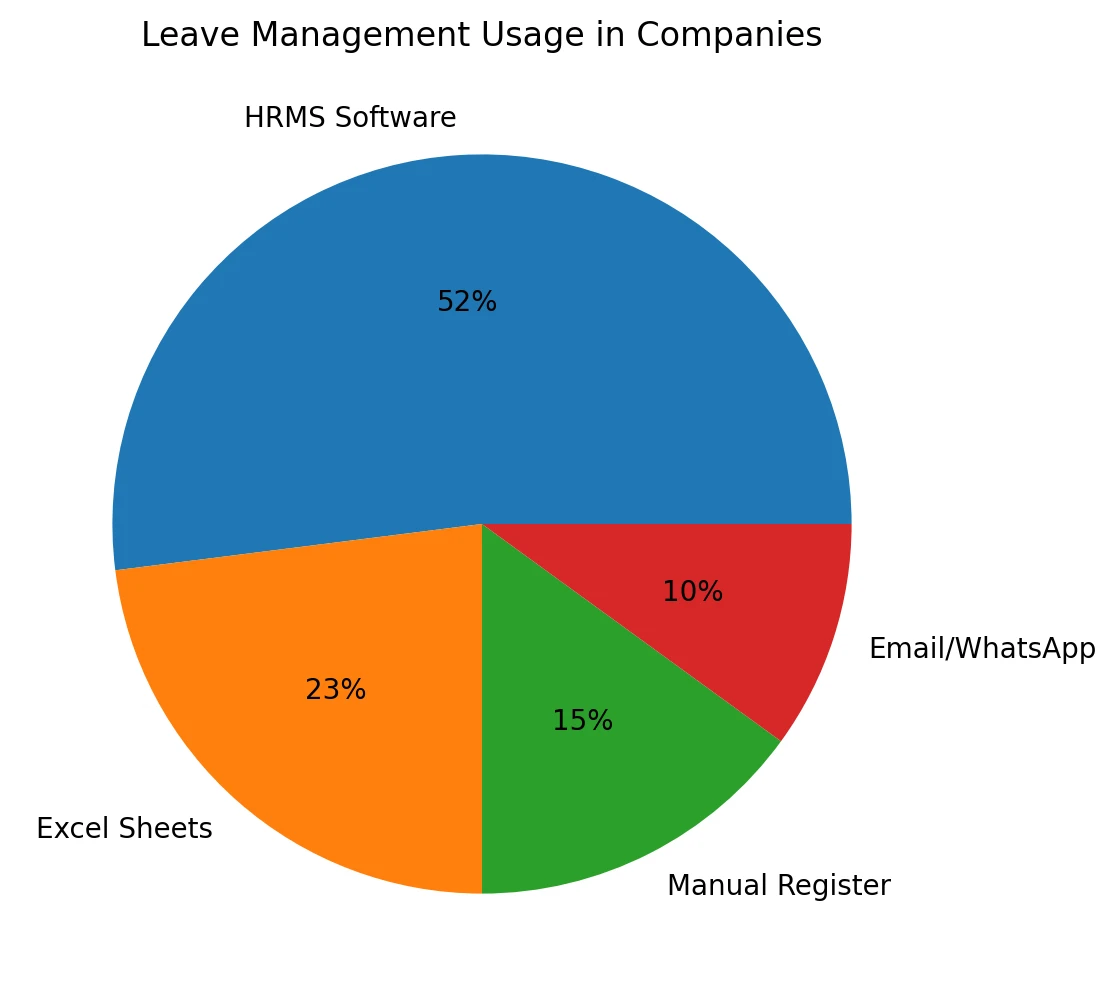
Most modern companies prefer HRMS software and leave management systems instead of manual methods.
To learn more about HR best practices, visit HR best practices.
Common Problems with Manual Leave Management
Many organizations still rely on spreadsheets, emails, paper forms, or messaging apps to manage employee leave. While these methods may work for very small teams, they become inefficient as the workforce grows. Manual leave tracking increases the risk of errors, slows down approval processes, and creates unnecessary administrative work for HR teams.
Without a centralized leave management system, businesses often struggle to maintain accurate records, resulting in payroll discrepancies, employee dissatisfaction, and compliance challenges.
Common Challenges of Manual Leave Management
1. Delayed Leave Approvals
When leave requests are shared through emails, WhatsApp, or paper forms, approvals can be delayed because managers may miss or overlook requests.
2. Incorrect Leave Balances
Updating leave balances manually increases the possibility of calculation errors, making it difficult for employees and HR teams to know the actual leave availability.
3. Payroll Errors
If approved leave is not accurately reflected in payroll, employees may receive incorrect salary deductions or payments, leading to disputes and additional HR effort.
4. Poor Record Management
Maintaining leave records across multiple spreadsheets or documents makes it difficult to retrieve historical data, generate reports, or prepare for audits.
5. Limited Visibility
Managers often lack a clear overview of employee availability, making it harder to plan workloads, approve overlapping leave requests, or allocate resources effectively.
6. Increased Administrative Work
HR professionals spend valuable time tracking leave requests, updating records, responding to employee queries, and preparing reports instead of focusing on strategic HR initiatives.
How Leave Management Software Solves These Problems
A modern leave management system centralizes the entire leave process in one platform. Employees can submit leave requests online, managers receive instant notifications for approvals, leave balances are updated automatically, and approved leave integrates with attendance and payroll systems. This improves accuracy, reduces manual work, and creates a transparent experience for employees, managers, and HR teams.
Key Features of a Leave Management System
A modern leave management system offers much more than leave tracking. It automates leave requests, approvals, attendance updates, payroll synchronization, and reporting through a centralized platform. The right solution helps HR teams reduce administrative work while giving employees and managers a seamless leave management experience.
1. Online Leave Application
Employees can submit leave requests anytime using a web portal or mobile application without visiting the HR department. The system records all leave requests digitally, reducing paperwork and improving response time.
Benefits
Apply for leave from anywhere
Faster request submission
No paper forms or emails
Complete digital leave history
2. Multi-Level Approval Workflow
Organizations often require leave approval from reporting managers, department heads, or HR teams. A configurable approval workflow automatically routes requests to the appropriate approvers, ensuring transparency and faster decision-making.
Benefits
Faster approvals
Clear approval hierarchy
Reduced communication delays
Complete approval history
3. Real-Time Leave Balance Tracking
Employees can instantly check their available casual leave, sick leave, earned leave, and other leave balances without contacting HR. The system updates balances automatically after every approved request.
Benefits
Accurate leave balances
Greater transparency
Fewer HR queries
Better leave planning
4. Custom Leave Policy Management
Every organization has unique leave policies. A leave management system allows HR teams to configure leave types, accrual rules, carry-forward policies, encashment rules, probation policies, and department-specific leave entitlements.
Benefits
Flexible leave policies
Supports different employee categories
Simplifies policy management
Ensures consistent implementation
5. Holiday Calendar Management
HR teams can maintain company holidays, regional holidays, and optional holidays in one centralized calendar. Employees can view upcoming holidays while planning their leave.
Benefits
Centralized holiday calendar
Better workforce planning
Reduced scheduling conflicts
6. Attendance Integration
Approved leave is automatically synchronized with attendance records, ensuring accurate attendance reports without manual updates.
Benefits
Accurate attendance records
Reduced manual work
Better workforce visibility
Improved reporting
7. Payroll Integration
The leave management system integrates with payroll software to ensure salary calculations reflect approved leave accurately. This minimizes payroll errors and reduces manual intervention during salary processing.
Benefits
Accurate payroll processing
Automatic leave deductions
Faster salary processing
Reduced payroll disputes
8. Reports and Analytics
HR teams can generate real-time reports on leave trends, department-wise leave utilization, absenteeism, leave balances, and workforce availability. These insights support better workforce planning and data-driven decision-making.
Benefits
Real-time dashboards
Custom reports
Better planning
Easy audit preparation
9. Mobile Accessibility
Employees and managers can access the leave management system from smartphones or tablets, allowing them to submit requests, approve leave, and monitor balances while working remotely or travelling.
Benefits
Access from anywhere
Faster approvals
Improved employee experience
Supports hybrid and remote work
10. Employee Self-Service (ESS)
A self-service portal enables employees to manage their leave independently. They can apply for leave, check approval status, view leave balances, and download leave history without contacting HR.
Benefits
Less dependency on HR
Better employee experience
Faster access to information
Reduced administrative workload
For guidance on leave policy best practices, refer to leave policy best practices.
Benefits of Leave Management Software
A leave management system benefits everyone in an organization, from employees and managers to HR teams and business leaders. By automating leave requests, approvals, attendance updates, and payroll integration, organizations can reduce administrative work, improve transparency, and create a more efficient workplace.
Benefits for Employees
Employees no longer need to rely on emails, paper forms, or repeated follow-ups to request leave. They can submit leave applications online, monitor approval status, and check their available leave balance anytime through a self-service portal or mobile application.
Key Benefits
Apply for leave anytime, anywhere
Real-time leave balance visibility
Faster approval process
Transparent leave records
Mobile access for remote and hybrid employees
Reduced dependency on HR teams
Employees gain greater confidence in the leave process because all requests, approvals, and balances are maintained accurately within the system.
Benefits for Managers
Managers receive leave requests instantly and can review team availability before approving applications. This helps prevent overlapping leave requests and ensures that business operations continue without disruption.
Key Benefits
Faster leave approvals
Better team availability planning
Improved workforce scheduling
Complete approval history
Real-time notifications
Better decision-making
Managers can make informed decisions without manually reviewing spreadsheets or coordinating through multiple communication channels.
Benefits for HR Teams
HR professionals often spend significant time managing leave records, answering employee queries, updating attendance, and correcting payroll errors. A leave management system automates these routine activities, allowing HR teams to focus on strategic initiatives such as employee engagement, talent development, and workforce planning.
Key Benefits
Reduced administrative workload
Automatic leave balance calculations
Accurate attendance records
Payroll integration
Faster report generation
Simplified compliance management
Easy audit preparation
Automation reduces manual errors while improving the overall efficiency of HR operations.
Benefits for Business Owners
Business owners and senior management gain better visibility into workforce availability, leave trends, and organizational productivity through centralized dashboards and real-time reports.
Key Benefits
Improved operational efficiency
Better workforce planning
Reduced payroll errors
Higher employee satisfaction
Data-driven decision-making
Scalable HR processes
A centralized leave management system supports business growth by creating consistent HR processes, improving compliance, and reducing operational risks.
How a Leave Management System Works
A leave management system automates the complete leave lifecycle, from submitting a leave request to updating payroll and attendance records. Instead of relying on manual approvals and spreadsheets, the software follows a structured workflow that improves accuracy, transparency, and efficiency.
Step 1: Employee Submits a Leave Request
Employees log in to the Employee Self-Service (ESS) portal or mobile application, select the leave type, choose the leave dates, add a reason if required, and submit the request.
Step 2: Manager Reviews the Request
The system automatically notifies the reporting manager. Before approving the request, the manager can review the employee's leave balance, team availability, and any overlapping leave requests.
Step 3: HR Verification (If Applicable)
Depending on the organization's leave policy, the request may also be routed to the HR department for verification. HR can ensure the request complies with company policies and applicable leave rules.
Step 4: Leave Balance Updates Automatically
Once the leave is approved, the employee's leave balance is updated automatically. There is no need for manual calculations or spreadsheet updates.
Step 5: Attendance Records Are Updated
The approved leave is synchronized with the attendance management system, ensuring attendance reports remain accurate and eliminating duplicate data entry.
Step 6: Payroll Is Processed Accurately
During payroll processing, approved leave records are automatically considered for salary calculations, helping HR teams avoid payroll errors and ensuring employees receive accurate salaries.
Step 7: Reports and Analytics Are Generated
HR teams can generate real-time reports on leave utilization, absenteeism, department-wise leave trends, and workforce availability. These reports support workforce planning, compliance, and business decision-making.
Leave Management Workflow
Employee Applies for Leave
          │
          ▼
Manager Reviews Request
          │
          ▼
HR Verification (Optional)
          │
          ▼
Leave Approved or Rejected
          │
          ▼
Leave Balance Updated
          │
          ▼
Attendance Updated
          │
          ▼
Payroll Processed
          │
          ▼
Reports & Analytics Generated
Why Businesses Choose Automated Leave Management
Organizations that implement leave management software experience measurable improvements in HR efficiency, employee experience, and operational accuracy. By replacing manual processes with automation, businesses can save time, minimize errors, and create a transparent leave management process that benefits every stakeholder..
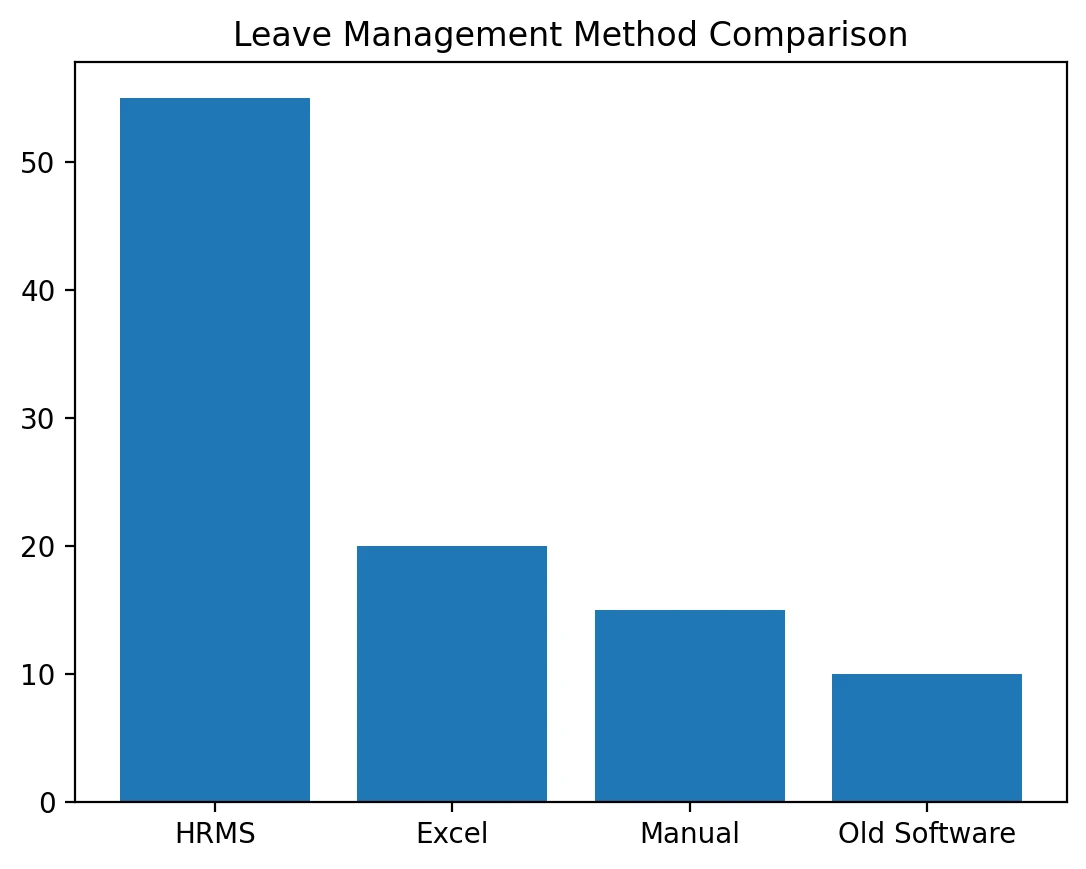
Manual Leave Management vs Automated Leave Management Software
As businesses grow, manual leave tracking becomes increasingly difficult to manage. Using spreadsheets, emails, or paper forms often results in delayed approvals, payroll errors, and inaccurate leave records. An automated leave management system streamlines the entire process, improves accuracy, and reduces administrative work.
Feature | Manual Leave Management | Automated Leave Management |
|---|---|---|
Leave Requests | Paper forms, emails, or WhatsApp | Online self-service portal |
Approval Process | Manual follow-ups | Automated approval workflow |
Leave Balance | Updated manually | Real-time automatic updates |
Attendance Integration | Manual updates | Automatic synchronization |
Payroll Integration | Separate calculations | Direct payroll integration |
Holiday Calendar | Managed manually | Built-in holiday calendar |
Reports | Time-consuming | One-click reports |
Employee Access | Depends on HR | 24/7 self-service access |
Accuracy | Higher risk of errors | Highly accurate |
Compliance | Difficult to maintain | Automated record keeping |
Scalability | Suitable for small teams only | Suitable for businesses of all sizes |
Why Automated Leave Management Is Better
Automated leave management software eliminates repetitive manual tasks and ensures every leave request follows a structured workflow. HR teams spend less time updating records, managers can approve requests faster, and employees enjoy a transparent leave process with real-time access to their leave balances and approval status.
As organizations continue to grow, adopting an automated leave management system improves operational efficiency, minimizes payroll errors, and supports better workforce planning.
Payroll and Attendance Integration
A modern leave management system delivers maximum value when it integrates seamlessly with payroll and attendance software. Instead of managing leave records, attendance, and salary calculations separately, businesses can automate these processes through a single HRMS platform.
When an employee's leave request is approved, the system automatically updates leave balances, attendance records, and payroll calculations. This eliminates duplicate data entry, reduces manual errors, and ensures HR teams always work with accurate employee information.
Benefits of Payroll Integration
Payroll integration ensures that approved leave is automatically considered during salary processing. This reduces calculation errors, minimizes payroll disputes, and saves HR teams significant time during monthly payroll cycles.
Key Benefits
Automatic leave deductions
Accurate salary calculations
Reduced payroll errors
Faster payroll processing
Improved compliance
Simplified payslip generation
Benefits of Attendance Integration
Attendance integration keeps employee attendance records synchronized with approved leave requests. HR teams no longer need to update attendance manually, while managers gain better visibility into employee availability.
Key Benefits
Automatic attendance updates
Real-time workforce visibility
Reduced manual data entry
Better shift planning
Accurate attendance reports
Simplified leave reconciliation
Why Integration Matters
When leave management, attendance, and payroll operate as separate systems, HR teams often spend valuable time reconciling records and correcting inconsistencies. An integrated HRMS eliminates these challenges by ensuring all employee data remains synchronized across modules.
This not only improves operational efficiency but also enhances employee trust through accurate leave balances, attendance records, and salary processing.
Why Choose a Cloud-Based Leave Management System?
Modern businesses need HR software that is accessible, secure, and easy to manage. Unlike traditional on-premise software, a cloud-based leave management system allows employees, managers, and HR teams to access leave information from anywhere using a desktop, laptop, or mobile device.
Whether employees are working from the office, remotely, or across multiple locations, a cloud-based solution ensures that leave requests, approvals, attendance records, and employee data remain synchronized in real time.
Benefits of a Cloud-Based Leave Management System
Access Anytime, Anywhere
Employees and managers can apply for leave, approve requests, and check leave balances from any location with an internet connection, making it ideal for hybrid and remote work environments.
Automatic Software Updates
Cloud-based solutions receive regular feature updates and security improvements automatically. Businesses always use the latest version without installing updates manually.
Secure Data Storage
Employee leave records are stored securely in the cloud with regular backups, reducing the risk of data loss caused by hardware failures or manual record keeping.
Easy Scalability
As a business grows, additional employees, departments, and office locations can be added without major infrastructure changes, making the system suitable for startups, SMEs, and large enterprises.
Multi-Location Workforce Management
Organizations with multiple branches can manage leave policies, approvals, and employee records through a centralized platform while maintaining consistency across all locations.
Reduced IT Maintenance
Since the software is hosted in the cloud, businesses don't need to maintain dedicated servers or perform complex software installations, reducing IT costs and administrative effort.
Who Can Use a Leave Management System?
A leave management system is designed for organizations of all sizes and industries. Whether you have a small team of 10 employees or a large enterprise with thousands of staff across multiple locations, an automated leave management system helps streamline leave requests, approvals, attendance tracking, and payroll integration.
Startups and Small Businesses
Startups and small businesses often operate with limited HR resources. Automating leave management helps reduce manual work, maintain accurate leave records, and improve employee experience without increasing administrative overhead.
Ideal For
Startups
Small offices
Retail stores
Clinics
Educational institutions
Small and Medium Enterprises (SMEs)
As businesses grow, managing leave manually becomes more challenging. A leave management system helps SMEs standardize leave policies, simplify approvals, and improve workforce planning.
Benefits for SMEs
Faster leave approvals
Centralized employee records
Attendance and payroll integration
Reduced HR workload
Better reporting and compliance
Large Enterprises
Organizations with multiple departments, locations, and approval levels require a scalable leave management solution. Advanced workflow automation, role-based access, and centralized reporting help maintain consistency across the organization.
Enterprise Features
Multi-branch management
Multi-level approval workflows
Department-wise leave policies
Role-based permissions
Enterprise reporting
Workforce analytics
Industries That Benefit from Leave Management Software
A leave management system is suitable for businesses across various industries, including:
Information Technology (IT)
Manufacturing
Healthcare
Retail
Education
Logistics
Hospitality
Banking and Financial Services
Business Process Outsourcing (BPO)
Professional Services
Regardless of the industry, automating leave management helps improve operational efficiency, reduce administrative effort, and ensure compliance with organizational policies.
Why Every Growing Business Needs Leave Management Software
As organizations expand, manual leave tracking becomes increasingly difficult to manage. A centralized leave management system ensures consistent policies, faster approvals, accurate leave records, and better workforce planning, making it an essential component of modern HR operations.
Compliance and Leave Policy Management
Managing employee leave is not only about approving leave requests it is also essential for maintaining compliance with company policies and labour regulations. A leave management system helps organizations create standardized leave policies, maintain accurate employee records, and generate reports required for audits and regulatory compliance.
Instead of maintaining multiple spreadsheets and paper records, businesses can centralize all leave-related information in one secure platform. This improves transparency, reduces compliance risks, and ensures leave policies are applied consistently across the organization.
Types of Leave That Can Be Managed
A modern leave management system supports multiple leave categories, allowing organizations to configure policies based on their business requirements.
Common leave types include:
Casual Leave (CL)
Sick Leave (SL)
Earned or Privilege Leave (EL/PL)
Maternity Leave
Paternity Leave
Compensatory Off (Comp-Off)
Loss of Pay (LOP)
Optional or Restricted Holidays
Work From Home (WFH) Requests (if applicable)
Leave Policy Configuration
Every organization has unique leave rules. A leave management system allows HR teams to configure policies such as:
Leave accrual rules
Carry-forward policies
Leave encashment
Probation leave eligibility
Half-day leave rules
Sandwich leave policy
Department-specific leave rules
Holiday calendars
This flexibility ensures that leave policies align with the organization's operational and HR requirements.
Compliance Benefits
Maintaining accurate leave records helps businesses improve compliance and simplify audits.
Key Benefits
Centralized employee leave records
Consistent policy implementation
Complete leave history
Accurate payroll calculations
Simplified audit preparation
Reduced compliance risks
Better reporting and documentation
Why Compliance Matters
Without a structured leave management process, organizations may face inconsistencies in leave approvals, payroll calculations, and employee records. A centralized leave management system reduces these risks by ensuring every leave request follows approved workflows and all leave data is stored securely for future reference.
For growing businesses, automated leave policy management supports transparency, improves HR governance, and helps maintain consistent workforce management practices.
Why Choose ZFour HRMS for Leave Management?
Choosing the right leave management software is about more than automating leave requests. Businesses need a solution that simplifies HR operations, integrates with existing workflows, and scales as the organization grows. ZFour HRMS combines leave management, attendance, payroll, and employee self-service into a single cloud-based platform, helping organizations improve efficiency while reducing manual work.
Whether you're managing a startup, a growing business, or a large enterprise, ZFour HRMS provides the flexibility to configure leave policies, automate approvals, and maintain accurate employee records from one centralized dashboard.
Key Advantages of ZFour HRMS
End-to-End Leave Automation
From leave application to final approval, ZFour HRMS automates every stage of the leave management process. Employees can submit requests online, managers can approve them instantly, and HR teams can monitor leave balances without manual intervention.
Integrated HRMS Platform
ZFour HRMS connects leave management with attendance tracking, payroll processing, employee records, and reporting. This eliminates duplicate data entry and improves the accuracy of HR operations.
Flexible Leave Policy Management
Organizations can create leave policies based on their business requirements, including different leave types, approval hierarchies, carry-forward rules, probation policies, and department-specific configurations.
Employee Self-Service (ESS)
Employees can apply for leave, check leave balances, view approval status, and access HR information through a user-friendly self-service portal, reducing dependency on HR teams.
Real-Time Reports and Insights
HR managers can access dashboards and reports that provide visibility into leave trends, absenteeism, employee availability, and department-wise leave utilization, supporting better workforce planning.
Secure Cloud-Based Access
With cloud deployment, employees and managers can access the system securely from anywhere, making it suitable for office-based, hybrid, and remote work environments.
Scalable for Growing Businesses
Whether your organization has 20 employees or thousands across multiple locations, ZFour HRMS is designed to scale with your business while maintaining consistent HR processes.
Why Businesses Trust ZFour HRMS
Organizations choose ZFour HRMS because it helps them:
Reduce manual HR tasks
Improve leave approval efficiency
Minimize payroll and attendance errors
Standardize leave policies
Enhance employee experience
Support business growth with scalable HR automation
By bringing leave management, attendance, payroll, and employee information together in one platform, ZFour HRMS enables businesses to build efficient, transparent, and future-ready HR operations.
Conclusion
Managing employee leave efficiently is essential for improving productivity, maintaining compliance, and delivering a better employee experience. As organizations grow, manual leave tracking through spreadsheets or paper records becomes difficult to manage, often leading to approval delays, payroll errors, and administrative inefficiencies.
A modern leave management system simplifies the entire process by automating leave requests, approval workflows, attendance synchronization, payroll integration, and reporting. This allows HR teams to reduce manual work, managers to make faster decisions, and employees to enjoy a transparent and convenient leave experience.
Whether you're a startup, SME, or large enterprise, investing in the right leave management software can help streamline HR operations, improve workforce planning, and support long-term business growth.
If you're looking for a cloud-based leave management solution that integrates seamlessly with attendance, payroll, and employee self-service, ZFour Leave Management System provides a scalable platform designed to simplify workforce management and help businesses operate more efficiently.
Ready to transform your leave management process?

Farheen Ahmed
HR Tech Content Strategist at ZFour Technology Private Limited
Research-driven content on HRMS, payroll, attendance management, employee management, and modern HR technology for Indian businesses.