5 min read
In today’s fast-paced business environment, HR teams are expected to manage growing employee needs while keeping administrative work efficient and accurate. Increasing compliance requirements, distributed teams, and the need for data-driven decision-making make manual HR processes difficult to manage at scale.
In practice, HRMS automation can show how much time routine HR workflows consume and how automation can reduce repetitive administrative work. In this blog, we’ll explore five HRMS automations that can help HR teams save time, reduce manual effort, and improve process efficiency.
What is HRMS automation?
HRMS automation uses software to automate repetitive HR processes such as attendance tracking, payroll calculations, leave management, employee document handling, and performance reviews. It reduces manual administration, improves process consistency, and gives HR teams better visibility into workforce operations.
1. Automated Attendance Management
Manual attendance tracking can result in errors, repeated follow-ups, and difficulties in monitoring employee attendance across locations. HRMS automation can simplify this process by connecting attendance systems with centralized dashboards.
With features such as biometric integration, mobile attendance, and location-based workflows, HR teams can reduce manual attendance administration and improve visibility.
Key Features:
Geo-fenced attendance through mobile devices
Biometric attendance integration
Real-time attendance dashboards
Automated alerts for late check-ins and early check-outs
Centralized attendance records
Benefits:
Reduces manual attendance follow-ups
Improves attendance accuracy
Provides better workforce visibility
Simplifies attendance monitoring for HR and managers
For businesses managing field or distributed employees, geo-fencing in HRMS can further support location-based attendance workflows.
2. Payroll Automation and Statutory Deductions
Payroll processing can become time-consuming when HR teams rely on spreadsheets for salary calculations, deductions, approvals, and payslip generation.
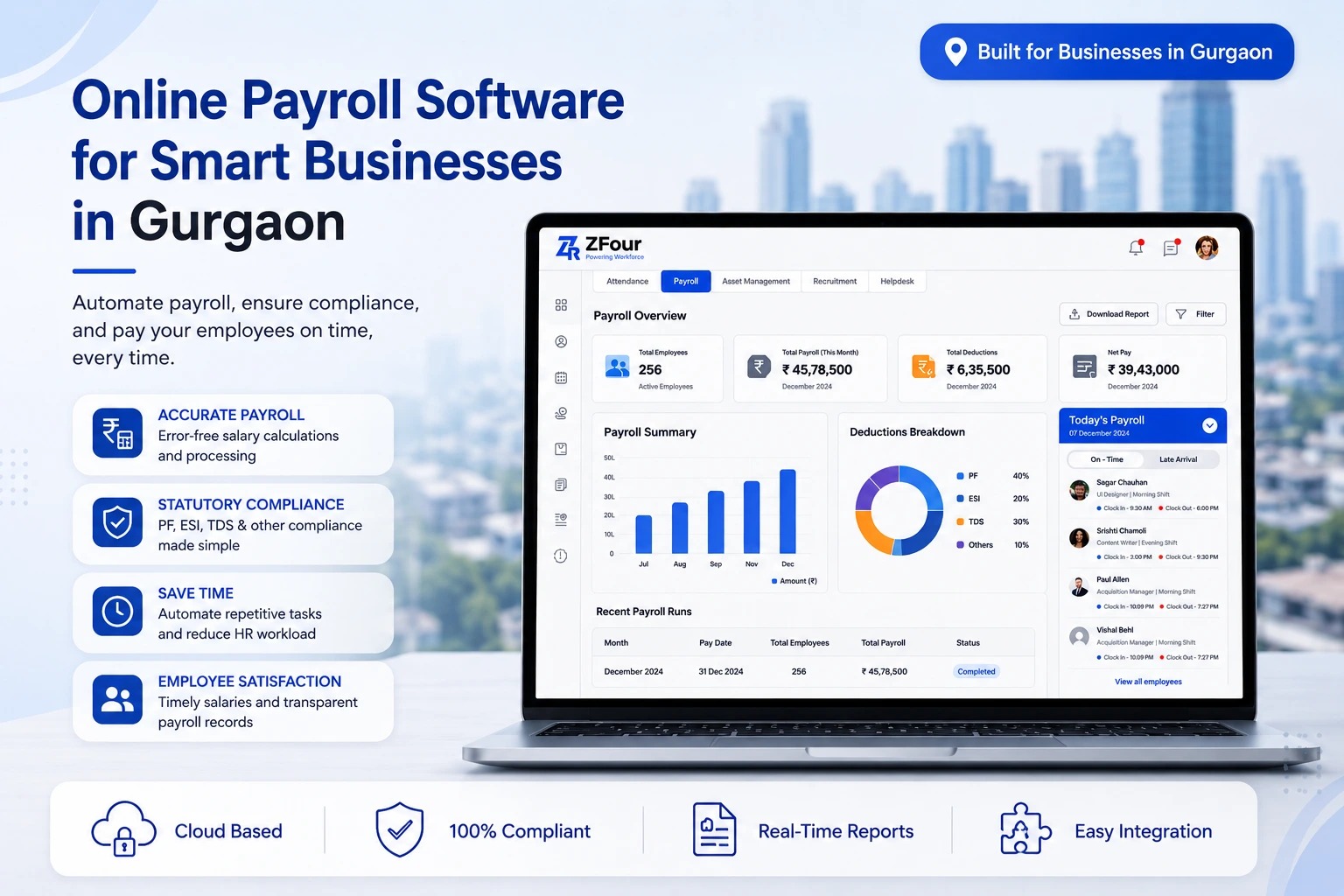
Payroll automation can streamline these repetitive activities by using employee salary structures and configured payroll rules to support consistent processing.
Key Features:
Automated salary calculations based on configured salary structures
PF, ESI, TDS, and Professional Tax calculations
Payroll approval workflows
Automated payslip generation
Bank transfer support
Benefits:
Reduces manual payroll calculations
Minimizes repetitive administrative work
Helps maintain consistent payroll workflows
Speeds up payroll processing and payslip generation
Businesses should always verify applicable statutory requirements and current regulations through relevant official government sources, such as the Employees' Provident Fund Organisation (EPFO).
3. Leave & Holiday Management
Tracking employee leave balances, reviewing requests, and maintaining holiday calendars manually can create unnecessary administrative work.
HRMS leave automation allows organizations to configure leave policies and approval workflows so that employees and managers can manage requests through a centralized system.
Key Features:
Automatic leave balance updates
Configurable leave policies
Sick, casual, earned, and other leave categories
Multi-level approval workflows
Centralized holiday calendars
Benefits:
Reduces manual leave calculations
Makes leave balances easier to track
Improves transparency for employees and managers
Reduces repetitive HR follow-ups
Employees can submit requests while managers can review and approve them through defined workflows, reducing dependency on email and spreadsheets.
4. Automated Employee Document Management
Managing employee documents through physical files, email attachments, and scattered folders can make it difficult to find information when it is needed.
An HRMS can centralize employee documents and provide controlled access based on roles and responsibilities.
Key Features:
Cloud-based employee document repository
Role-based access controls
Centralized employee records
Document expiry reminders
Digital onboarding and exit documentation
Benefits:
Reduces time spent searching for documents
Makes employee records easier to manage
Improves document organization
Supports more structured onboarding and exit processes
Helps HR teams maintain better control over sensitive information
Centralized document management can also make it easier for authorized HR personnel to access relevant records without maintaining multiple physical or digital copies.
5. Performance Review Automation
Traditional performance reviews can involve spreadsheets, emails, manual reminders, and lengthy coordination between employees and managers.
Performance management automation can bring structure to the review process by centralizing goals, feedback, review cycles, and performance information.
Key Features:
Goal setting and tracking
Performance review workflows
360-degree feedback
Automated review notifications
Centralized performance records
Benefits:
Reduces manual coordination during appraisal cycles
Keeps review activities organized
Improves visibility into employee goals and progress
Supports more consistent performance evaluations
Helps managers make decisions using structured performance information
For SMEs looking to build a more consistent review process, a structured performance appraisal system can help align employee goals with business objectives.
Why HRMS Automation Matters for Modern Businesses
HRMS automation is not simply about replacing manual tasks with software. The larger benefit is creating connected workflows that allow HR teams to manage employee information and routine processes more efficiently.
When attendance, leave, payroll, documents, and performance workflows are managed through a centralized HR system, businesses can reduce repetitive administration and improve process visibility.
Key advantages include:
Less manual data entry
Fewer repetitive HR follow-ups
Faster access to employee information
More consistent HR workflows
Better visibility through dashboards and reports
Improved employee self-service
Greater operational scalability
The actual time savings will vary depending on workforce size, existing processes, HR team structure, integrations, and how extensively automation is implemented.
Why Choose ZFour HRMS for HR Automation?
ZFour HRMS brings multiple HR workflows together in a centralized platform designed to help businesses simplify day-to-day workforce management.
Depending on the organization's requirements, HR teams can use HRMS capabilities across areas such as attendance, payroll, leave, employee management, performance, and employee self-service.
Key capabilities include:
Real-time HR dashboards
Employee self-service
Attendance management
Payroll workflows
Leave and holiday management
Employee document management
Performance management
Multi-device accessibility
End-to-end employee lifecycle management
By connecting these workflows, organizations can reduce dependency on manual processes and give HR teams more time to focus on employee experience and strategic workforce priorities.
How to Start Automating HR Processes
Businesses don't need to automate every HR process at once. A practical approach is to begin with the workflows that consume the most administrative time.
Step 1: Identify Repetitive Tasks
Start by identifying processes that require frequent manual data entry, calculations, approvals, or follow-ups.
Step 2: Prioritize High-Impact Workflows
Attendance, payroll, leave, employee documents, and performance reviews are common areas where automation can reduce repetitive administration.
Step 3: Define Your HRMS Requirements
Determine the features your organization actually needs, including attendance methods, payroll workflows, employee self-service, reporting, integrations, and access controls.
Step 4: Configure Workflows
Set up policies, approval levels, employee roles, notifications, and other workflows according to your organization's requirements.
Step 5: Measure the Improvement
Track indicators such as processing time, manual follow-ups, payroll errors, employee adoption, and HR administrative workload to understand the impact of automation.
Final Takeaway
HRMS automation can help businesses move away from repetitive, spreadsheet-driven HR administration toward more connected and structured workflows.
Automating attendance, payroll, leave, employee documents, and performance reviews can reduce manual effort, improve visibility, and give HR teams more time to focus on people and business priorities.
The amount of time saved will depend on the organization's existing processes and level of automation. Rather than relying on a fixed number of hours, businesses should measure their own baseline and track improvements after implementation.
Ready to simplify your HR workflows? Explore ZFour HRMS and see how connected HR automation can support your organization.

Farheen Ahmed
HR Tech Content Strategist at ZFour Technology Private Limited
Research-driven content on HRMS, payroll, attendance management, employee management, and modern HR technology for Indian businesses.