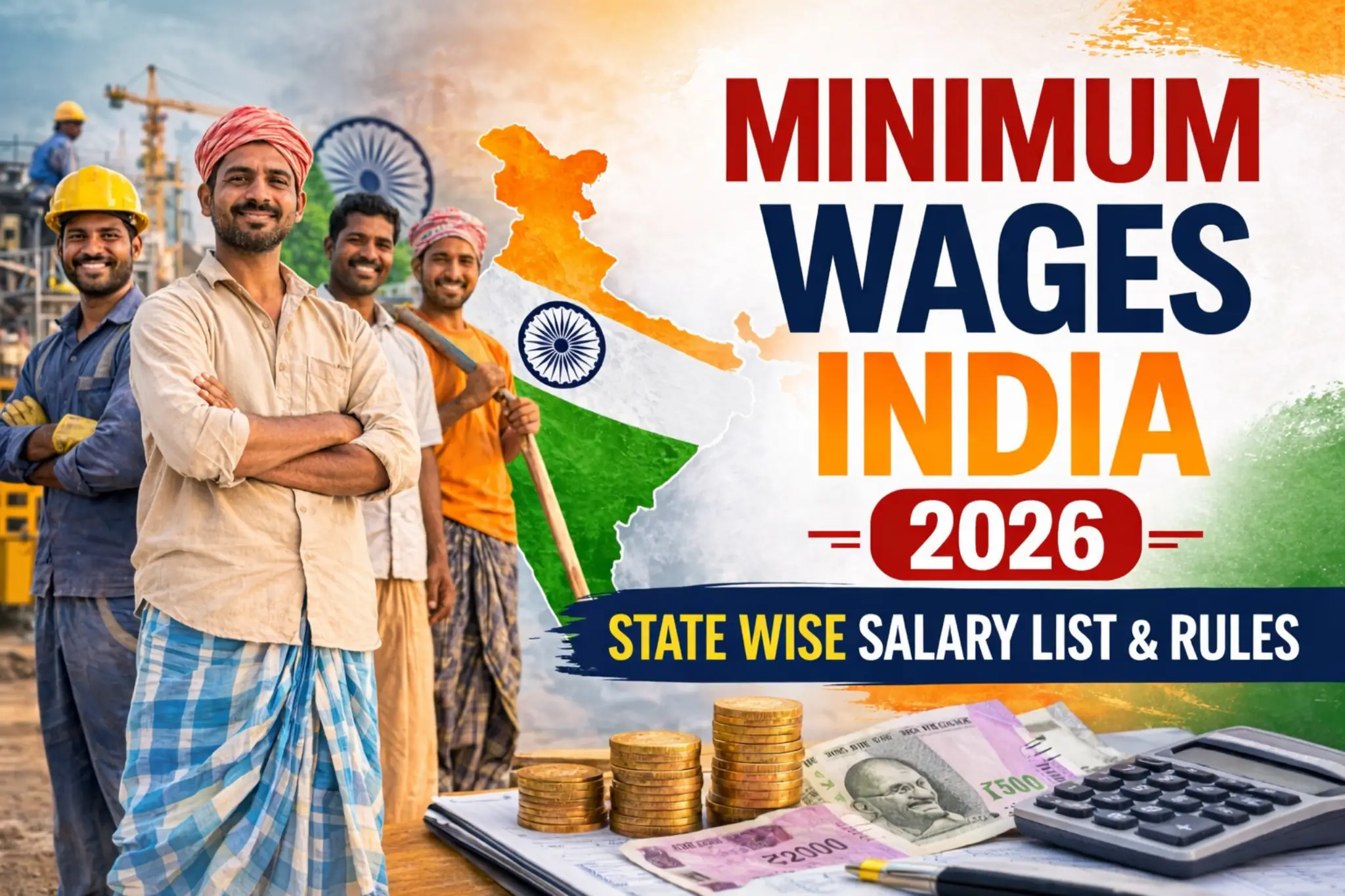
Minimum wages in India is an important rule under labour law that defines the minimum salary employers must pay to workers.
The government sets minimum wages in India state-wise to ensure fair payment and proper compliance.
Minimum wages in India 2026 updates include labour codes, salary rules, PF, ESI, and payroll compliance requirements.
Every employer must follow minimum wages in India to avoid penalties, legal notices, and payroll errors.
In this guide, we explain minimum wages in India in detail, including:
- State wise minimum wages list
- Minimum wages in India labour law rules
- Salary structure rule under labour codes
- PF and ESI impact on wages
- Compliance checklist for employers
This guide is useful for companies using payroll software, HRMS software, or manual salary processing to stay compliant with minimum wages in India.
Minimum Wages in India Salary Structure Rule
Minimum wages in India are defined under labour laws to ensure employees receive fair payment for their work.
Each state government sets minimum wages for different categories of workers.
Minimum wages depend on:
- State rules
- Skill level
- Industry type
- Location (metro / non-metro)
- Government notification
Under labour codes, wage definition has changed and companies must follow proper salary structure.
Key rules in minimum wages in India:
- Basic salary should be at least 50% of total CTC
- Minimum wage must not be less than government rate
- PF and ESI calculated on wages
- Gratuity depends on basic salary
- Bonus depends on wage definition
Companies must update payroll system according to new rules.
Read also → PF & ESI Calculation Guide 2026
Read also → 50% Basic Salary Rule under Labour Codes
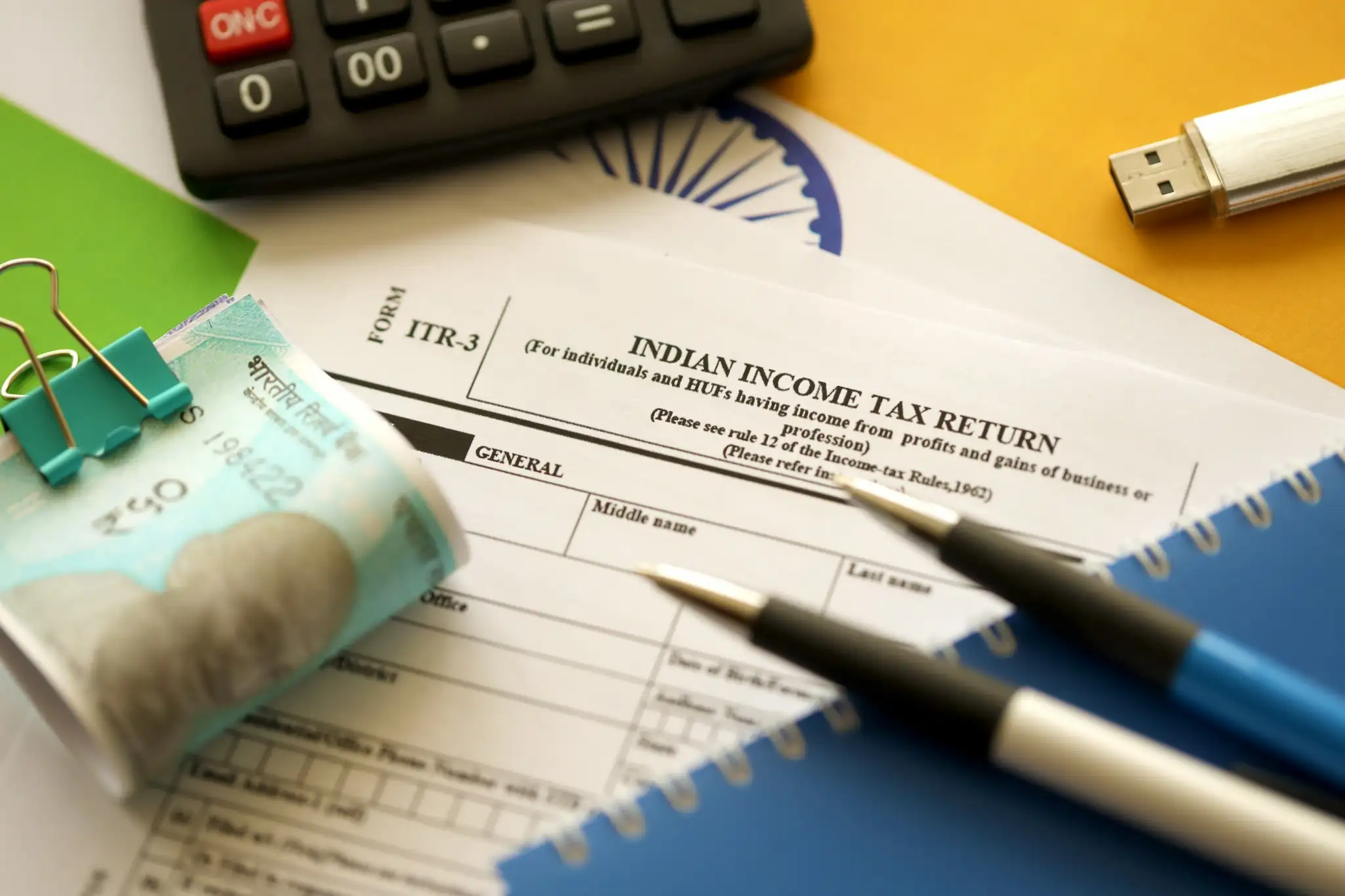
Minimum Wages in India State Wise List
Minimum wages in India are different for each state. Below is a sample state-wise minimum wage list for reference.
Minimum Wages in India State-Wise
State | Unskilled | Semi-Skilled | Skilled | Highly Skilled |
Delhi | 17800 | 19600 | 21500 | 23500 |
Haryana | 16500 | 18200 | 20100 | 22000 |
Maharashtra | 17000 | 18800 | 21000 | 23000 |
Uttar Pradesh | 15000 | 16800 | 18500 | 20500 |
Karnataka | 16800 | 18600 | 20500 | 22500 |
Gujarat | 16000 | 17800 | 19800 | 21800 |
Rajasthan | 15500 | 17200 | 19000 | 21000 |
Minimum wages change frequently. Employers must check official notifications.
Always verify latest minimum wages in India before payroll processing.
Minimum Wages in India Wage Definition Under Labour Codes
Under new labour codes, wage definition includes multiple components.
Salary structure must follow:
- Basic salary
- HRA
- Allowances
- Bonus
- PF
- ESI
- Gratuity
Rule:
Basic salary ≥ 50% of CTC
If minimum wages increase, salary structure must also change.
Salary Components Under Labour Codes
Component | Included in Wage | Notes |
Basic Salary | Yes | Must be 50% |
HRA | Partial | Depends |
Bonus | Yes | If regular |
PF | Based on basic | Mandatory |
ESI | Based on wage | If applicable |
Gratuity | Based on basic | After 5 years |
Allowances | Limited | Cannot reduce basic |
This rule affects:
- Payroll calculation
- Compliance
- Employer cost
- PF contribution
- Gratuity amount
Companies using HRMS software can manage salary automatically.
Minimum Wages in India and PF ESI Impact
Minimum wages in India directly affect PF, ESI, and gratuity.
When wages increase:
- PF increases
- ESI increases
- Gratuity increases
- Employer contribution increases
Example:
Salary | PF (12%) | ESI | Employer Cost |
15000 | 1800 | 750 | High |
18000 | 2160 | 900 | Higher |
20000 | 2400 | 1000 | More |
Companies must update payroll software regularly.
If minimum wages are not followed:
- PF mismatch
- ESI error
- Labour notice
- Penalty
Minimum wages in India 2026 must be followed in every payroll.
Minimum Wages in India 2026 Compliance Guide
Every employer must follow minimum wages in India to stay compliant.
Checklist:
- Check state wage notification
- Maintain salary records
- Update payroll monthly
- Deduct PF / ESI correctly
- Follow labour codes
- Keep employee register
- Issue salary slip
- Maintain attendance record
Best way to stay compliant:
- Use HRMS software
- Use payroll software
- Follow labour law updates
- Check government website
Minimum wages in India compliance is important for:
- Companies
- Factories
- Shops
- IT companies
- Startups
- Contractors
Employers must ensure:
- No employee paid below minimum wage
- Salary structure correct
- PF deducted properly
- ESI deducted properly
- Bonus calculated correctly
- Overtime paid properly
If employer does not follow minimum wages in India :
- Fine
- Legal case
- Labour inspection
- PF notice
- ESIC notice
Using a payroll system reduces risk.
Minimum Wages in India for HR and Payroll Teams
HR and payroll teams must check minimum wages every month.
Important tasks:
- Update salary sheet
- Verify PF
- Verify ESI
- Check wage category
- Update employee records
- Check labour law changes
Payroll mistakes happen when:
- Minimum wages not updated
- Wrong salary breakup
- Wrong PF calculation
- Wrong ESI deduction
Minimum wages in India should be part of payroll checklist.
Conclusion
Minimum wages in India is very important for payroll, HR, and labour law compliance. Companies must follow state-wise minimum wages, salary rules, PF, ESI, and gratuity regulations.
New labour codes make salary structure more strict, and employers must update payroll systems regularly.
Using HRMS or payroll software helps companies stay compliant and avoid penalties.
Minimum wages in India 2026 should always be checked before salary processing to ensure proper compliance.
Need Help with Payroll & Labour Law Compliance?
Managing minimum wages in India, PF, ESI, gratuity, and salary structure as per labour law can be difficult for companies.
ZFour HRMS helps businesses manage payroll, attendance, leave, salary, and statutory compliance in one system.
Benefits of using payroll software:
- Automatic payroll calculation
- PF / ESI / TDS compliance
- Minimum wage updates
- Easy salary structure management
- Employee reports and records
- Secure cloud based system
If your company wants to stay compliant with minimum wages in India in 2026, using HRMS software helps manage payroll, PF, ESI, and labour law compliance easily.
You can also read:
PF & ESI Calculation Guide 2026
Labour Codes 50% Basic Salary Rule
Payroll Compliance Checklist India
ZFour HRMS makes payroll and compliance simple for every business.
Farheen
Senior HR & Payroll Subject Matter Expert
Certified HR Specialist & Payroll Compliance Expert with 10+ years in enterprise workforce management.