7 min read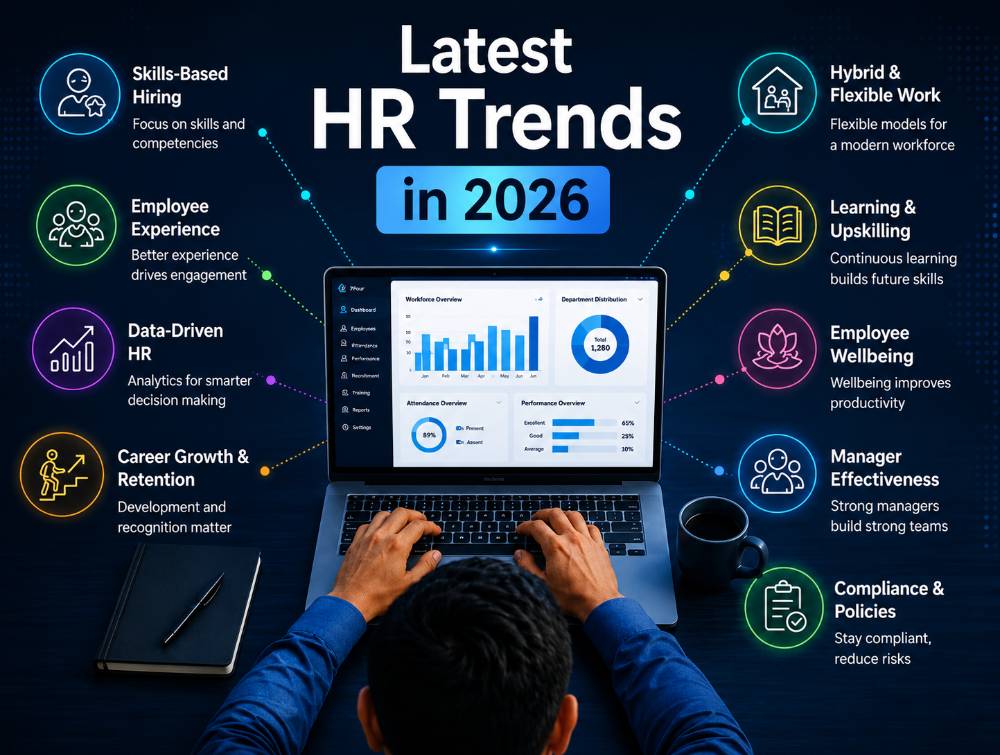
Human Resources is evolving as organizations respond to changing employee expectations, new skills requirements, flexible work models, retention challenges, and the need for better workforce planning. The latest HR trends in India in 2026 are moving HR beyond routine administration toward more employee-focused, skills-driven, and data-informed workforce management.
From skills-based hiring and employee experience to career development, workplace flexibility, wellbeing, and workforce planning, these trends are changing how organizations attract, manage, develop, and retain employees.
1. Skills-Based Hiring
Skills-based hiring is becoming increasingly important as organizations adapt to changing job requirements and evolving workforce needs. Instead of relying primarily on academic qualifications or previous job titles, employers are increasingly evaluating candidates based on relevant skills, competencies, experience, and their ability to perform specific roles.
This approach can help businesses identify candidates with the capabilities required for current and future roles. It can also support internal mobility by helping organizations identify existing employees who have the skills needed for new responsibilities.
Common elements of skills-based hiring include:
Defining the skills required for each role
Using competency-based job descriptions
Assessing practical skills during recruitment
Identifying transferable skills
Supporting internal mobility and career progression
Reviewing workforce skills gaps
For HR teams, the goal is not simply to change how candidates are evaluated. Skills-based hiring can also help organizations connect recruitment decisions with longer-term workforce planning.
The shift toward skills-based hiring is also connected to changing workforce requirements. The World Economic Forum's Future of Jobs research provides broader insight into changing skills and workforce expectations.
2. Employee Experience as a Priority
Employee experience is becoming a central part of HR strategy. Instead of focusing only on policies and administrative processes, organizations are paying greater attention to how employees experience the workplace throughout their employment lifecycle.
This includes:
Easier access to HR information
Clear communication
Flexible work arrangements
Faster HR requests and approvals
Learning and development opportunities
Employee feedback mechanisms
Transparent workplace policies
Opportunities for career development
A stronger employee experience can reduce friction in everyday workplace processes and help employees feel more informed, supported, and connected to the organization.
For organizations looking to simplify employee access to routine HR services, employee self-service can be one part of a broader employee experience strategy.
3. Employee Retention and Career Growth
Employee retention is becoming an increasingly important HR priority as businesses compete for skilled talent. Employees often look beyond salary when evaluating whether to remain with an organization, making career development, recognition, management support, and growth opportunities important parts of the employee experience.
Organizations can support retention by focusing on:
Clear career progression
Internal mobility opportunities
Learning and development
Employee recognition
Regular feedback
Meaningful performance conversations
Manager support
Skills development
Career growth should be connected to both employee aspirations and business requirements. When employees can see opportunities to develop and progress within an organization, businesses may be better positioned to retain valuable skills and experience.
4. Data-Driven HR Decisions
HR teams increasingly use workforce information to understand employee patterns and support business decisions.
Workforce data can help organizations examine areas such as:
Employee attendance
Workforce productivity
Attrition patterns
Recruitment performance
Leave trends
Workforce costs
Employee performance
For example, if an organization identifies repeated absenteeism within a particular team, HR can investigate the underlying cause instead of relying only on assumptions.
This makes workforce analytics useful for moving from reactive HR management toward more evidence-based workforce planning and decision-making.
HR teams should also consider data quality, privacy, access controls, and appropriate interpretation when using workforce information.
5. Flexible and Hybrid Work
Flexible and hybrid work models continue to influence how organizations manage employees across different locations and working arrangements.
HR teams need to consider employee expectations, communication, scheduling, collaboration, performance management, and workplace policies when managing flexible work environments.
Important areas include:
Clear flexible-work policies
Consistent communication
Team coordination
Manager support
Employee accountability
Scheduling and workforce planning
Regular feedback
Maintaining a consistent employee experience
The right approach depends on the organization's workforce model, business requirements, employee roles, and applicable workplace policies.
6. Continuous Learning and Upskilling
Changing technologies, business models, and job responsibilities are increasing the importance of continuous learning and skills development.
Organizations are investing in training and development to help employees build capabilities relevant to changing roles and business needs.
Common approaches include:
Role-specific training
Technical upskilling
Reskilling
Leadership development
Mentoring
Internal knowledge sharing
Skills assessments
Career development programs
For HR teams, the objective is not simply to provide more training. Learning programs should connect employee development with actual skills gaps, career opportunities, and business requirements.
Organizations that invest in continuous learning can build a more adaptable workforce while supporting employee career growth.
7. Employee Wellbeing and Sustainable Workplaces
Employee wellbeing is becoming a broader part of workplace strategy. Organizations are increasingly considering how workload, management practices, flexibility, communication, and workplace culture affect the sustainability of the employee experience.
HR teams can support workplace wellbeing through:
Reasonable workload management
Supportive management practices
Flexible working arrangements where appropriate
Clear communication
Employee feedback
Recognition and appreciation
Healthy workplace policies
Access to appropriate workplace support
Wellbeing should be treated as part of sustainable workforce management rather than as a standalone initiative.
8. Manager Effectiveness and People Leadership
Managers have a significant influence on employee experience, communication, development, and team performance. As workplace expectations change, organizations are paying greater attention to the skills managers need to lead effectively.
Important areas include:
Manager training
Effective communication
Constructive feedback
Performance conversations
Conflict management
Team development
Employee recognition
Leadership development
Strong people management requires more than monitoring performance. Managers also need to communicate expectations, support employee development, identify challenges, and create an environment where teams can perform effectively.
For a broader discussion of how technology is changing HR, see our guide to the future of HR technology in 2026.
9. Skills-Based Workforce Planning
Workforce planning is increasingly focused on the capabilities organizations need rather than simply the number of employees they have.
HR teams can assess:
Current workforce capabilities
Critical skills
Skills gaps
Future business requirements
Internal mobility opportunities
Succession needs
Recruitment priorities
A skills-based approach can help organizations identify where existing employees may be developed or moved into new roles and where external hiring may be required.
Connecting workforce planning with business strategy can help HR teams prepare for changing market conditions and future capability requirements.
10. HR Compliance and Workplace Policy Readiness
Keeping HR policies and processes current is an important part of responsible workforce management. Organizations need to regularly review workplace policies, employee documentation, and HR processes to ensure they remain appropriate for their workforce and applicable requirements.
Areas HR teams may review include:
Employment documentation
Attendance and leave policies
Workplace procedures
Employee communication
Payroll and HR process coordination
Record management
Policy updates
Compliance responsibilities
Compliance requirements can vary based on factors such as location, workforce structure, industry, and applicable laws. HR teams should verify current requirements and seek appropriate professional advice when necessary.
Challenges HR Teams Face When Adopting New Workplace Practices
Although these HR trends can create opportunities for organizations, adopting new workplace practices is not always straightforward.
Organizations may face:
Budget limitations
Resistance to change
Skills gaps within HR teams
Manager adoption challenges
Employee adoption issues
Inconsistent workplace practices
Difficulty measuring outcomes
Changing workforce requirements
Successful change requires more than introducing a new policy or process. HR teams need clear communication, manager involvement, employee feedback, appropriate training, and measurable objectives.
The most effective approach is to identify the workforce problem first, understand its underlying cause, and then select the appropriate people, process, or technology response.
How Businesses Can Respond to Emerging HR Trends
Businesses can prepare for changing HR trends by taking a structured approach to workforce management.
1. Review Current Workforce Needs
Identify challenges related to hiring, retention, skills, employee experience, productivity, and workforce planning.
2. Identify Skills Gaps
Understand which capabilities are available internally and which skills may be required in the future.
3. Strengthen Employee Experience
Review how employees interact with managers, HR processes, workplace policies, learning opportunities, and career development.
4. Develop Managers
Provide managers with the communication, feedback, coaching, and leadership skills required to support their teams.
5. Build a Continuous Learning Culture
Connect learning and development programs with actual employee and business requirements.
6. Review Workplace Policies
Regularly assess policies and processes to ensure they remain suitable for the organization's workforce and applicable requirements.
7. Use Workforce Data Responsibly
Use reliable workforce information to identify patterns and support evidence-based decisions while maintaining appropriate privacy and governance practices.
How ZFour HRMS Can Support Modern HR Processes
Businesses responding to these HR trends may use technology to simplify existing HR processes and improve employee access to HR services. ZFour HRMS can support areas such as attendance, leave, payroll, and employee self-service as part of a broader workforce management approach.
Businesses evaluating HR technology can also compare ZFour HRMS vs greytHR to understand how different HRMS options compare in terms of features, implementation, and overall ROI.
Conclusion
The latest HR trends in India in 2026 show that HR is becoming increasingly employee-focused, skills-driven, flexible, and data-informed.
Skills-based hiring, employee experience, career development, retention, continuous learning, flexible work, employee wellbeing, manager effectiveness, workforce planning, and workplace policy readiness are shaping how organizations manage their people.
Technology can support these changes, but successful HR transformation depends on more than adopting new tools. Businesses also need clear processes, capable managers, employee involvement, appropriate governance, and a workforce strategy aligned with business needs.
Organizations that combine thoughtful HR practices with responsible use of data and technology can build more adaptable and sustainable workplaces.
Looking to modernize your HR processes?
Book a ZFour HRMS demo

Farheen Ahmed
HR Tech Content Strategist at ZFour Technology Private Limited
Research-driven content on HRMS, payroll, attendance management, employee management, and modern HR technology for Indian businesses.