9 min read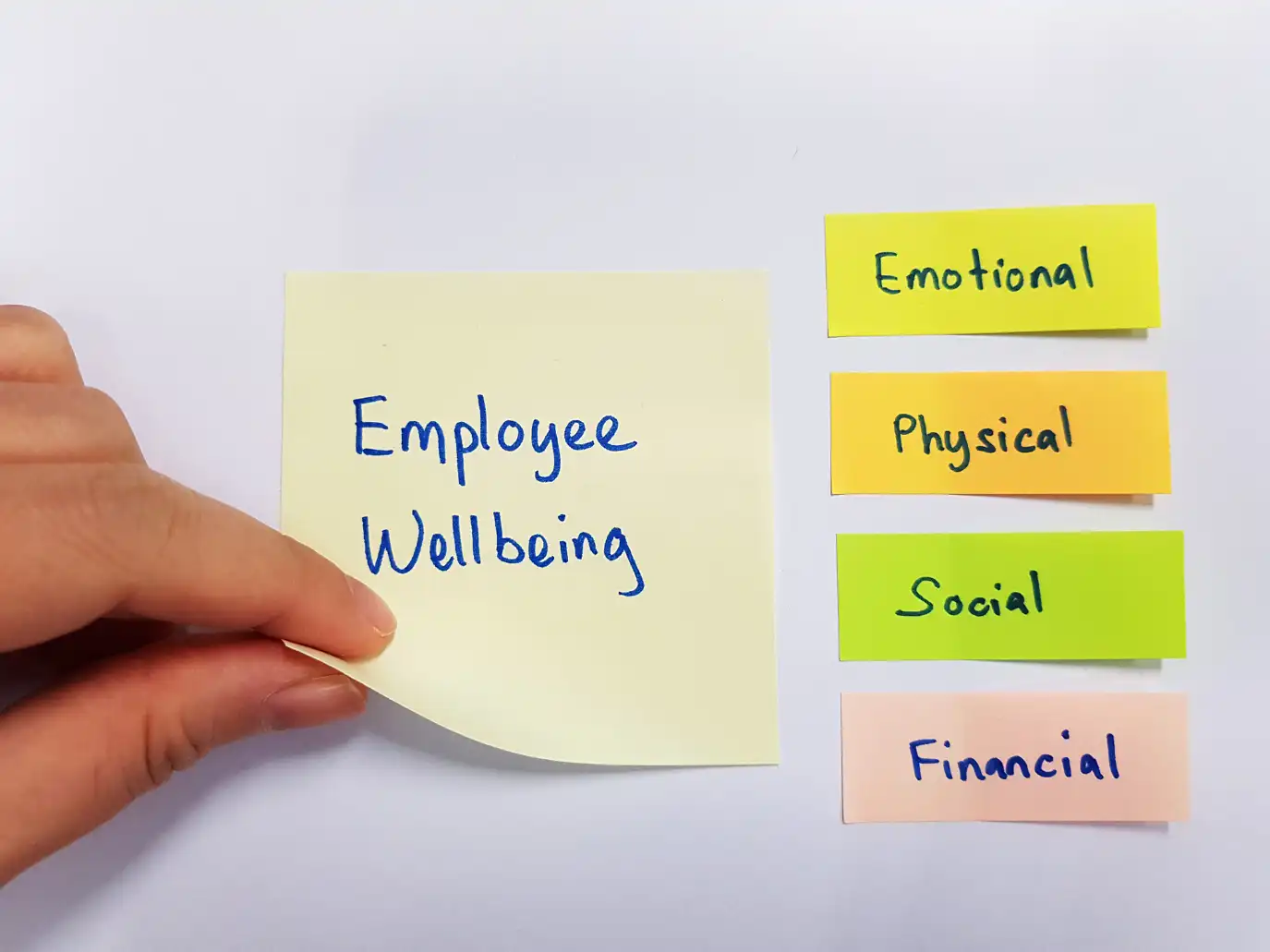
Employee wellbeing has become an important part of modern workforce management. Employees may face workload pressures, communication challenges, difficulty maintaining work-life boundaries, or limited access to workplace support.
For HR teams, supporting wellbeing is not only about offering occasional wellness activities. It involves creating a workplace environment where employees can access appropriate support, take leave when needed, communicate concerns, and maintain a sustainable approach to work.
Employee wellbeing programs can help organizations structure these efforts. HR technology can also support the administrative side of wellbeing initiatives by connecting relevant employee information, leave processes, communication, and workforce reporting in one system.
This guide explains what employee wellbeing programs are, why they matter, what initiatives organizations can consider, and how HRMS technology can support workplace wellbeing.
What Are Employee Wellbeing Programs?
Employee wellbeing programs are structured workplace initiatives designed to support different aspects of employees' overall wellbeing.
Depending on the organization, wellbeing programs may address:
Mental and emotional wellbeing
Physical health
Work-life balance
Workplace relationships
Financial wellbeing
Flexible working practices
Stress management
Employee support and resources
A wellbeing program does not need to include every type of initiative. Organizations should consider their workforce, workplace environment, employee needs, and available resources when deciding what to introduce.
Why Is Employee Wellbeing Important?
Employee wellbeing can influence how people experience their workplace and manage their responsibilities.
A well-designed wellbeing approach may help organizations:
Create a more supportive employee experience
Encourage employees to use appropriate support resources
Improve communication around workload and wellbeing
Support healthier work practices
Identify recurring workplace concerns
Strengthen employee engagement
Contribute to retention when wellbeing is part of a broader positive employee experience
However, wellbeing programs should not be treated as a guaranteed solution for engagement or retention. Their effectiveness depends on how relevant, accessible, trusted, and consistently implemented they are.
Key Areas of Employee Wellbeing
Employee wellbeing is broader than mental health alone. HR teams can consider several interconnected areas when designing a wellbeing strategy.
1. Mental and Emotional Wellbeing
Organizations can provide access to appropriate mental-health resources, awareness programs, manager training, or external professional support where available.
HR teams should avoid positioning HR software as a replacement for qualified mental-health professionals.
Instead, HR technology can support the administrative processes around wellbeing initiatives.
2. Physical Wellbeing
Physical wellbeing initiatives may include:
Health-awareness activities
Fitness initiatives
Ergonomic guidance
Workplace health resources
Appropriate breaks
Access to relevant healthcare benefits
The right approach depends on the workforce and the organization's resources.
3. Work-Life Balance
Work-life balance can be supported through practical policies and management practices such as:
Appropriate workload planning
Leave availability
Flexible working arrangements where applicable
Clear communication expectations
Reasonable meeting practices
Respect for personal time
Technology can support these processes by making leave and employee requests easier to manage.
4. Financial Wellbeing
Financial concerns can affect an employee's overall workplace experience.
Organizations may consider initiatives such as:
Financial education
Benefits education
Payroll transparency
Access to relevant financial resources
Guidance on available employee benefits
Financial wellbeing programs should be designed carefully and should not be presented as financial advice unless qualified professionals are involved.
5. Social and Workplace Wellbeing
Employees also experience wellbeing through their relationships and workplace environment.
Organizations can encourage:
Team interaction
Inclusive communication
Peer recognition
Manager-employee conversations
Collaboration
Appropriate social activities
The goal should be meaningful connection rather than adding more mandatory activities to employees' schedules.
Common Employee Wellbeing Programs
There is no single wellbeing program that works for every organization. HR teams can select initiatives based on employee needs and organizational priorities.
Mental Health Awareness
Organizations may conduct awareness sessions, provide educational resources, or offer access to appropriate professional support.
Employee Assistance Programs
Where available, an Employee Assistance Program (EAP) can provide employees with access to professional support for personal or work-related concerns.
EAP services are typically provided through specialized providers rather than being a standard HRMS function.
Wellness Activities
Organizations may offer activities related to physical health, relaxation, fitness, or healthy workplace practices.
Flexible Work Practices
Where business requirements permit, flexible schedules or hybrid work arrangements may support employees in managing work and personal responsibilities.
Recognition Programs
Structured recognition can help organizations acknowledge employee contributions and reinforce positive workplace behaviors.
Learning and Development
Professional development can support employees' sense of growth and provide opportunities to build relevant skills.
Manager Training
Managers can be trained to recognize workplace concerns, communicate effectively, provide feedback, and direct employees toward appropriate resources.
How HRMS Can Support Employee Wellbeing Programs
HR teams can also use HR analytics to identify workforce patterns and support more informed people-management decisions.
Depending on the platform and configuration, HRMS technology may support:
Employee records
Leave management
Attendance
Employee self-service
Performance management
Employee communication
HR reporting
Workforce data
For example, when employees can submit leave requests digitally, HR teams can manage the process through a structured workflow rather than relying entirely on emails or spreadsheets.
Similarly, centralized workforce information can help HR teams review patterns in attendance, leave, or other HR processes that may warrant further investigation.
HRMS Features That Can Support Employee Wellbeing
1. Leave Management
Employees need access to appropriate time off as part of a sustainable workplace environment.
Digital leave management can help employees:
View available leave
Submit requests
Track approvals
Check leave status
HR teams can also maintain a more structured record of leave activity.
2. Employee Self-Service
Employee self-service allows employees to complete routine HR activities without contacting HR for every request.
Depending on the system, this may include:
Leave requests
Employee information
Attendance-related requests
HR documents
Payroll information
A self-service approach can reduce unnecessary administrative friction for employees and HR teams.
3. Attendance Management
Attendance data can help HR teams understand workforce patterns.
Depending on the organization's policies and technology setup, HRMS attendance tools may support:
Attendance recording
Working-time information
Attendance reports
Leave and attendance workflows
Attendance information should be used responsibly and in accordance with organizational policies and applicable requirements.
4. Performance Management
Performance management can contribute to employee experience when it focuses on clear expectations, useful feedback, and development rather than simply evaluating employees.
HRMS performance workflows may support:
Goal setting
Performance reviews
Feedback
Appraisals
Development discussions
This can help create a more structured process for manager-employee conversations.
5. HR Reporting and Workforce Insights
Centralized HR data can help HR teams identify workforce patterns.
For example, HR teams may review:
Leave trends
Attendance patterns
Employee turnover
Performance information
Workforce changes
These indicators do not automatically prove that employees are experiencing wellbeing problems. Instead, they can highlight areas where HR may need to investigate further.
Employee Wellbeing: HRMS vs Dedicated Wellbeing Tools
It is important to distinguish between HRMS functionality and specialized employee wellbeing platforms.
Requirement | HRMS | Dedicated Wellbeing/EAP Platform |
|---|---|---|
Employee records | Common HRMS function | Usually not the primary purpose |
Leave management | Common HRMS function | May be limited |
Attendance | Common HRMS function | Usually not the primary purpose |
Performance management | Common HRMS function | May be limited |
Employee self-service | Common HRMS function | May be available |
Mental-health counseling | Usually requires specialist provider | Often central to the service |
EAP services | Usually requires external provider | Common capability |
Wellness programs | May support administration | Often a core offering |
HR reporting | Common HRMS function | Depends on provider |
The most appropriate combination depends on the organization's requirements. An HRMS and a specialized wellbeing platform can also complement each other rather than being treated as competing systems.
How to Build an Effective Employee Wellbeing Program
1. Understand Employee Needs
Start by identifying the issues employees are actually experiencing.
Organizations can use:
Anonymous surveys
Employee feedback
Manager conversations
Focus groups
Existing workforce data
Avoid assuming that every employee has the same wellbeing needs.
2. Set Clear Objectives
Define what the program is intended to address.
For example:
Improve awareness of available support
Encourage healthier work practices
Improve access to leave
Strengthen manager communication
Support work-life balance
Clear objectives make it easier to evaluate whether the program is useful.
3. Provide Appropriate Resources
Use qualified professionals or specialized providers when employees require services outside HR's expertise.
HR teams should clearly communicate:
What support is available
How employees can access it
Whether services are confidential
Who provides the service
What information, if any, is shared with the organization
4. Train Managers
Managers are often an important part of an employee's day-to-day experience.
Training can help managers:
Communicate workload expectations
Conduct effective one-to-one conversations
Provide constructive feedback
Recognize potential workplace concerns
Direct employees toward appropriate resources
Managers should not be expected to diagnose mental-health conditions.
5. Make Participation Accessible
Wellbeing initiatives should be easy to understand and access.
Avoid creating programs that require excessive paperwork, complicated approval processes, or participation outside employees' normal working arrangements.
6. Protect Employee Privacy
Wellbeing information can be sensitive.
Organizations should establish appropriate policies around:
Access
Data collection
Confidentiality
Data retention
Reporting
Third-party providers
Only information necessary for the stated HR purpose should be collected and accessed appropriately.
How to Measure Employee Wellbeing Programs
Measuring a wellbeing program does not mean trying to assign a single “wellbeing score” to employees.
Instead, HR teams can evaluate:
Participation
How many eligible employees use or participate in the program?
Employee Feedback
Do employees find the initiative useful and accessible?
Awareness
Do employees know what resources are available and how to access them?
Leave and Attendance Trends
Are there meaningful changes in relevant workforce patterns?
These metrics should be interpreted carefully because changes in attendance, leave, or turnover can have many causes.
For a broader framework on employee measurement, see our guide to employee satisfaction metrics.
Common Mistakes in Employee Wellbeing Programs
Treating Wellbeing as a One-Time Activity
A single wellness event is unlikely to replace a broader wellbeing strategy.
Offering Programs Without Understanding Employee Needs
An initiative may have low participation simply because it does not address the issues employees actually care about.
Treating HR Technology as a Substitute for Human Support
HRMS software can streamline processes, but it cannot replace qualified counselors, healthcare professionals, or effective managers.
Collecting Sensitive Information Without a Clear Purpose
Organizations should be transparent about what information they collect and why.
Ignoring Manager Behavior
Policies and programs may have limited impact if employees experience excessive workloads, poor communication, or inconsistent management.
Measuring Participation Without Measuring Experience
High participation does not automatically mean employees found a program useful. Feedback and qualitative insights matter too.
How ZFour HRMS Can Support Employee Management
ZFour HRMS can support several HR processes that form part of broader employee management and workplace experience.
Depending on the organization's selected modules and configuration, relevant processes may include:
Attendance management
Leave management
Employee self-service
Performance management
Payroll
Employee information
HR reporting
These capabilities can help HR teams manage routine workforce processes through a centralized system.
However, organizations requiring specialized mental-health counseling, EAP services, clinical support, or dedicated wellness programs should evaluate specialist providers where appropriate.
Employee Wellbeing and the Future of Work
As remote, hybrid, and flexible working arrangements continue to evolve, organizations may need to rethink how they support employees.
Future-focused wellbeing strategies are likely to place greater emphasis on:
Flexible work practices
Manager capability
Employee autonomy
Digital access to HR services
Workload management
Employee feedback
Responsible use of workforce data
Technology can make HR processes more accessible, but effective wellbeing still depends on organizational culture, leadership, policies, and employee trust.
Conclusion
Employee wellbeing programs are most effective when they are built around real employee needs rather than treated as isolated workplace activities.
Organizations can support wellbeing through appropriate mental-health resources, healthy work practices, manager training, flexible policies, recognition, development opportunities, and access to relevant professional support.
HRMS technology can complement these efforts by simplifying related processes such as leave management, attendance, employee self-service, performance management, and workforce reporting.
The key is to use technology as an enabler—not a replacement for human support, responsible management, and a workplace culture where employees feel comfortable seeking help.
A practical wellbeing strategy combines appropriate programs, clear policies, employee feedback, privacy-conscious processes, and effective HR technology to create a more sustainable employee experience.

Farheen Ahmed
HR Tech Content Strategist at ZFour Technology Private Limited
Research-driven content on HRMS, payroll, attendance management, employee management, and modern HR technology for Indian businesses.