Employee Satisfaction Metrics: The Ultimate Guide to Measuring Workforce Happiness
- May 21, 2025
- 3 min read
Updated: Dec 15, 2025

In today’s competitive business environment, employee satisfaction is a fundamental pillar of organizational success.
Happy employees are not just more productive – they are also more innovative, collaborative, and loyal, directly impacting business growth and customer satisfaction.
But the question remains:
How do companies accurately measure and improve this crucial factor?
What Are Employee Satisfaction Metrics?
Employee satisfaction metrics are quantitative measures that help organizations assess how happy, engaged, and content their employees are with their roles, responsibilities, workplace culture, and overall experience within the company.
These metrics go beyond mere surveys. They provide a data-driven approach to understand workforce sentiment, identify improvement areas, and design effective employee engagement strategies.
Key Employee Satisfaction Metrics to Track
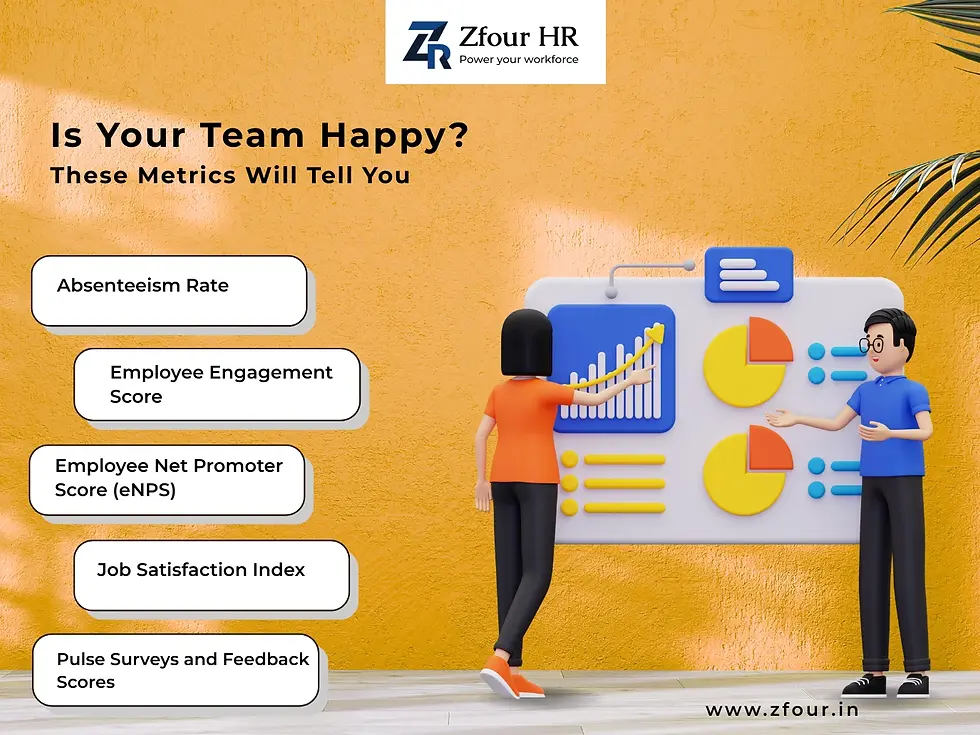
1. Employee Net Promoter Score (eNPS)
One of the most popular metrics, eNPS, measures how likely employees are to recommend their workplace.
This simple yet effective score highlights overall satisfaction and loyalty.
2. Employee Engagement Score
Tracking engagement involves measuring enthusiasm, commitment, and emotional connection to work. Engagement surveys help understand if employees feel motivated and valued.
3. Job Satisfaction Index
This metric evaluates how content employees are with their roles, responsibilities, and work environment. It often includes questions about workload, autonomy, and recognition.
4. Turnover Rate
While indirectly a satisfaction metric, a high employee turnover rate often signals dissatisfaction or poor engagement.
5. Absenteeism Rate
Frequent unplanned absences can reflect low morale or health issues linked to workplace stress.
6. Pulse Surveys and Feedback Scores
Regular short surveys offer real-time insights into employee mood and concerns, enabling proactive interventions.
Why Employee Satisfaction Metrics Matter
Measuring employee satisfaction is not just an HR task – it is a strategic investment. Here’s why:
Identify Pain Points Early: Metrics reveal dissatisfaction triggers before they escalate into resignations.
Boost Morale: Addressing concerns proactively improves team spirit.
Reduce Turnover Costs: Retaining existing employees saves significant recruitment and training costs.
Drive Engagement & Productivity: Satisfied employees are motivated to perform better.
Enhance Employer Branding: Positive workplace culture attracts top talent organically.
Leveraging Employee Satisfaction Metrics for Business Success
Boost Retention: Identifying dissatisfaction early helps reduce turnover costs.
Improve Productivity: Satisfied employees show higher motivation and output.
Enhance Employer Branding: A positive workplace culture attracts top talent.
Drive Continuous Improvement: Metrics guide HR policies and wellness initiatives.
Best Practices to Improve Employee Satisfaction
Foster open communication through internal communication tools.
Implement recognition programs to celebrate achievements.
Provide career development opportunities.
Support work-life balance, especially with hybrid or remote work setups.
Use HR analytics to monitor trends and measure impact
Why Choose ZFour HRMS for Employee Satisfaction Management?
ZFour offers a comprehensive platform combining employee engagement tools, advanced HR analytics dashboards, and performance management systems to help organizations measure, analyze, and act on employee satisfaction data effectively.
Its user-friendly interface and real-time reporting capabilities empower HR teams to create happier, more productive workplaces.
How to Collect and Analyze Employee Satisfaction Data
Implementing an integrated HRMS software with embedded employee feedback tools simplifies data collection and reporting.
Here’s how:
Anonymous Surveys: Encourage honest feedback without fear of judgment.
Sentiment Analysis: Uses AI to assess emotional tone in responses.
Dashboard Visualisations: Presents data in an easy-to-understand format for quick decisions.
Custom Reports: Generates reports filtered by department, role, or tenure to identify targeted solutions.
Best Practices to Improve Employee Satisfaction
Foster open communication through internal tools and regular town halls.
Implement recognition programs that celebrate achievements meaningfully.
Provide clear career development and growth opportunities.
Support work-life balance with flexible or hybrid work policies.
Offer wellness programs addressing mental, physical, and financial well-being.
Use HR analytics to monitor trends and measure impact over time.
Conclusion
Employee satisfaction metrics are vital for understanding and enhancing the employee experience.
By leveraging data-driven insights and proactive HR strategies, organizations can cultivate a motivated workforce ready to drive success.
FAQs:
1. What are employee satisfaction metrics?
Employee satisfaction metrics are quantitative measures used to assess how happy and engaged employees are with their workplace, roles, and organizational culture.
2. Why are employee satisfaction metrics important?
These metrics help organizations identify areas for improvement, reduce turnover, boost productivity, and enhance overall employee engagement and retention.
3. How can companies collect employee satisfaction data?
Companies can use tools like surveys, pulse polls, feedback forms, and HRMS platforms with integrated employee engagement modules to gather reliable data.
4. What is the difference between employee satisfaction and employee engagement?
Employee satisfaction measures how content employees are with their job, while employee engagement reflects the emotional commitment and motivation employees have toward their work.
5. How does ZFour HRMS help improve employee satisfaction?
ZFour HRMS offers integrated engagement tools, real-time analytics dashboards, and performance management features to measure satisfaction accurately and implement effective improvement strategies.


Comments