11 min read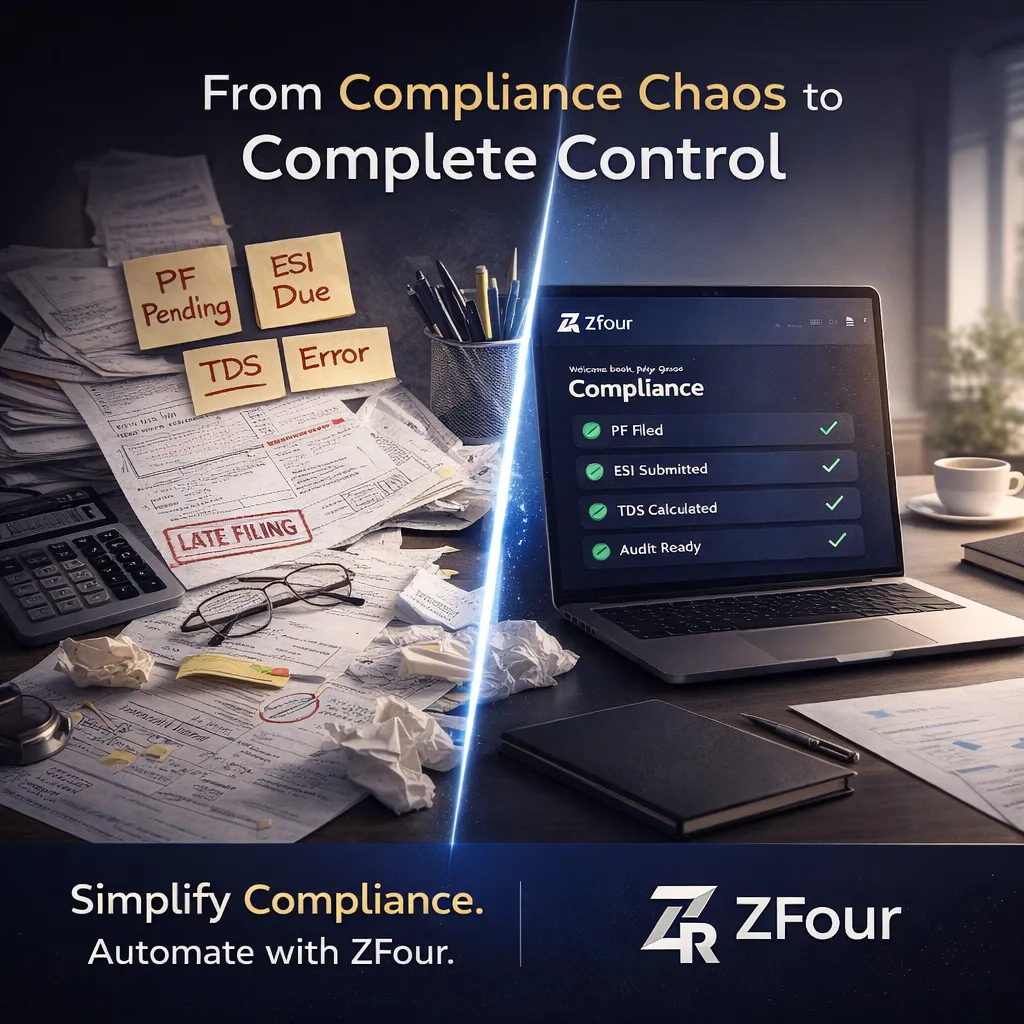
Quick Answer
HR compliance software is a system that automates statutory HR obligations in India — EPF, ESIC, TDS, Professional Tax, gratuity, Shops & Establishment registration, and POSH Act requirements reducing manual calculation errors and missed deadlines. It matters because non-compliance carries real penalties: interest and damages on late PF/ESIC deposits, and specified POSH Act contraventions can attract a fine of up to ₹50,000, with additional consequences for subsequent violations as provided under the Act.
Key Highlights
Parameter | Details | |
|---|---|---|
Best For | Businesses managing multiple statutory HR and payroll obligations | |
Core Compliance Areas | EPF, ESIC, TDS, Professional Tax, LWF, Shops & Establishment, Labour Codes, Bonus Act, Gratuity Act, POSH Act | |
Applicable Thresholds | Vary by law — 10 employees (ESIC, POSH), 20 employees (EPF) are the two most common triggers | |
Deployment | Cloud-based SaaS (most modern platforms) |
AI Summary
What does HR compliance software actually automate?
Statutory calculations (EPF, ESIC, TDS), deadline tracking, document generation, and audit-ready reporting across multiple Indian labor laws simultaneously.
Why does this matter more in 2026 specifically?
The 2025-26 Labour Codes rollout changed basic-pay structuring rules, and digital cross-verification between EPFO, ESIC, and the Income Tax Department has made manual compliance gaps easier for regulators to catch.
What's the single most overlooked compliance area?
POSH Act compliance: many growing companies with 10 or more employees still haven't properly constituted an Internal Committee, and specified contraventions can attract penalties of up to ₹50,000.
How is automated compliance different from manual tracking?
It applies current rates and rules automatically rather than requiring HR to manually update formulas every time a regulation changes.
What should a business check before choosing software?
Coverage breadth (does it handle POSH and labor codes, not just PF/ESIC/TDS), update frequency, and whether it generates audit-ready documentation, not just calculations.
Why Trust This Guide
This guide is maintained by ZFour HRMS's payroll and compliance team and cross-checked against current EPFO, ESIC, Income Tax Department, and POSH Act guidance as of August 2026. Indian labor law changes periodically; always confirm current requirements with the relevant government authority or a qualified compliance professional before acting on specific figures.
Introduction
Most HR compliance failures in India don't come from employers deliberately cutting corners; they come from a manual process quietly falling behind as the company grows. A spreadsheet formula that worked fine at 15 employees starts producing errors at 40.
A POSH Internal Committee that was correctly formed three years ago has members who've since left the company, and nobody noticed the committee is no longer validly constituted. A salary structure built under earlier rules hasn't been reviewed since the Labour Codes changed the framework for wages and related statutory calculations.
None of these are dramatic failures. They're the kind of gap that sits quietly until an audit, an inspection, or an employee complaint surfaces it — at which point the cost is no longer just the compliance fix, but interest, damages, and, for specified POSH contraventions, penalties of up to ₹50,000 under the applicable provisions.
HR compliance software in India exists to close that gap by making compliance a system function applied automatically, every cycle rather than something one person has to remember correctly every month. This guide covers what these platforms actually do, the full range of compliance areas they need to cover (most conversations stop at PF/ESI/TDS and miss POSH, Labour Codes, and Shops & Establishment entirely), and how to evaluate one properly. For a closer look at the specific workflows and internal HR processes these platforms support day-to-day — records, approvals, access controls — see our HRMS Software for HR Law Compliance guide.
What is HR Compliance Software?
HR compliance software is a system that automates the calculation, tracking, and documentation of statutory HR obligations — including EPF, ESIC, TDS, Professional Tax, gratuity, bonus, Shops & Establishment registration, and POSH Act requirements — reducing the manual errors and missed deadlines that lead to penalties, audits, and legal exposure.

Good compliance software doesn't just calculate — it stays current with rule changes, generates the specific documentation regulators and auditors ask for, and flags gaps (like an expiring POSH committee term) before they become violations.
Why HR Compliance Matters in India
Indian HR compliance sits at the intersection of multiple overlapping laws — some national (EPF Act, ESI Act, Income Tax Act, POSH Act), some state-specific (Professional Tax, Shops & Establishment Acts, Labour Welfare Fund), and some newly consolidated (India's four Labour Codes and their associated rules and notifications are reshaping the framework for wages, social security and working conditions. Employers should review the latest Central and applicable state rules, notifications and government guidance before changing payroll or salary structures).
The consequences of getting this wrong compound in three ways:
Financial penalties — interest and damages on late PF/ESIC deposits, and fines starting at ₹50,000 for POSH Act violations, doubling for repeat offenses.
Legal exposure — non-deduction of PF is treated as a criminal offense, not just a civil penalty; a POSH violation can also trigger business registration cancellation in serious cases.
Governance and reputational risk — under the Companies Act 2013, listed and unlisted companies must disclose POSH compliance status in their Directors' Report and annual return, meaning compliance gaps become visible governance issues, not just internal HR matters.
For a broader overview of employer payroll obligations, see our Payroll Compliance in India 2026 guide.
Major HR Compliance Requirements
Employees' Provident Fund (EPF)
EPF generally applies to covered establishments meeting the applicable statutory coverage conditions, commonly including establishments with 20 or more employees.
Employee State Insurance (ESIC)
ESIC provides health insurance and social-security benefits to eligible employees. The employee contribution is generally 0.75% and the employer contribution is generally 3.25% of applicable wages. ESIC applicability depends on the establishment, applicable area, employee category and statutory coverage conditions. The commonly cited wage ceiling is ₹21,000 per month, subject to applicable rules.
Tax Deducted at Source (TDS)
Income tax withheld from employee salaries based on applicable tax slabs and declared exemptions, deposited monthly under the employer's TAN.
Professional Tax (PT)
A state-level levy on salaried employees applicable in states like Maharashtra, Karnataka, and West Bengal, but not in Uttar Pradesh (including Noida) or several other states. Applicability must be confirmed per state, not assumed uniform.
Labour Welfare Fund (LWF)
A small, typically half-yearly state-specific contribution, applicable only in states that have enacted an LWF Act.
Shops & Establishment Act
State-level registration and compliance requirements governing working hours, leave entitlements, and workplace conditions required for most commercial establishments regardless of size, and often the first registration a new business needs.
Labour Codes (2025-26)
The four consolidated Labour Codes introduced a common framework for wages and social-security requirements. Employers should review salary structures and payroll calculations against the applicable provisions, rules, notifications, and government guidance.
Payment of Bonus Act
Requires eligible employers to pay a statutory minimum bonus to qualifying employees based on tenure and salary thresholds, applicable to establishments with 20 or more employees.
Payment of Gratuity Act
Requires a lump-sum payment to employees completing five or more years of continuous service, now folded into the Code on Social Security — with liability directly affected by the new basic-pay structuring rule under the Labour Codes.
For the detailed formula and eligibility rules, see our Gratuity Calculation in India 2026 guide.
POSH Act (Prevention of Sexual Harassment)
Mandatory for every workplace with 10 or more employees, requiring a properly constituted Internal Committee (IC) — at least four members, chaired by a senior woman employee, with a minimum of 50% women members and one external member from an NGO or with relevant expertise. Non-compliance with applicable POSH requirements can attract penalties of up to ₹50,000 for specified contraventions, with additional consequences for subsequent violations as provided under the Act. This is frequently the most overlooked compliance area in this list, since it doesn't involve a monthly financial calculation the way PF or TDS does.
Common HR Compliance Challenges
Tracking rule changes across multiple overlapping laws simultaneously, especially during a period of active legislative change like the ongoing Labour Codes rollout.
Managing state-specific variation — Professional Tax and LWF applicability differ by state, and multi-location companies must track this correctly per employee location.
POSH committee upkeep — Internal Committees have fixed terms (up to three years) and specific composition requirements; committees quietly become non-compliant as members leave without anyone re-constituting them.
Manual formula drift — spreadsheet-based calculations that were accurate when built become wrong as rates, thresholds, or employee circumstances change.
Fragmented documentation — audit readiness requires having challans, filings, and records centrally accessible, not scattered across emails and local files.
Key Features of HR Compliance Software
Feature | What It Does |
|---|---|
Automated statutory calculation | Applies current EPF, ESIC, TDS, and PT rules automatically per employee |
Real-time regulatory updates | Reflects rate and rule changes (like Labour Codes provisions) without manual reconfiguration |
Centralized compliance dashboard | Gives HR one view of obligations, deadlines, and status across all compliance areas |
Deadline alerts | Flags upcoming filing and deposit due dates before they're missed |
Audit-ready documentation | Stores payslips, challans, and filing records in an exportable, centralized format |
POSH/committee tracking | Flags expiring Internal Committee terms and incomplete annual filings (available in more comprehensive platforms — confirm this specific capability, since many payroll-focused tools don't cover POSH at all) |
Benefits of HR Compliance Software
Reduced legal exposure — fewer manual errors means fewer triggers for penalties or audit findings.
Faster reporting — compliance reports that took days to compile manually generate in minutes.
Improved accuracy — rates and thresholds are applied consistently, without depending on one person remembering to update a formula.
Stronger governance — centralized, audit-ready records support Directors' Report disclosures and due diligence processes (relevant for companies raising investment or preparing for acquisition).
HR time recovery — administrative compliance work shrinks, freeing HR to focus on higher-value workforce initiatives.
How ZFour HRMS Simplifies HR Compliance in India
Managing HR compliance manually can become difficult as employee headcount, locations, and payroll complexity increase. ZFour HRMS brings payroll, employee data, and statutory compliance into one cloud-based platform, helping HR teams reduce repetitive calculations and maintain more consistent compliance workflows.
Automated Payroll & Statutory Calculations
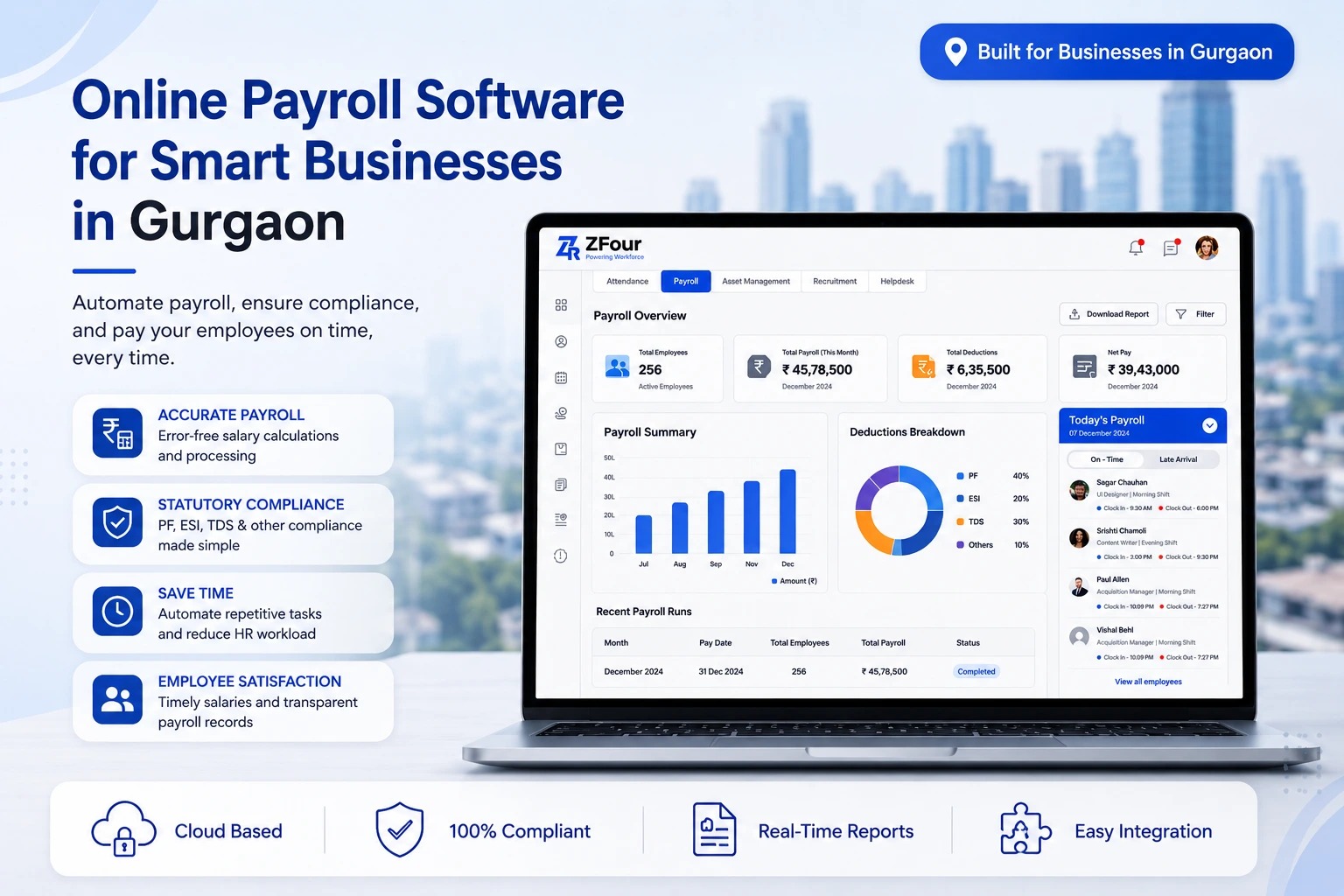
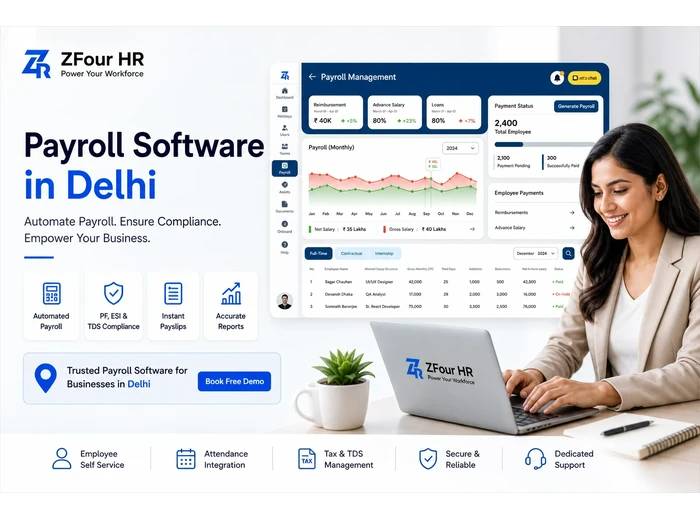
ZFour HRMS automates payroll calculations and supports statutory deductions including PF, ESI, TDS, and Professional Tax. Payroll data can be connected with attendance information, helping reduce manual data entry between attendance and salary processing.
PF, ESI & TDS Compliance Support
The ZFour payroll compliance engine is designed to automate PF and ESI calculations, TDS processing, and compliance reporting. It also supports PF ECR generation, ESI contribution data, Form 16 generation, and state-specific Professional Tax logic.
Why This Matters
The main advantage of using ZFour HRMS is not simply automating individual calculations. It connects employee data → payroll → statutory calculations → reporting within one HR technology ecosystem.
This helps businesses reduce manual HR work while giving HR and finance teams a more centralized view of payroll and compliance activities.
Important: HRMS automation supports compliance management but does not replace professional legal or tax advice. Businesses should verify applicable requirements based on their establishment, employee category, location, and the latest government notifications.
How HR Compliance Software Works
Most platforms follow a similar operating model: employee and salary data flows in from payroll, the system applies current statutory rules to calculate each required contribution or deduction, generates the necessary documentation (challans, reports, filings), and surfaces upcoming deadlines through a dashboard or alert system — with HR reviewing and approving before anything is filed or deposited.
Manual Compliance vs. HR Compliance Software
Compliance Process | Manual Management | Automated with HR Compliance Software |
|---|---|---|
PF & ESIC calculation | Spreadsheet-based, error-prone as rules change | Automatic calculation per current rules |
TDS deduction | Manual tax slab updates | Auto-updated regime-aware calculation |
POSH committee tracking | Easy to lose track of expiring terms | Flagged proactively (platform-dependent) |
Compliance reports | Time-consuming manual compilation | One-click, audit-ready generation |
Filing deadlines | Risk of missed due dates | Automated reminders and alerts |
Audit readiness | Scattered across files and emails | Centralized, exportable dashboard |
HR Compliance Checklist
Use this checklist to review key HR compliance requirements in your organization:
EPF applicability confirmed based on the establishment's coverage and applicable statutory requirements.
ESIC applicability confirmed based on the establishment type, location, employee count, and applicable coverage requirements.
Wage structure reviewed according to the applicable Labour Code wage definition and current statutory requirements.
POSH Internal Committee (IC) properly constituted where applicable, including the required members and external member.
POSH reporting requirements reviewed and applicable annual reporting completed with the relevant authority.
Shops & Establishments registration verified and kept current for each applicable operating location.
Professional Tax applicability confirmed according to the state-specific rules.
TDS calculated and deducted correctly based on employee income, declarations, applicable tax regime, and current tax rules.
Bonus and gratuity obligations reviewed based on employee eligibility and applicable statutory requirements.
All statutory deposits, returns, and filings completed within their respective due dates.
Employee and compliance documentation centrally maintained for audit and record-keeping purposes.
State-specific and labour-law requirements reviewed regularly to account for regulatory changes.
Compliance Note: HR and payroll regulations can vary by establishment, employee category, state, and applicable legislation. Businesses should verify the latest requirements with the relevant government authority or a qualified compliance professional before making compliance decisions.
Future of HR Compliance in India
HR compliance is becoming increasingly digital, with payroll systems, statutory reporting and compliance records moving toward more centralized workflows. As regulations and state-specific requirements evolve, businesses should prioritize software that can accommodate regulatory updates without relying on manual spreadsheet changes.
The Bottom Line
HR compliance in India isn't a single monthly calculation; it's an ongoing obligation spanning payroll taxes, wage and social-security requirements, and governance requirements such as POSH. These obligations can carry financial and legal consequences when they are missed or handled incorrectly. Companies can fall behind when compliance activities are tracked across disconnected spreadsheets, files, and manual processes. Compliance software's real value is bringing these requirements into one system, helping HR teams track calculations, documentation, deadlines, and reporting more consistently.
Ready to see it in practice? Book a free ZFour HRMS demo to see automated statutory compliance in action, or start with our Payroll Taxes in India guide if you want to go deeper on PF/ESIC/TDS specifically first.
Related Articles
External References

Farheen Ahmed
HR Tech Content Strategist at ZFour Technology Private Limited
Research-driven content on HRMS, payroll, attendance management, employee management, and modern HR technology for Indian businesses.