10 min read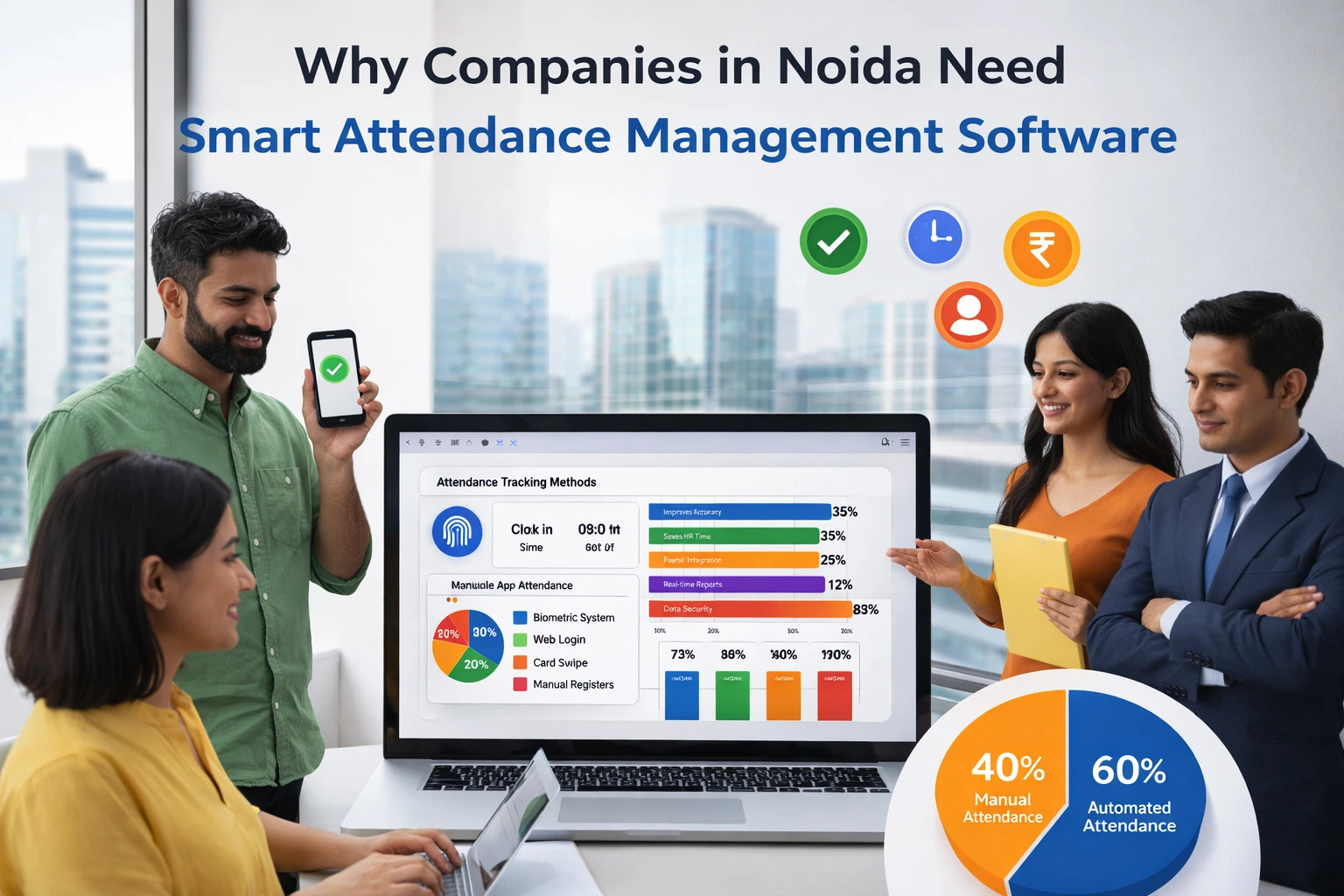
Quick Answer
Attendance management software helps businesses automate employee check-in and check-out, shift management, leave tracking, payroll inputs, reporting, and employee self-service.
For businesses in Noida, platforms such as ZFour HRMS, Keka HR, greytHR, Zoho People, and Darwinbox can be evaluated based on workforce size, attendance methods, payroll requirements, integrations, reporting, scalability, and budget.
There is no single attendance management platform that is best for every organization. The right solution depends on whether your business needs biometric attendance, GPS or mobile attendance, shift management, payroll integration, employee self-service, multi-location support, or other HR workflows.
Key Highlights
Category | Details |
|---|---|
Best For | Startups, SMEs, mid-sized businesses, and enterprises |
Industries | IT, manufacturing, retail, healthcare, logistics, BPO, and education |
Deployment | Cloud-based HRMS and attendance platforms |
Attendance Methods | Biometric, GPS, mobile, web, and other supported methods |
Integrations | Payroll, leave management, employee self-service, and HRMS |
Primary Benefit | Automated attendance tracking and better workforce visibility |
Location Focus | Noida and surrounding business areas |
Updated | 2026 |
AI Summary
Attendance management software automates employee attendance tracking and reduces manual HR work.
It can connect attendance with payroll, leave management, employee records, and reporting.
Businesses in Noida can use attendance software for office, hybrid, shift-based, and field workforces.
Modern platforms may support biometric, mobile, GPS, web, and other attendance methods depending on configuration.
Businesses should compare features, integrations, scalability, security, support, and total cost before selecting a platform.
Why Trust This Guide?
This guide explains the key features, workflows, and evaluation criteria businesses should consider when choosing attendance management software in Noida.
It focuses on practical HR requirements such as attendance tracking, shift management, payroll integration, employee self-service, reporting, mobile attendance, workforce visibility, and scalability.
Product features, pricing, integrations, and implementation requirements can change by provider and plan. Businesses should verify current details directly with each software provider before making a purchase decision.
Introduction
Employee attendance is closely connected with payroll, leave management, workforce planning, and daily HR operations.
When attendance records are inaccurate, businesses may face payroll discrepancies, employee disputes, overtime calculation issues, and additional administrative work.
For growing organizations in Noida, attendance management can become more complex as businesses introduce multiple departments, shifts, locations, hybrid work arrangements, and field teams.
Modern attendance management software can help businesses capture attendance digitally, connect relevant information with payroll and leave processes, and provide managers with better visibility into workforce attendance.
Instead of relying entirely on registers, spreadsheets, or disconnected attendance devices, HR teams can use centralized digital workflows to manage attendance more efficiently.
For a broader comparison of attendance solutions across India, see our guide to Best Attendance Management Software in India 2026.
What Is Attendance Management Software?
Attendance management software is a digital HR solution used to record, monitor, and manage employee attendance.
Depending on the platform, it can support:
Employee check-in and check-out
Biometric attendance
Mobile attendance
GPS-based attendance
Web attendance
Shift management
Overtime tracking
Leave integration
Attendance regularization
Payroll integration
Employee self-service
Attendance reports
Workforce analytics
For example, an organization with office employees and field teams may use biometric attendance for office staff and mobile or GPS-based attendance for eligible field employees.
This can help HR teams manage different attendance requirements through more centralized digital workflows.
Why Businesses in Noida Need Attendance Management Software
Businesses operating in Noida can have different workforce structures, including office-based teams, manufacturing employees, shift workers, sales teams, field employees, and hybrid workers.
Common attendance challenges include:
Managing multiple shifts
Tracking overtime
Supporting remote and field employees
Monitoring multiple locations
Connecting attendance with payroll
Managing leave and attendance together
Preparing attendance reports
Resolving attendance discrepancies
Manual attendance processes can become increasingly difficult to manage as employee numbers and operational complexity grow.
Attendance software can help automate repetitive processes while giving HR teams and managers better access to attendance information.
Top Attendance Management Software in Noida
There is no universal “best” attendance management platform. Businesses should compare solutions according to workforce structure, attendance requirements, payroll workflows, integrations, budget, and future growth.
Attendance Software | Best Suited For | Attendance Capabilities to Evaluate | Key Strength |
|---|---|---|---|
ZFour HRMS | Indian SMEs and growing businesses | Biometric, GPS, mobile, web and configured attendance workflows | Attendance with payroll and broader HRMS workflows |
Keka HR | Growing and mid-sized companies | Attendance, leave, shifts and integrations | HR, payroll and employee experience |
greytHR | Small and mid-sized businesses | Attendance, shifts and payroll-related workflows | Payroll and HR administration |
Zoho People | Businesses using the Zoho ecosystem | Mobile, biometric integrations, geo-fencing and attendance workflows | HR workflows and integrations |
Darwinbox | Larger and enterprise organizations | Workforce attendance and HR workflows | Enterprise HR management |
Note: Features, pricing, integrations, availability, and implementation requirements can vary by provider, plan, and configuration. Verify current capabilities directly with each vendor before purchasing.
ZFour HRMS
ZFour HRMS provides attendance and broader HR management capabilities for businesses looking to connect attendance with payroll and other HR workflows.
Depending on configuration, businesses can evaluate ZFour for:
Attendance tracking
Biometric attendance
GPS-based attendance
Mobile attendance
Shift management
Leave management
Payroll workflows
Employee self-service
HR reporting
Employee management
ZFour can be considered by startups, SMEs, growing businesses, and organizations that need multiple attendance methods alongside broader HR workflows.
Businesses managing sales teams, technicians, delivery staff, or other mobile employees can also explore field employee attendance tracking.
Keka HR
Keka HR provides HR management capabilities covering areas such as attendance, leave, payroll, employee experience, and performance management.
Businesses evaluating Keka should compare:
Attendance workflows
Shift management
Leave integration
Payroll requirements
Employee self-service
Performance management
Reporting
Integrations
greytHR
greytHR is an HR and payroll platform that businesses can evaluate for attendance, payroll, leave, employee management and HR administration.
Areas to compare include:
Attendance
Payroll
Shift management
Leave
Employee self-service
Reports
Payroll-related workflows
Integrations
Zoho People
Zoho People provides HR management and attendance capabilities and can be particularly relevant for businesses already using other Zoho applications.
Businesses can evaluate areas such as
Employee management
Attendance
Leave
Mobile attendance
Biometric integrations
Geo-fencing
HR workflows
Payroll integrations
Reporting
Darwinbox
Darwinbox is positioned toward broader enterprise HR management and can be evaluated by organizations with more complex workforces and HR requirements.
Areas to evaluate include:
Core HR
Attendance
Payroll
Recruitment
Performance
Talent management
Analytics
Workflow automation
Key Features of Attendance Management Software
Automatic Attendance Tracking
Automatic attendance tracking records employee check-in and check-out information digitally.
Depending on the platform, businesses may use:
Biometric devices
Mobile applications
GPS
Web login
Face recognition
RFID or card systems
Benefits
Reduces manual entry
Improves attendance visibility
Reduces repetitive HR work
Creates centralized attendance records
Shift Management
Businesses with different working schedules need attendance software that can handle various shifts.
Look for support for:
Day shifts
Night shifts
Rotational shifts
Flexible shifts
Overtime
Grace periods
Shift changes
Effective shift management can reduce manual attendance adjustments and improve workforce planning.
Leave Management Integration
Attendance and leave should work together wherever possible.
Important capabilities include:
Leave applications
Approval workflows
Leave balances
Holiday calendars
Half-day leave
Attendance and leave reconciliation
This can reduce duplicate data entry between HR and attendance systems.
Payroll Integration
Attendance data often contributes to payroll inputs.
Depending on configuration, an integrated system may use information such as:
Working days
Approved leave
Overtime
Late attendance
Shift information
Businesses evaluating payroll workflows can also explore how attendance data connects with payroll.
The exact payroll workflow depends on the software, configuration, and business rules.
Real-Time Dashboard
A centralized dashboard can provide visibility into:
Employees present
Absences
Late arrivals
Employees on leave
Shift status
Overtime
This helps managers and HR teams monitor workforce attendance without manually compiling reports.
Mobile Attendance
Mobile attendance can be useful for:
Field employees
Sales teams
Remote employees
Hybrid workers
Employees working across locations
Depending on the platform, mobile attendance may use GPS, geo-fencing, device authentication, or other verification methods.
For organizations evaluating location-based attendance, see this guide to geo-fencing attendance.
Biometric Attendance
Biometric attendance can use devices or supported integrations to identify employees during check-in and check-out.
Businesses considering biometric attendance should evaluate:
Device compatibility
Integration
Data synchronization
Multiple locations
Attendance rules
Backup attendance methods
For a Noida-specific overview, see this biometric attendance system guide.
Automated Reports and Analytics
Attendance software can provide reports such as:
Daily attendance
Monthly attendance
Overtime
Leave
Working hours
Shift reports
Attendance trends
Automated reports can reduce the time HR teams spend preparing attendance information manually.
Cloud-Based Access
Cloud-based attendance software can allow authorized users to access workforce information from different locations.
Potential benefits include:
Remote access
Multi-location management
Centralized data
Reduced local infrastructure
Easier system updates
Businesses should still evaluate security, access controls, backups and data-handling practices before implementation.
Employee Self-Service
Employee self-service can allow employees to:
View attendance
Check leave balances
Apply for leave
Review attendance history
View shift information
Submit attendance-related requests
This can reduce routine HR queries and improve transparency.
Problems Solved by Attendance Management Software
Challenge | How Software Can Help |
|---|---|
Manual attendance errors | Digital check-in and check-out |
Payroll discrepancies | Attendance-to-payroll workflows |
Overtime tracking | Configured overtime rules |
Multiple shifts | Shift scheduling and attendance rules |
Leave reconciliation | Connected leave and attendance workflows |
Reporting delays | Automated attendance reports |
Employee disputes | Employee access to attendance records |
Multi-location management | Centralized attendance visibility |
Field attendance | Mobile/GPS-based attendance where supported |
Benefits of Attendance Management Software
Improved Attendance Accuracy
Digital attendance records can reduce manual entry errors and provide a clearer history of employee attendance.
Faster Payroll Preparation
Connecting attendance with payroll can reduce repetitive data verification and manual data transfer.
Higher HR Productivity
Automating routine attendance tasks gives HR teams more time for recruitment, employee engagement, and other strategic activities.
Better Workforce Visibility
Managers can access attendance information and identify patterns such as absenteeism, late arrivals, or overtime.
Improved Employee Experience
Self-service access can make attendance and leave information more transparent for employees.
Easier Reporting
Automated reports reduce the need to prepare attendance summaries manually.
How Attendance Management Software Works
A typical attendance workflow can look like this:
Employee Check-in → Attendance Captured → Shift/Leave Validation → Approval if Required → Payroll Input → Reports → Employee Self-Service
The exact workflow depends on the platform and the organization's attendance policies.
Attendance Software for Different Business Needs
IT Companies
IT companies may need:
Hybrid attendance
Flexible shifts
Mobile attendance
Employee self-service
Payroll integration
Manufacturing
Manufacturing organizations may prioritize:
Multiple shifts
Overtime
Biometric attendance
Workforce reporting
Multi-location management
Retail
Retail businesses may need:
Branch-level attendance
Shift scheduling
Mobile attendance
Centralized reporting
Healthcare
Healthcare organizations may require:
Day and night shifts
Workforce scheduling
Overtime
Attendance reporting
Logistics and Field Services
Organizations with field teams may benefit from:
GPS attendance
Mobile check-in
Geo-fencing
Location-based workforce visibility
Startups and SMEs
Growing companies may prioritize:
Easy implementation
Payroll integration
Attendance
Leave
Employee self-service
Scalability
Attendance Management Software vs Manual Attendance
Area | Manual Attendance | Attendance Software |
|---|---|---|
Attendance tracking | Registers/spreadsheets | Digital workflows |
Payroll inputs | Manual transfer | Can be integrated |
Leave | Separate process | Can be connected |
Overtime | Manual calculation | Configured rules |
Reports | Manual preparation | Automated reports |
Employee access | HR dependent | Self-service where supported |
Multi-location | Difficult | Centralized management |
Field attendance | Difficult | Mobile/GPS options where supported |
Scalability | Limited | Designed for growing workflows |
How to Choose the Best Attendance Management Software in Noida
Choosing software based only on price can create problems later.
Evaluate the platform against your actual workforce requirements.
Understand Your Workforce
Consider:
Employee count
Number of locations
Office versus field employees
Shift patterns
Hybrid workforce
Remote employees
Define Attendance Requirements
Determine whether you need:
Biometric
Mobile
GPS
Geo-fencing
Web attendance
Face recognition
RFID
Check Payroll Integration
Confirm how attendance information moves into payroll and which attendance inputs affect salary processing.
Evaluate Leave Integration
Check whether approved leave is reflected correctly in attendance and payroll workflows.
Review Employee Self-Service
Test whether employees can easily:
View attendance
Apply for leave
Request regularization
Check approvals
Check Reporting
Make sure HR and managers can access the reports they actually need.
Evaluate Security
Review:
User permissions
Role-based access
Authentication
Audit trails
Data protection
Backup processes
Check Scalability
Ask whether the platform can support:
More employees
More locations
Additional shifts
New departments
Future HR workflows
Evaluate Implementation and Support
Compare:
Data migration
Training
Onboarding
Customer support
Documentation
Implementation timelines
Test Real Workflows
Before purchasing, ask the vendor to demonstrate:
Employee check-in
Attendance correction
Leave approval
Shift change
Overtime
Payroll integration
Employee self-service
Attendance reporting
Attendance Software Evaluation Checklist
Evaluation Criteria | What to Check |
|---|---|
Payroll Integration | Attendance-to-payroll workflow |
Leave Management | Leave and attendance synchronization |
Mobile Attendance | Mobile check-in/check-out |
GPS | Location-based attendance where required |
Biometric | Device compatibility and integration |
Geo-fencing | Location boundary controls |
Shift Management | Day, night and rotational shifts |
Cloud Access | Authorized access from different locations |
Employee Self-Service | Attendance and leave access |
Reporting | Attendance, overtime, and workforce reports |
Security | Permissions, authentication, and audit controls |
Scalability | Employees, locations, and departments |
Integrations | Payroll, HRMS, and other systems |
Support | Implementation and ongoing assistance |
Common Mistakes When Choosing Attendance Software
Choosing Only Based on Price
A cheaper platform may not include the workflows or integrations your business needs.
Compare the total cost and business value, not just the subscription price.
Ignoring Payroll Integration
If attendance and payroll remain disconnected, HR teams may continue doing manual reconciliation.
Overlooking Future Growth
A system that works for a small workforce may not be suitable for a much larger organization.
Ignoring Employee Experience
Employees should have a simple way to view attendance, apply for leave and submit attendance-related requests.
Not Considering Mobile Attendance
Businesses with field or hybrid employees should evaluate whether mobile attendance is required.
Not Checking Support
Review onboarding, training, documentation, and customer support before making a decision.
Key Takeaways
Attendance management software automates employee time tracking and reduces manual HR work.
Payroll integration can reduce repetitive attendance-to-payroll processing.
Cloud-based platforms can support hybrid and multi-location workforces.
Mobile and GPS attendance can help businesses manage eligible field employees.
Biometric attendance can reduce manual check-in processes.
Employee self-service improves access to attendance and leave information.
Businesses should compare features, integrations, security, scalability, implementation, support and total cost.
The best attendance software depends on the organization's actual workforce requirements.
Ready to Simplify Attendance Management?
Manual attendance tracking can increase administrative work and make payroll preparation more difficult as a business grows.
A centralized attendance management solution can help businesses automate attendance workflows, improve workforce visibility and connect attendance with related HR processes.
Why Consider ZFour HRMS?
Automated Attendance Tracking
Payroll Integration
Leave Management
Employee Self-Service
Real-Time Dashboards
Multi-Shift Management
Cloud-Based Access
Mobile Attendance
Scalable HR Workflows
Book a personalized demo of ZFour HRMS to explore how attendance management, payroll, leave and employee self-service can work together in one HRMS platform.
Related Attendance Resources

Farheen Ahmed
HR Tech Content Strategist at ZFour Technology Private Limited
Research-driven content on HRMS, payroll, attendance management, employee management, and modern HR technology for Indian businesses.