13 min read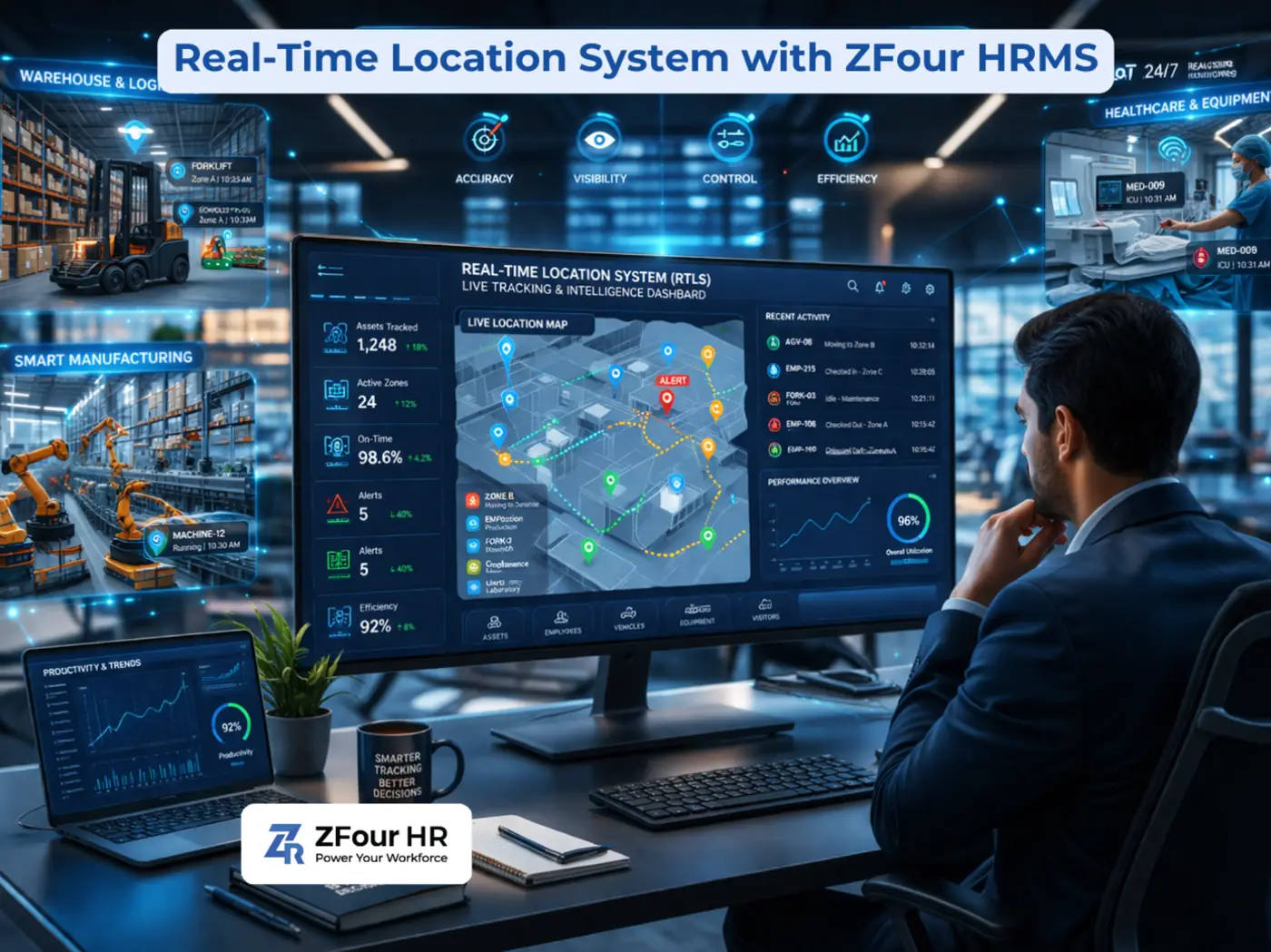
Quick Answer
Real-time employee location tracking is a GPS-enabled workforce management solution that allows organizations to monitor the live location of field employees during working hours. It helps businesses improve attendance accuracy, optimize field operations, verify employee visits, enhance workforce productivity, and make better operational decisions through location-based insights.
Modern HRMS platforms combine GPS tracking with attendance management, geofencing, route history, task management, and reporting to simplify workforce management while maintaining transparency and operational efficiency.
Introduction
Organizations with field sales teams, service engineers, delivery personnel, technicians, healthcare staff, construction workers, and remote employees often face challenges in tracking employee movement, verifying field visits, and maintaining accurate attendance records. Traditional methods such as phone calls, spreadsheets, or manual check-ins provide limited visibility and can lead to communication delays, inaccurate reporting, and administrative overhead.
Real-time employee location tracking addresses these challenges by providing live GPS-based visibility into workforce activities during working hours. Managers can monitor employee locations, verify attendance through geofencing, allocate tasks efficiently, and generate accurate reports—all from a centralized platform.
When implemented responsibly, location tracking not only improves operational efficiency but also enhances employee accountability, optimizes travel routes, and supports better customer service through faster response times.
In this guide, you'll learn:
What real-time employee location tracking is
How GPS-based employee tracking works
Key features to look for in a location tracking solution
Benefits for employees, managers, and businesses
Industry-specific use cases
Privacy considerations and best practices
How to choose the right employee location tracking software
Who Should Read This Guide?
This guide is designed for organizations that manage mobile, remote, or field-based workforces.
It is especially useful for:
HR Managers and HR Executives
Operations Managers
Business Owners
Field Sales Teams
Service Engineers
Delivery & Logistics Companies
Construction Companies
Healthcare Organizations
Facility Management Teams
Workforce Managers
Small and Medium Businesses (SMEs)
Enterprises managing distributed teams
Whether your organization manages a small field workforce or multiple teams across different locations, understanding real-time employee location tracking can help improve operational visibility, attendance accuracy, and workforce coordination.
What Is Real-Time Employee Location Tracking?
Real-time employee location tracking is a GPS-enabled workforce management solution that helps organizations monitor the live location of field employees during working hours. It provides managers with real-time visibility into employee movements, allowing businesses to coordinate field operations more efficiently, verify work locations, and improve overall workforce management.
Unlike traditional attendance systems that only record when an employee checks in or checks out, real-time location tracking continuously updates an employee's location during authorized working hours. When integrated with an HRMS, it can also support attendance verification, route monitoring, task allocation, geofencing, and workforce reporting from a single platform.
This technology is commonly used by organizations that manage mobile or distributed teams, including field sales representatives, delivery executives, service technicians, healthcare workers, facility management teams, and construction site staff.
How Does Real-Time Employee Location Tracking Work?
Employee location tracking combines GPS technology, mobile applications, cloud-based software, and workforce management tools to provide accurate location updates and operational insights. The process is designed to help managers monitor field activities while improving coordination and reporting.
A typical workflow includes:
Employees start their shift using the mobile application.
GPS captures the employee's location during authorized working hours.
Location data is securely transmitted to the centralized dashboard.
Managers can view live employee locations, completed visits, and travel history.
Attendance can be verified using geofencing or location-based check-ins.
Reports and analytics help organizations review workforce productivity and operational performance.
Real-Time Employee Location Tracking Workflow
Employee Starts Work Shift
            ↓
GPS Location Captured
            ↓
Secure Location Data Sync
            ↓
Live Manager Dashboard
            ↓
Geofencing & Attendance Verification
            ↓
Task Assignment & Route Monitoring
            ↓
Reports, Analytics & Workforce Insights
Technologies Used in Employee Location Tracking
Modern employee tracking solutions combine several technologies to improve accuracy and operational efficiency.
Technology | Purpose |
|---|---|
GPS (Global Positioning System) | Determines the employee's live geographical location. |
Mobile Application | Collects location updates and enables employee check-in/check-out. |
Geofencing | Creates virtual boundaries to automate attendance and location verification. |
Cloud Platform | Stores location data securely and enables real-time access. |
Manager Dashboard | Displays live workforce locations, reports, and operational insights. |
Analytics & Reporting | Generates workforce reports, travel history, attendance summaries, and productivity insights. |
Key Takeaway
Real-time employee location tracking is more than simply viewing an employee's GPS location. When integrated with HRMS software, it helps organizations improve attendance accuracy, coordinate field teams, optimize route planning, automate location-based attendance, and make informed workforce decisions through centralized reporting and analytics.
Key Features of Real-Time Employee Location Tracking
The effectiveness of an employee location tracking solution depends on more than just GPS monitoring. Modern workforce management platforms combine location tracking with attendance management, task monitoring, reporting, and analytics to help organizations manage field operations more efficiently.
Below are the key features businesses should consider when evaluating a real-time employee location tracking solution.
Benefits for Employees
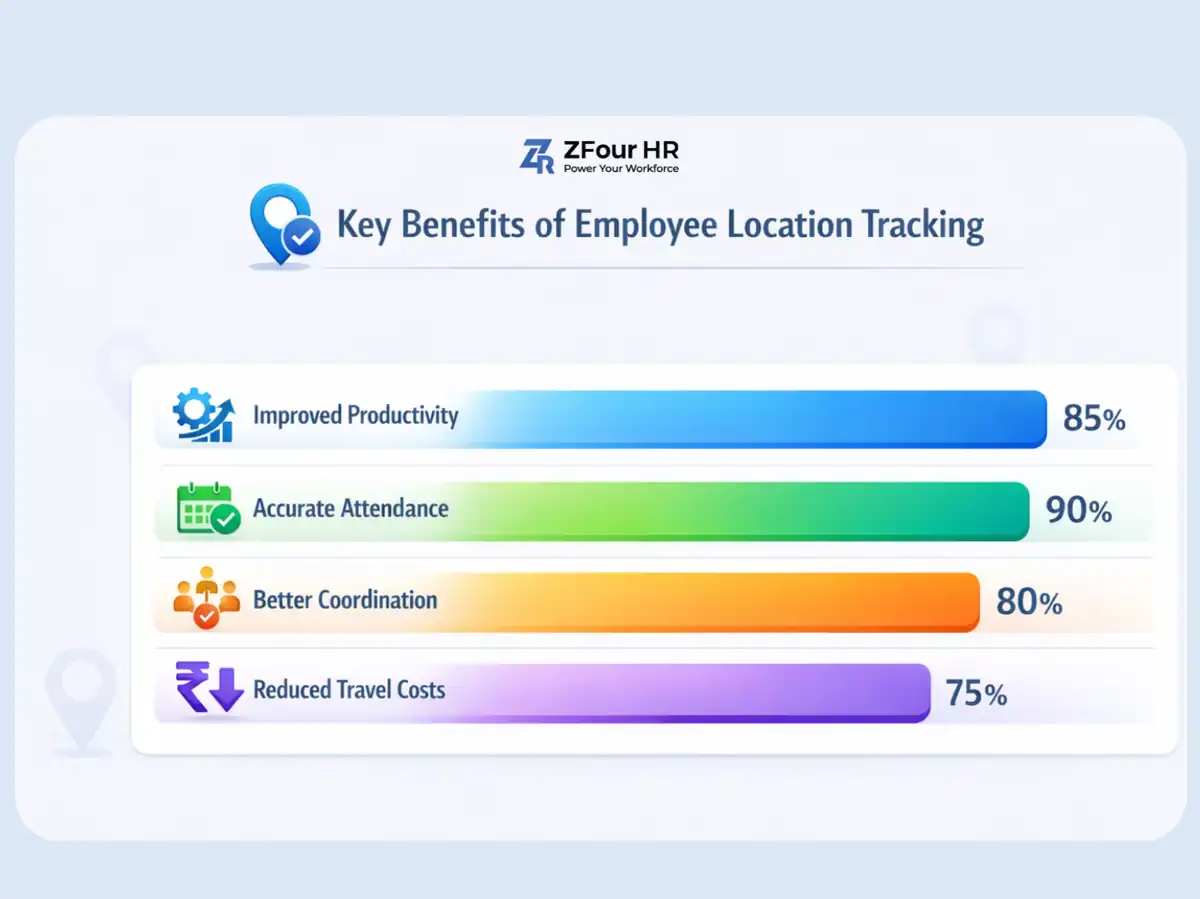
When implemented transparently and during authorized working hours, employee location tracking simplifies daily field operations and reduces manual reporting.
Employees can:
Check in and check out using GPS-enabled attendance.
Receive task assignments directly through a mobile application.
View assigned work locations and schedules.
Reduce manual paperwork by automating field activity records.
Access attendance history and completed task details.
Stay connected with managers while working remotely or in the field.
Benefits for Managers and HR Teams
Real-time visibility helps managers coordinate field teams more effectively while reducing administrative effort.
Managers and HR teams can:
Monitor employee locations during working hours.
Verify customer visits and field activities.
Improve attendance accuracy through location-based verification.
Assign tasks based on employee availability and proximity.
Generate workforce reports for operational planning.
Reduce manual follow-ups and improve communication with field employees.
Benefits for Businesses
Employee location tracking supports better workforce management while improving operational efficiency and customer service.
Organizations can:
Improve field workforce visibility.
Reduce attendance discrepancies.
Optimize travel routes and response times.
Increase employee accountability through verified work locations.
Improve resource allocation and task planning.
Generate real-time operational reports.
Integrate attendance, payroll, and workforce management within a single HRMS platform.
Key Takeaway
Real-time employee location tracking is more than a GPS monitoring tool. When integrated with HRMS software, it helps organizations automate attendance verification, improve workforce coordination, optimize field operations, and make informed business decisions using location-based insights and workforce analytics.
Industry-Specific Use Cases of Real-Time Employee Location Tracking
Real-time employee location tracking is valuable for organizations that manage field-based, remote, or mobile workforces. Different industries use location tracking to improve operational efficiency, verify employee attendance, optimize travel routes, and enhance customer service. While the objectives may vary, the common goal is to improve workforce visibility and streamline day-to-day operations.
Privacy, Challenges & Best Practices for Employee Location Tracking
Real-time employee location tracking can improve workforce management, but it should be implemented responsibly. Organizations should balance operational efficiency with employee privacy through transparent policies, secure data management practices, and clearly defined tracking procedures.
Employees are more likely to accept location tracking when they understand its purpose, how their information is used, and the safeguards in place to protect their privacy. Clear communication helps build trust and encourages successful adoption across the organization.
Organizations should protect employee location data by following recognized cybersecurity best practices and implementing appropriate access controls.
How to Choose the Right Employee Location Tracking Software
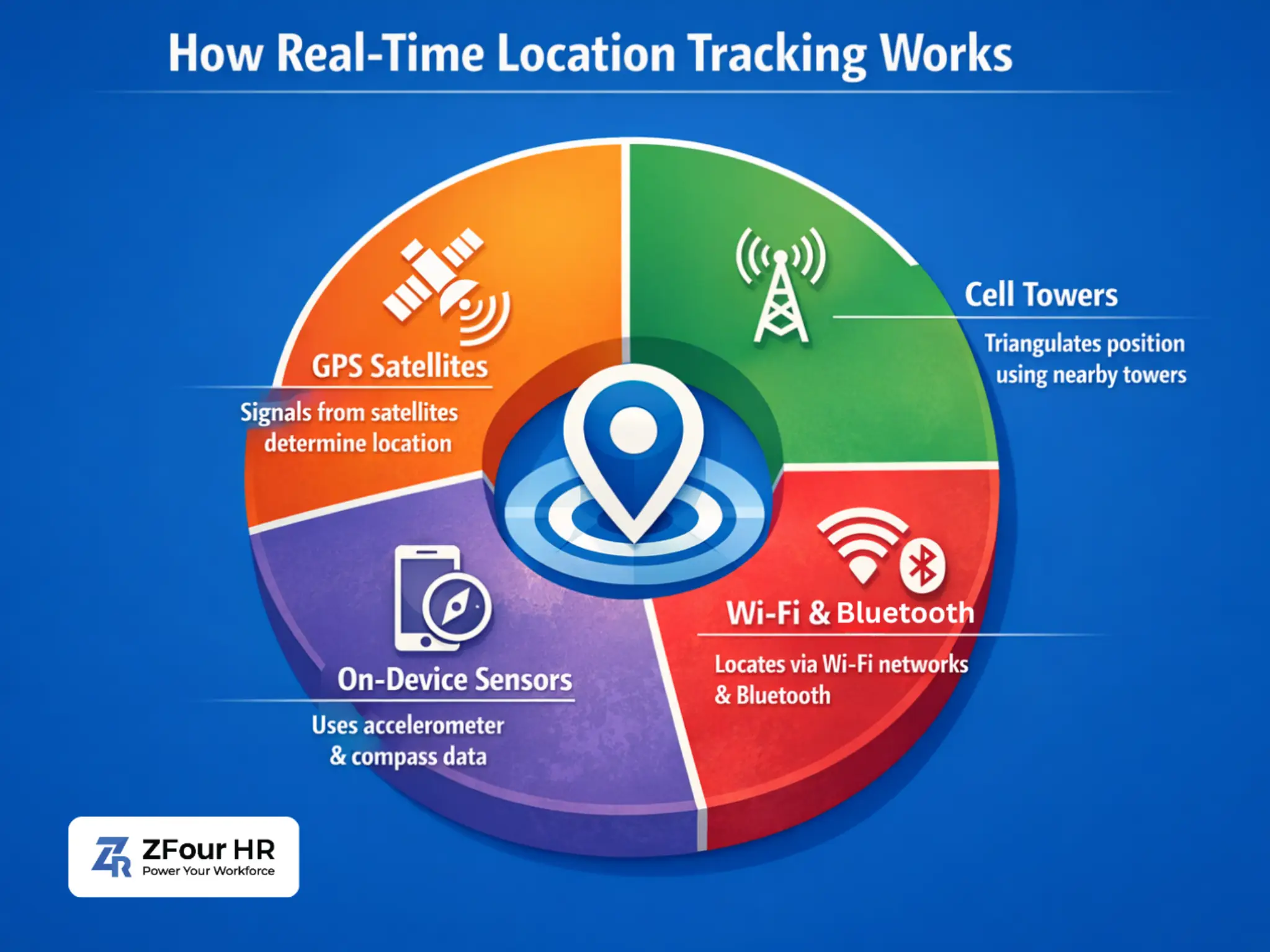
Selecting employee location tracking software involves more than choosing a solution with GPS functionality. Organizations should evaluate how well the platform supports workforce management, integrates with existing HR processes, protects employee data, and scales as business requirements evolve.
The right solution should improve operational efficiency while maintaining transparency, data security, and a positive employee experience.
Essential Features to Evaluate
Before selecting employee location tracking software, compare each solution using the following criteria.
Evaluation Criteria | Why It Matters |
|---|---|
Real-Time GPS Tracking | Provides live visibility into employee locations during authorized working hours. |
Geofencing | Automates attendance verification and location-based check-ins. |
Location-Based Attendance | Reduces manual attendance errors through GPS verification. |
Mobile Application | Enables employees to check in, receive tasks, and update work status from anywhere. |
Task & Visit Management | Helps managers assign work, verify visits, and monitor task completion. |
Route History & Travel Logs | Supports workforce planning and operational analysis. |
Reports & Analytics | Generates workforce insights, attendance reports, and productivity metrics. |
HRMS & Payroll Integration | Synchronizes attendance with payroll, leave management, and employee records. |
Role-Based Access Control | Protects employee location data by limiting access to authorized users. |
Scalability | Supports future workforce growth without changing systems. |
Questions to Ask Before Choosing a Solution
Before making a decision, consider asking the software provider:
Does the platform support real-time GPS tracking and geofencing?
Can it integrate with our HRMS, payroll, or attendance system?
Is location tracking limited to authorized working hours?
What reports and analytics are available?
Does the mobile application support Android and iOS devices?
How is employee location data protected?
Can managers assign and monitor field tasks from the same platform?
Is the solution suitable for multi-location or remote workforces?
What implementation, onboarding, and customer support services are provided?
Employee Tracking Software Comparison Checklist
Feature | Basic GPS App | Employee Tracking Software | Integrated HRMS with Location Tracking |
|---|---|---|---|
Live GPS Tracking | ✅ | ✅ | ✅ |
Geofencing | Limited | ✅ | ✅ |
Attendance Management | ❌ | Limited | ✅ |
Payroll Integration | ❌ | Limited | ✅ |
Task Management | ❌ | ✅ | ✅ |
Employee Records | ❌ | ❌ | ✅ |
Reports & Analytics | Basic | Advanced | Comprehensive |
HR & Workforce Management | ❌ | Partial | Complete |
Signs You've Chosen the Right Solution
A well-designed employee location tracking platform should help your organization:
Improve workforce visibility without increasing administrative effort.
Automate attendance using GPS and geofencing.
Reduce manual reporting and paperwork.
Optimize travel routes and field task allocation.
Integrate seamlessly with payroll and HR operations.
Generate actionable reports for workforce planning.
Scale easily as your organization grows.
Key Takeaway
The best employee location tracking software is not simply the one with the most features. It is the solution that aligns with your workforce structure, operational processes, privacy requirements, and long-term business goals. Evaluating integration capabilities, reporting, security, scalability, and user experience alongside GPS functionality helps organizations make a more informed technology investment.
Common Challenges
Organizations implementing employee location tracking may encounter operational and organizational challenges if the solution is not planned carefully.
Common challenges include:
Employee concerns about privacy.
Resistance to adopting new technology.
Inaccurate GPS signals in indoor or remote environments.
Battery consumption on mobile devices.
Poor internet connectivity affecting live updates.
Integrating location tracking with existing HR or payroll systems.
Managing large volumes of location data efficiently.
Recognizing these challenges early allows organizations to plan appropriate implementation strategies and improve user adoption.
Best Practices for Successful Implementation
Organizations can maximize the value of employee location tracking by following practical implementation guidelines.
Recommended best practices:
Clearly communicate the purpose of location tracking to employees.
Develop a documented employee location tracking policy.
Configure tracking to operate only during working hours where appropriate.
Use role-based access controls to protect sensitive location information.
Integrate location tracking with attendance and workforce management systems.
Train managers and employees before implementation.
Regularly review reports and system performance to improve operational efficiency.
Monitor compliance with internal company policies and applicable legal requirements.
Balancing Productivity and Employee Trust
Successful employee location tracking is based on transparency rather than constant monitoring. Organizations should use location data to improve workforce coordination, attendance verification, task allocation, and operational planning—not to create unnecessary surveillance.
A well-implemented solution helps managers make informed decisions while giving employees confidence that location information is being used responsibly and only for legitimate business purposes.
Key Takeaway
Real-time employee location tracking delivers the best results when organizations combine technology with clear communication, transparent policies, and responsible data management. By focusing on privacy, security, and employee trust, businesses can improve operational efficiency while creating a positive workplace experience.
Real-Time Location Tracking for Field Sales Teams
Field sales professionals spend most of their working hours visiting clients, distributors, and business partners. Real-time location tracking helps sales managers monitor field activities, optimize travel routes, and verify customer visits without relying on manual updates.
Common use cases:
Monitor customer visits during working hours.
Verify meeting locations using GPS
Optimize daily travel routes.
Improve sales team coordination.
Generate visit history and activity reports.
Real-Time Location Tracking for Logistics & Delivery Businesses
Delivery personnel and logistics teams frequently travel across multiple locations. Employee location tracking improves route planning, delivery coordination, and operational visibility.
Common use cases:
Track delivery personnel in real time.
Optimize delivery routes.
Improve dispatch planning.
Monitor delivery completion.
Generate travel history reports.
Real-Time Location Tracking for Construction & Engineering Teams
Construction companies often manage employees across multiple project sites. Real-time location tracking helps project managers coordinate field teams, verify attendance, and monitor site visits.
Common use cases:
Verify attendance at construction sites.
Track engineer and supervisor visits.
Monitor workforce movement between projects.
Improve project coordination.
Generate location-based attendance reports.
Real-Time Location Tracking for Healthcare & Home Services
Healthcare professionals, home-care providers, and service technicians frequently travel to customer or patient locations. Location tracking helps improve scheduling and service coordination.
Common use cases:
Monitor healthcare staff visits.
Verify completed appointments.
Coordinate emergency responses.
Improve field workforce scheduling.
Track employee availability.
Real-Time Location Tracking for Facility Management & Security Services
Organizations managing multiple client locations require visibility into employee movement and site visits. GPS-based tracking supports workforce accountability and operational planning.
Common use cases:
Verify employee presence at client locations.
Track security patrol routes.
Monitor shift movement.
Improve incident response.
Generate attendance and activity reports.
Real-Time Location Tracking for Utility & Maintenance Services
Utility companies and maintenance service providers often assign technicians to multiple customer locations each day. Real-time tracking helps improve service efficiency and response times.
Common use cases:
Assign technicians based on proximity.
Monitor service requests.
Reduce travel time.
Improve emergency response.
Generate service completion reports.
Key Features of Real-Time Employee Location Tracking
Modern employee location tracking solutions offer much more than live GPS monitoring. They combine workforce management, attendance verification, task tracking, reporting, and analytics to help organizations manage mobile employees efficiently while improving operational visibility.
When evaluating employee location tracking software, businesses should look beyond basic location tracking and consider features that support workforce productivity, transparency, and day-to-day operations.
Industry-Wise Benefits at a Glance
Industry | Primary Business Benefit |
|---|---|
Field Sales | Verify customer visits and improve route planning |
Logistics & Delivery | Optimize deliveries and monitor field operations |
Construction | Track workforce movement across project sites |
Healthcare | Coordinate mobile healthcare professionals efficiently |
Facility Management | Verify employee presence across client locations |
Utility & Maintenance | Improve technician allocation and response times |
Real-World Business Scenario
Imagine a company managing 75 field service engineers across multiple cities. Without a centralized tracking solution, managers rely on phone calls, manual attendance records, and employee updates to coordinate daily operations.
By implementing a real-time employee location tracking solution integrated with an HRMS:
Employees check in using GPS-enabled attendance.
Managers can view live employee locations through a centralized dashboard.
Customer visits are verified using geofencing.
Tasks are assigned based on employee proximity and availability.
Attendance records are synchronized with payroll.
Reports provide insights into travel history, completed visits, and workforce productivity.
This approach helps reduce manual coordination, improve operational visibility, and support faster, data-driven decision-making.
Key Takeaway
Real-time employee location tracking supports a wide range of industries by improving workforce visibility, attendance accuracy, task coordination, and operational efficiency. Organizations should evaluate location tracking solutions based on their workforce structure, operational requirements, and business goals rather than focusing solely on GPS functionality.
Future Trends in Employee Location Tracking
Employee location tracking is evolving beyond basic GPS monitoring. Modern workforce management platforms are integrating artificial intelligence (AI), automation, predictive analytics, and cloud technologies to help organizations improve field operations, workforce planning, and employee experience.
As businesses continue adopting hybrid and mobile work models, employee location tracking is becoming an essential part of digital workforce management rather than a standalone tracking tool.
Emerging Trends
AI-powered workforce insights to identify travel patterns and operational improvements.
Smart geofencing for automated attendance verification and location-based workflows.
Predictive workforce planning using historical location and productivity data.
Cloud-based workforce management for real-time access across multiple locations.
Integrated HRMS platforms that combine GPS tracking, attendance, payroll, leave management, and reporting.
Mobile-first workforce solutions that enable employees and managers to work efficiently from anywhere.
Advanced analytics dashboards for measuring field productivity, travel efficiency, and workforce performance.
Conclusion
Real-time employee location tracking has become an essential workforce management capability for organizations managing field employees, remote teams, and distributed operations. Beyond simply displaying employee locations, modern tracking solutions help improve attendance accuracy, optimize field operations, verify customer visits, and provide actionable workforce insights that support better business decisions.
Before implementing an employee location tracking solution, organizations should evaluate their operational requirements, workforce structure, privacy policies, integration needs, and long-term business objectives. Choosing a platform that combines GPS tracking with attendance, reporting, payroll integration, and workforce management can help improve productivity while maintaining employee trust and operational transparency.
Ready to Improve Field Workforce Management?
Managing field employees becomes more effective when organizations combine real-time location tracking with attendance management, task monitoring, payroll, and workforce analytics in a single platform.
ZFour HRMS Geo Tracking helps businesses:
Monitor live employee locations during authorized working hours.
Automate GPS-based attendance with geofencing.
Track field visits and employee movement.
Improve workforce coordination through centralized dashboards.
Integrate location tracking with payroll, leave management, and HRMS.
Generate real-time reports for operational decision-making.
If you're evaluating employee location tracking software for your organization, explore how ZFour HRMS can help streamline field workforce management while improving operational visibility and productivity.
Related Articles

Farheen Ahmed
HR Tech Content Strategist at ZFour Technology Private Limited
Research-driven content on HRMS, payroll, attendance management, employee management, and modern HR technology for Indian businesses.