11 min read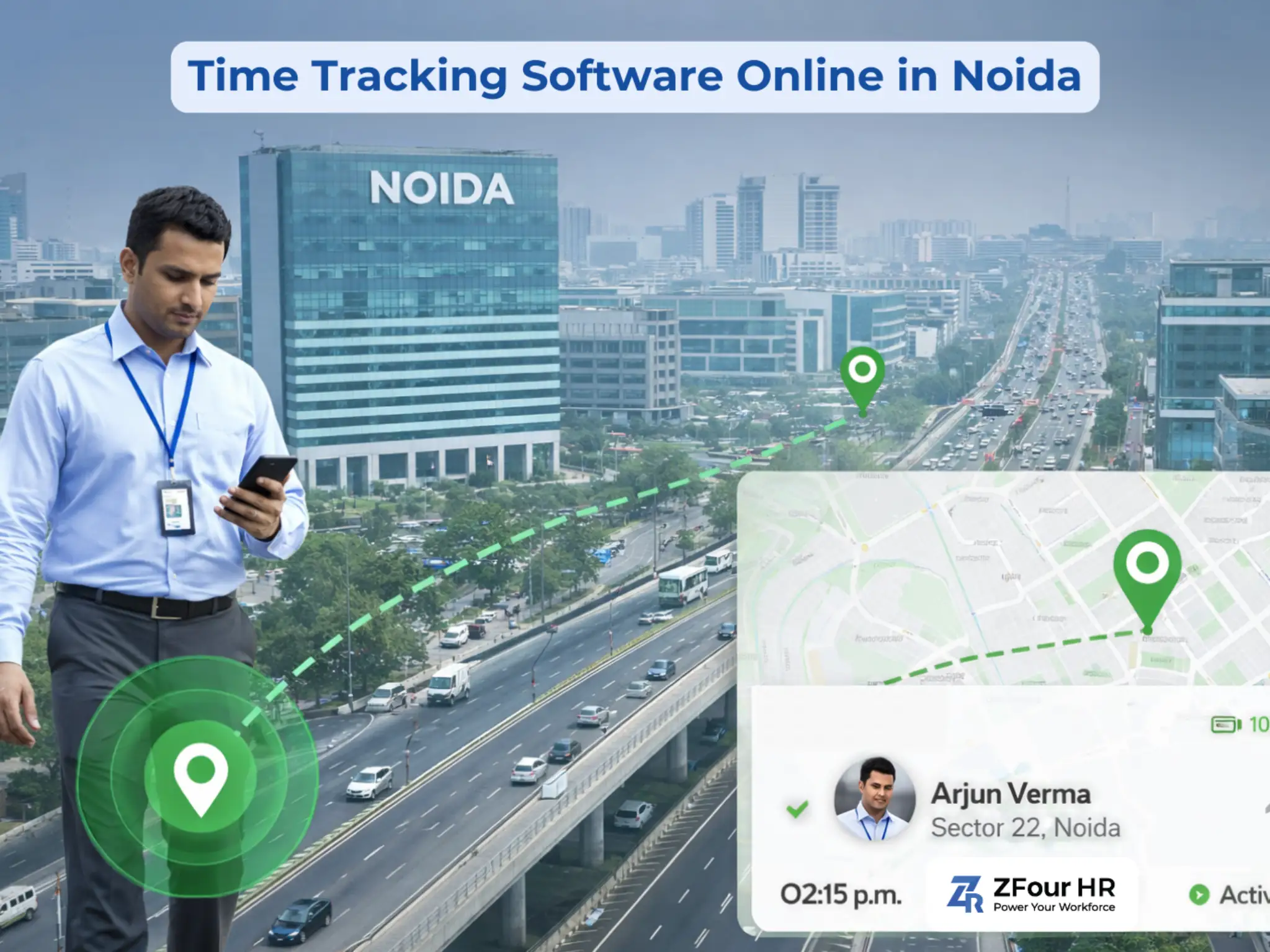
Managing employee work hours accurately is essential for improving productivity, ensuring payroll accuracy, and maintaining operational efficiency. As businesses expand, relying on paper timesheets, spreadsheets, or manual attendance records often leads to calculation errors, payroll discrepancies, and reduced visibility into employee working hours.
A Time Tracking Software helps organizations record employee work hours in real time, automate attendance tracking, monitor project time, and generate accurate reports from a centralized platform.
Whether employees work from the office, remotely, or in the field, businesses can track time efficiently while improving accountability and workforce management.
For organizations in Noida, including IT companies, startups, manufacturing units, agencies, and service-based businesses, cloud-based time tracking software simplifies daily operations, reduces administrative effort, and provides valuable insights into employee productivity. When integrated with attendance and payroll systems, it helps HR teams significantly reduce manual work and make faster, data-driven decisions.
In this guide, you'll learn how time tracking software works, its key features and benefits, common challenges it solves, how to choose the right solution, and why businesses in Noida are adopting automated time tracking to improve workforce management.
What Is Time Tracking Software?
Time Tracking Software is a digital solution that records employee working hours, tracks time spent on tasks and projects, and provides real-time visibility into workforce productivity. It replaces manual timesheets, paper records, and spreadsheets with an automated system that accurately captures work hours and generates detailed reports.
Modern time tracking software helps businesses monitor attendance, calculate billable hours, manage overtime, and integrate time records with payroll and HRMS platforms. Whether employees work from the office, remotely, or in the field, organizations can maintain accurate time records while improving operational efficiency.
For businesses in Noida, implementing a cloud-based time tracking system helps reduce administrative workload, improve payroll accuracy, and support better workforce planning.
Quick Overview
Feature | Availability |
|---|---|
Cloud-Based Access | ✅ Yes |
Mobile App Support | ✅ Yes |
Real-Time Time Tracking | ✅ Yes |
GPS & Location Tracking | ✅ Available |
Attendance Integration | ✅ Yes |
Payroll Integration | ✅ Yes |
Project & Task Tracking | ✅ Yes |
Reports & Analytics | ✅ Yes |
These capabilities help businesses automate employee time tracking, improve attendance accuracy, simplify payroll processing, and gain better visibility into workforce productivity.
What Can Time Tracking Software Do?
A modern time tracking solution offers much more than recording employee work hours. It helps organizations automate workforce management and improve operational efficiency through features such as:
Employee clock in and clock out
Real-time work hour tracking
Timesheet management
Attendance monitoring
Overtime calculation
Project and task time tracking
GPS and location tracking (where applicable)
Payroll integration
Productivity reports and analytics
Mobile time tracking for remote and field employees
Why Businesses in Noida Need Time Tracking Software
As businesses grow, managing employee work hours manually becomes increasingly difficult. Companies in Noida including IT firms, startups, manufacturing units, logistics companies, BPOs, consulting agencies, and service-based organizations often manage hybrid teams, multiple shifts, remote employees, or field staff.
Without an automated system, tracking work hours accurately can become time-consuming and error-prone.
A cloud-based time tracking software helps businesses record employee work hours in real time, automate attendance tracking, simplify payroll calculations, and provide managers with better visibility into workforce productivity.
By replacing spreadsheets and paper-based records with digital time tracking, organizations can improve operational efficiency while reducing administrative workload.
Businesses must also comply with applicable labour laws and working hour regulations while maintaining accurate employee records.
Common Challenges Businesses Face
Many organizations continue to rely on manual time tracking methods, which can create several operational challenges:
Inaccurate employee work hour records
Manual timesheet errors
Payroll calculation mistakes
Difficulty tracking overtime
Delayed attendance reporting
Limited visibility into employee productivity
Time-consuming administrative tasks
Challenges managing remote and field employees
How Time Tracking Software Works
Time tracking software automatically records employee working hours from clock-in to clock-out, reducing the need for manual timesheets and lowering payroll error rates. The system captures work hours in real time, allowing managers to monitor attendance, review timesheets, and generate accurate reports from a centralized dashboard.
For businesses in Noida, this automated workflow improves transparency, simplifies workforce management, and supports accurate attendance and payroll records across office-based, remote, and field teams.
The process is simple:
Step | What Happens |
|---|---|
1. Employee Clock-In | Employees clock in using the mobile app, web portal, biometric device, or kiosk. |
2. Time Recording | The system automatically records working hours in real time without manual entry. |
3. Manager Review | Managers review attendance, working hours, overtime, and timesheets from a centralized dashboard. |
4. Attendance & Payroll Sync | Approved time records are synchronized with attendance and payroll systems for accurate salary processing. |
5. Reports & Analytics | HR teams generate real-time reports to monitor productivity, attendance trends, overtime, and workforce performance. |
Instead of relying on spreadsheets or paper records, organizations can monitor employee work hours from a single dashboard, improving accuracy and reducing administrative effort.
Core Features
Automatic clock-in and clock-out
Real-time work hour tracking
Daily and weekly timesheet generation
Attendance synchronization
Overtime calculation
Payroll integration
Reports and workforce analytics
Show Image
Illustrative figures showing common outcomes businesses report after adopting time tracking software — not drawn from a specific published study, and actual results vary by organization.
A Real-World Example
Consider a growing IT services company in Noida managing both office-based and remote employees. Before implementing time tracking software, managers relied on spreadsheets and manual timesheets to record employee work hours.
This often resulted in delayed timesheet submissions, payroll discrepancies, overtime calculation errors, and limited visibility into employee productivity.
After adopting an automated time tracking solution, employees could clock in and out using a mobile app or web portal, while managers monitored attendance and work hours from a centralized dashboard.
Time records synchronized automatically with attendance and payroll systems, reducing manual data entry and improving reporting accuracy.
As a result, the organization reduced administrative workload, improved payroll accuracy, minimized disputes over work hours, and gained real-time insights into workforce productivity, enabling faster and more informed business decisions.
Manual vs Automated Time Tracking
As organizations grow, tracking employee work hours manually becomes increasingly difficult. Paper registers, spreadsheets, and manual timesheets often result in inaccurate records, payroll discrepancies, and delayed reporting.
A modern time tracking software automates the process, providing businesses with real-time visibility into employee working hours and improving overall workforce management.
Feature | Manual Time Tracking | Automated Time Tracking Software |
|---|---|---|
Time Recording | Paper or Excel | Automatic clock-in and clock-out |
Attendance Tracking | Manual updates | Real-time synchronization |
Timesheets | Created manually | Generated automatically |
Overtime Calculation | Manual calculations | Automatic calculation |
Payroll Processing | Manual data entry | Direct payroll integration |
Reporting | Time-consuming | Instant reports and dashboards |
Accuracy | Higher risk of errors | Significantly fewer errors |
Employee Visibility | Limited | Real-time workforce insights |
Scalability | Suitable for small teams | Supports businesses of most sizes |
Why Automated Time Tracking Is Better
As businesses expand, manual time tracking methods such as paper registers, spreadsheets, and handwritten timesheets become difficult to manage. They often lead to inaccurate work hour records, payroll discrepancies, delayed reporting, and unnecessary administrative effort.
Automated time tracking software records employee working hours in real time, synchronizes attendance with payroll, and provides managers with strong visibility into workforce activities from a centralized dashboard. This improves payroll accuracy, reduces overtime calculation errors, and cuts down on repetitive manual tasks.
For organizations managing office-based, remote, or field employees, automated time tracking offers a scalable solution that enhances operational efficiency, supports compliance, and enables better workforce planning through accurate reports and analytics.
Automated workforce management supports broader digital transformation initiatives by reducing manual processes and improving operational efficiency.
Industry Use Cases of Time Tracking Software
Time tracking software delivers measurable benefits across industries by improving workforce visibility, attendance accuracy, payroll processing, and operational efficiency. Here's how different industries use it in practice.
IT and services firms use it to separate billable client hours from internal work, which is critical when project margins depend on accurate time allocation and when hybrid/WFH schedules make manual sign-in impossible to enforce consistently.
Logistics and warehouse operations rely on it to track shift-based and hourly labor across multiple warehouse locations, where GPS-tagged check-ins also confirm workers were physically on-site, not just clocked in remotely.
Healthcare facilities use it for shift coverage assurance: when a nurse or technician is needed urgently, the system shows who's currently on duty in seconds, rather than requiring a call to the ward. This reduces shift overlaps and helps ensure adequate staff availability during emergencies.
Construction companies use time tracking software to record on-site working hours, control labor costs, maintain accurate project documentation, and support compliance with payroll and labor regulations.
Field sales teams use it to log time per client visit, which feeds directly into both performance tracking and, in some setups, route-based travel reimbursement. These examples show how time tracking software adapts to different industries by improving operational efficiency, workforce visibility, and payroll accuracy regardless of business size.
Common Problems with Manual Time Tracking
Many businesses begin with paper registers, spreadsheets, or manual timesheets because they are simple to implement. However, as the workforce grows, these methods become difficult to manage and often create operational challenges that affect productivity, payroll accuracy, and workforce planning.
The most common challenges include:
1. Inaccurate Time Entries
Employees may forget to record their working hours or submit timesheets late, resulting in incomplete or inaccurate attendance records.
2. Payroll Errors
Manual calculations increase the risk of incorrect salaries, overtime payments, and payroll discrepancies, requiring additional time for verification and corrections.
3. Limited Workforce Visibility
Managers cannot monitor employee attendance, project hours, or workforce availability in real time, making it difficult to allocate resources effectively.
4. Time-Consuming Administration
HR teams spend significant time collecting, verifying, and approving manual timesheets instead of focusing on strategic workforce initiatives.
5. Employee Disputes
Without accurate, timestamped records, disagreements over working hours, overtime, and attendance become more common, affecting transparency and employee trust.
By implementing automated time tracking software, organizations can substantially reduce these challenges, improve operational efficiency, and maintain accurate workforce records from a centralized platform.
How to Choose the Best Time Tracking Software
Selecting the right time tracking software depends on your organization's workforce size, business processes, and future growth plans. Instead of choosing software based only on price, evaluate whether it can improve productivity, simplify payroll, and integrate with your existing HR processes.
When comparing different solutions, consider the following factors:
1. Ease of Use
The software should have an intuitive interface that allows employees to clock in, submit timesheets, and access reports with minimal training.
2. Attendance & Payroll Integration
Choose a solution that automatically synchronizes time records with attendance and payroll systems to reduce manual work and improve salary accuracy.
3. Mobile Accessibility
A mobile application enables remote employees and field staff to record working hours from anywhere while allowing managers to monitor attendance in real time.
4. Reporting & Analytics
Look for software that provides detailed reports on employee working hours, overtime, attendance trends, productivity, and workforce performance.
5. Scalability
Select a platform that can support your business as it grows, whether you're managing 20 employees or thousands across multiple locations.
6. Security & Compliance
Ensure the software protects employee data with role-based access, secure cloud storage, and compliance with organizational policies.
Comparison Checklist
Feature | Basic Time Tracking Tool | Modern HRMS-Based Time Tracking |
|---|---|---|
Mobile App | Limited | ✅ Available |
Attendance Integration | Partial | ✅ Full Integration |
Payroll Integration | Manual Export | ✅ Automatic Sync |
Reports & Analytics | Basic | ✅ Advanced Dashboards |
Multi-location Support | Limited | ✅ Supported |
Scalability | Small Teams | ✅ Businesses of Most Sizes |
Choosing software with these capabilities helps organizations improve workforce visibility, reduce administrative effort, and build a scalable workforce management system.
Why Choose ZFour Time Tracking Software
ZFour Time Tracking Software is designed to help businesses automate employee time tracking, attendance management, and payroll processing from a single cloud-based platform. Instead of managing multiple systems, organizations can centralize workforce operations, improve productivity, and reduce administrative effort.
Why Businesses Choose ZFour
Secure cloud-based access
Whether you're managing a growing startup, an IT company, a manufacturing unit, or a multi-location enterprise in Noida, ZFour helps simplify workforce management while improving payroll accuracy and operational efficiency.
If you're also looking to automate attendance management, explore our Attendance Software Guide, or learn how Payroll Management Software can further streamline HR operations alongside time tracking.
Addressing Privacy & Employee Concerns
Employees reasonably ask whether time tracking means constant monitoring. It shouldn't, and well-implemented systems don't work that way:
Tracking should be limited to working hours only, not personal time
The purpose of reducing manual chasing and disputes, not surveillance, should be communicated clearly before rollout
Data access should be role-based, so only relevant managers see individual records
Teams that understand why a system was introduced adopt it far more smoothly than teams where it's rolled out without explanation.
Rolling It Out Without Disruption
Communicate first. Explain the reasoning before the tool appears in anyone's inbox. Framing it as "fewer follow-up calls" lands better than "monitoring."
Train briefly but directly. Even simple tools need a five-minute walkthrough so entries stay consistent from day one.
Pilot with one team. Roll out to a single department first, catch issues early, then expand.
Collect feedback and adjust. Early friction points are usually fixable, like a confusing check-in flow or a missing project code, before they become reasons people stop using it.
Common Mistakes to Avoid
Show Image
Illustrative breakdown of common rollout mistakes based on general implementation patterns, not a specific published survey.
Rolling out company-wide on day one instead of piloting
Skipping employee communication and letting the tool look like surveillance
Choosing a tool that doesn't integrate with existing payroll or attendance systems
Ignoring early feedback until adoption has already stalled
Conclusion
Managing employee work hours manually may work for small teams, but as businesses grow, it often leads to payroll errors, inaccurate attendance records, delayed reporting, and unnecessary administrative effort.
A modern time tracking software addresses these challenges by automating time tracking, improving workforce visibility, and integrating seamlessly with attendance and payroll systems.
Whether you're managing office employees, remote teams, or field staff, investing in the right time tracking software enables your organization to reduce manual work, improve operational efficiency, and build a scalable workforce management system.
For growing businesses, time tracking software is no longer optional—it has become an essential part of efficient workforce management.
Ready to Simplify Time Tracking?
Discover how ZFour Time Tracking Software can help you automate employee time tracking, attendance management, and payroll processing from a single platform.
👉 Book a Free Demo and see how ZFour can transform your workforce management.

Farheen Ahmed
HR Tech Content Strategist at ZFour Technology Private Limited
Research-driven content on HRMS, payroll, attendance management, employee management, and modern HR technology for Indian businesses.